Metrological Divergence
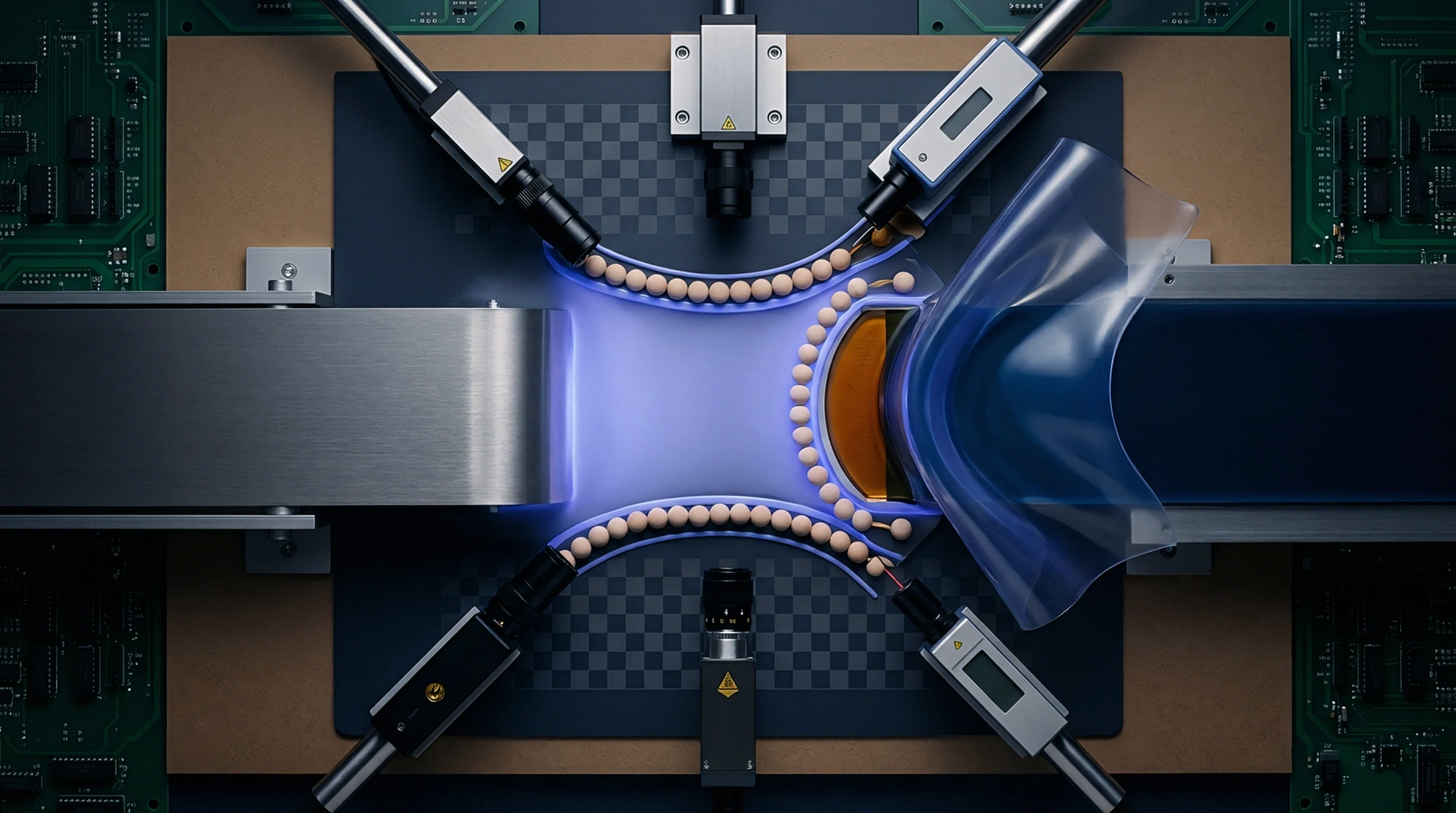
Measurement uncertainty in dual-sensor configurations often arises from the unequal rate at which two parallel elements alter their outputs under temperature variations. This phenomenon of differential thermal drift represents the relative change in offset or sensitivity between two independent transducer channels subjected to the same ambient fluctuations. It establishes the ultimate limit of common-mode rejection in differential sensing circuits.
Thermal Stabilization
Thermal management in high-precision sensors relies on matching the structural materials and heat pathways of the sensing elements. When the channels do not share identical thermal masses, a transient gradient occurs. This mismatch creates a temporary offset error that diminishes only after the entire assembly achieves thermal equilibrium.
Calibration Routine
Compensation of this temperature-induced divergence involves recording the outputs of both sensors across the operating range during a controlled thermal cycle. The sensor outputs are fit to polynomial curves to extract individual correction coefficients. These coefficients are then stored in the system non-volatile memory to be applied in real-time execution.
Error Budget
Specifications for industrial silicon transducers frequently state this value as a percentage of the full-scale output per degree Celsius. Designers must verify this parameter during production to prevent measurement saturation under extreme conditions.