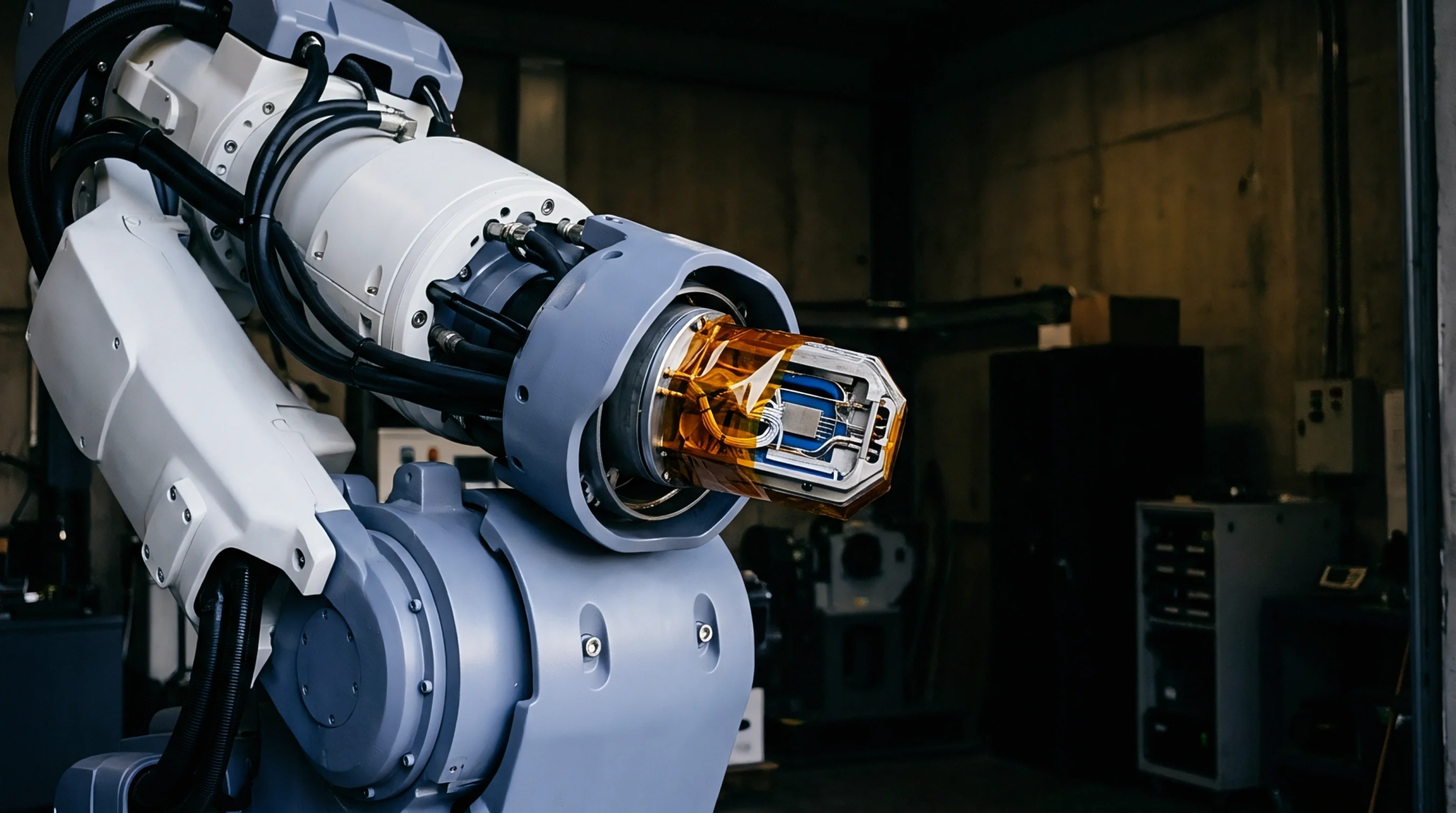
Primary Dewpoint Standard
Fundamental moisture measurement instruments determine thermodynamic water vapour dewpoint or frost point by precisely controlling the condensation equilibrium on a thermoelectrically cooled reflective surface. The chilled mirror hygrometer operates as a primary metrological transfer standard because the temperature at which condensation maintains steady-state optical equilibrium directly maps to water vapour pressure without secondary empirical calibrations. This boundary encompasses gaseous dewpoint and frost point determination across inert, atmospheric, and industrial process gases.
The instrument cannot determine dissolved water in liquid hydrocarbons, highly corrosive acid gases that chemically degrade the mirror metal, or condensable organic fractions that deposit alongside water molecules.
Phase Equilibrium Detection Dynamics
The operating mechanism combines a solid-state Peltier thermoelectric cooler, a polished metal mirror surface, an optical light-emitting diode, and a photodetector configured in a closed optical feedback loop. Gas samples pass through a sealed chamber across the reflective mirror face at a steady, controlled volumetric flow rate. The thermoelectric module chills the mirror surface until condensation droplets or ice crystals condense from the sample stream onto the polished face.
Formation of condensation scatters the incident optical beam, causing a measurable drop in specular light reaching the photodetector. Closed-loop proportional-integral-derivative control systems modulate current through the Peltier element, maintaining mirror temperature at the exact equilibrium point where the condensation rate balances evaporation. A calibrated resistance temperature detector embedded directly beneath the mirror surface measures the metallic temperature, yielding the true dewpoint.
Drift and Contamination Limits
Chemical contaminants, soluble salts, and particulate matter landing on the mirror surface alter physical phase transitions by depressing water vapour pressure according to Raoult’s law. Soluble particulates cause premature condensation, introducing positive dewpoint errors that artificially raise the apparent condensation point. Optical contamination compensation cycles periodically warm the mirror above ambient temperature to evaporate condensates, re-zeroing the optical detection baseline against dry mirror reflectance.
Microscopic oil droplets and airborne aerosols fail to evaporate during standard thermal cycles, requiring physical chamber disassembly and manual optical surface cleaning with spectral-grade solvents. Above zero degrees Celsius, condensation forms liquid water, while between zero and minus thirty degrees Celsius, supercooled liquid water can persist in metastable equilibrium with water vapour instead of forming solid frost, necessitating cyclic freezing routines to force ice crystallization and avoid ice-versus-liquid vapour pressure interpretation errors.
Calibration Verification Environment
National measurement institutes rely on primary chilled mirror architectures to calibrate transfer hygrometers, capacitive thin-film humidity sensors, and optical absorption spectrometers across secondary laboratories. Standard gravimetric hygrometer systems or continuous two-pressure humidity generators introduce known water vapour concentrations into the sensor cell under strictly isothermal conditions. Four-wire platinum resistance thermometers inside the mirror assembly undergo periodic calibration against fixed international temperature points, such as the triple point of water and gallium melt cell standards.
Operating line pressures must be monitored with high-precision absolute pressure transducers, because total gas pressure fluctuations directly shift partial vapour pressures and skew measured dewpoint values. Sample extraction lines require inert passivated stainless steel or fluoropolymer tubing, as standard elastomers absorb ambient moisture and induce hours of diffusion lag during ultra-low trace moisture measurements.