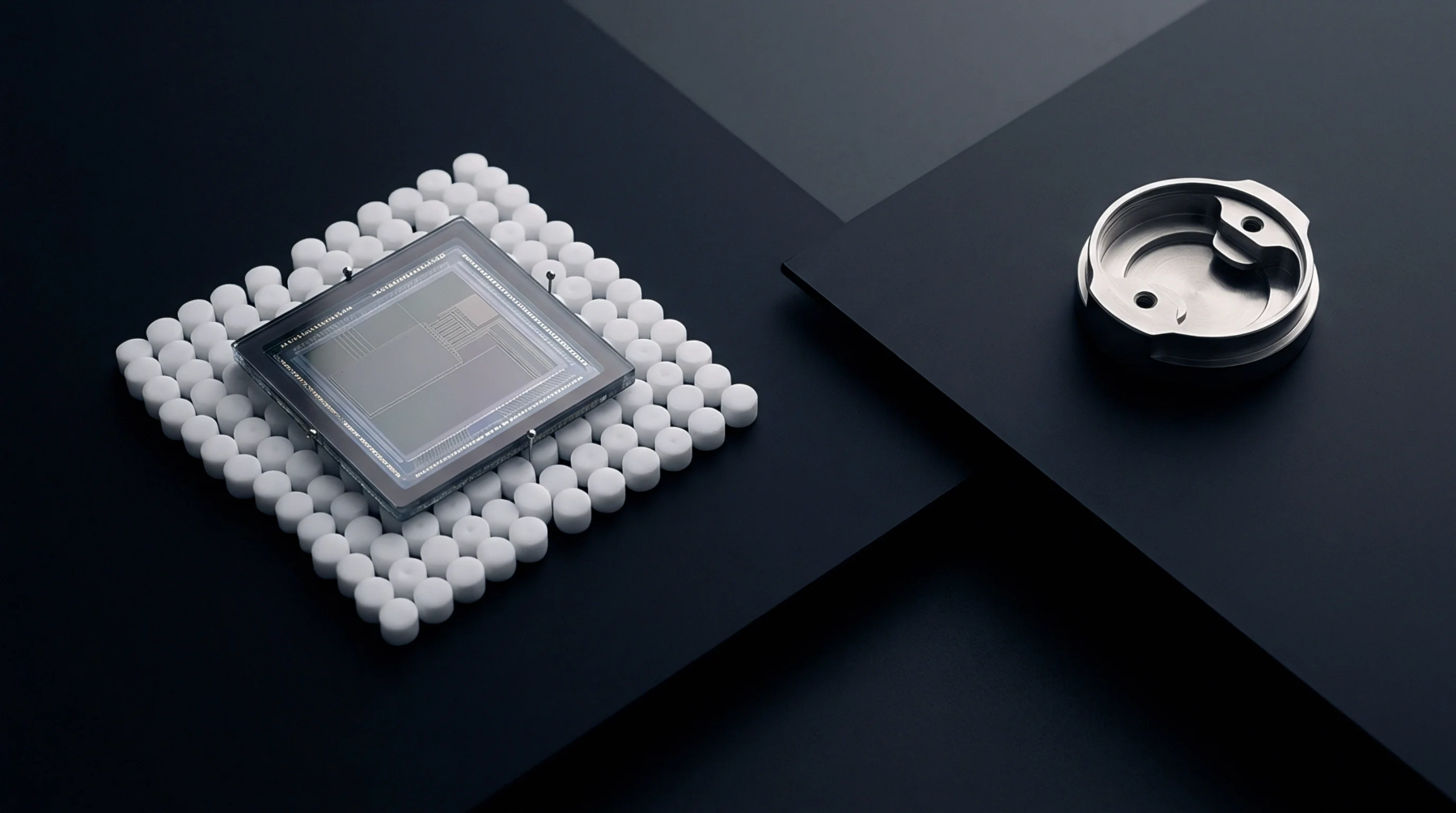
Enclosure Integrity
Microelectronic protection systems shield sensitive semiconductor dies from moisture and corrosive gases over extended operational lifespans. Using ceramic hermetic packaging ensures that the internal cavity remains dry and uncontaminated, which prevents the corrosion of delicate bonding wires and sensor surfaces. This defense is necessary for aerospace and medical applications where failures are unacceptable.
Mechanical Performance
Differential thermal expansion between the silicon die and the housing can induce mechanical stress. High stiffness in ceramic hermetic packaging minimizes the flexing of the housing under pressure or vibration. This rigidity keeps the internal die perfectly aligned and free from stress-induced drift, protecting the calibration baseline of the instrument.
Leak Testing
Manufacturing quality control relies on leak testing to verify the seal of the package. In the helium fine-leak test, the cavity is pressurized with helium and the emission rate is measured using a mass spectrometer. This process identifies micro-cracks or seal defects that could slowly compromise the package during its deployment in harsh environments, ensuring that only packages with verified leak rates are shipped.
Thermal Resistance
Heat dissipation becomes difficult in sealed cavities because there is no air movement to carry the energy away. Ceramic housings must rely on direct conduction to manage the thermal load.