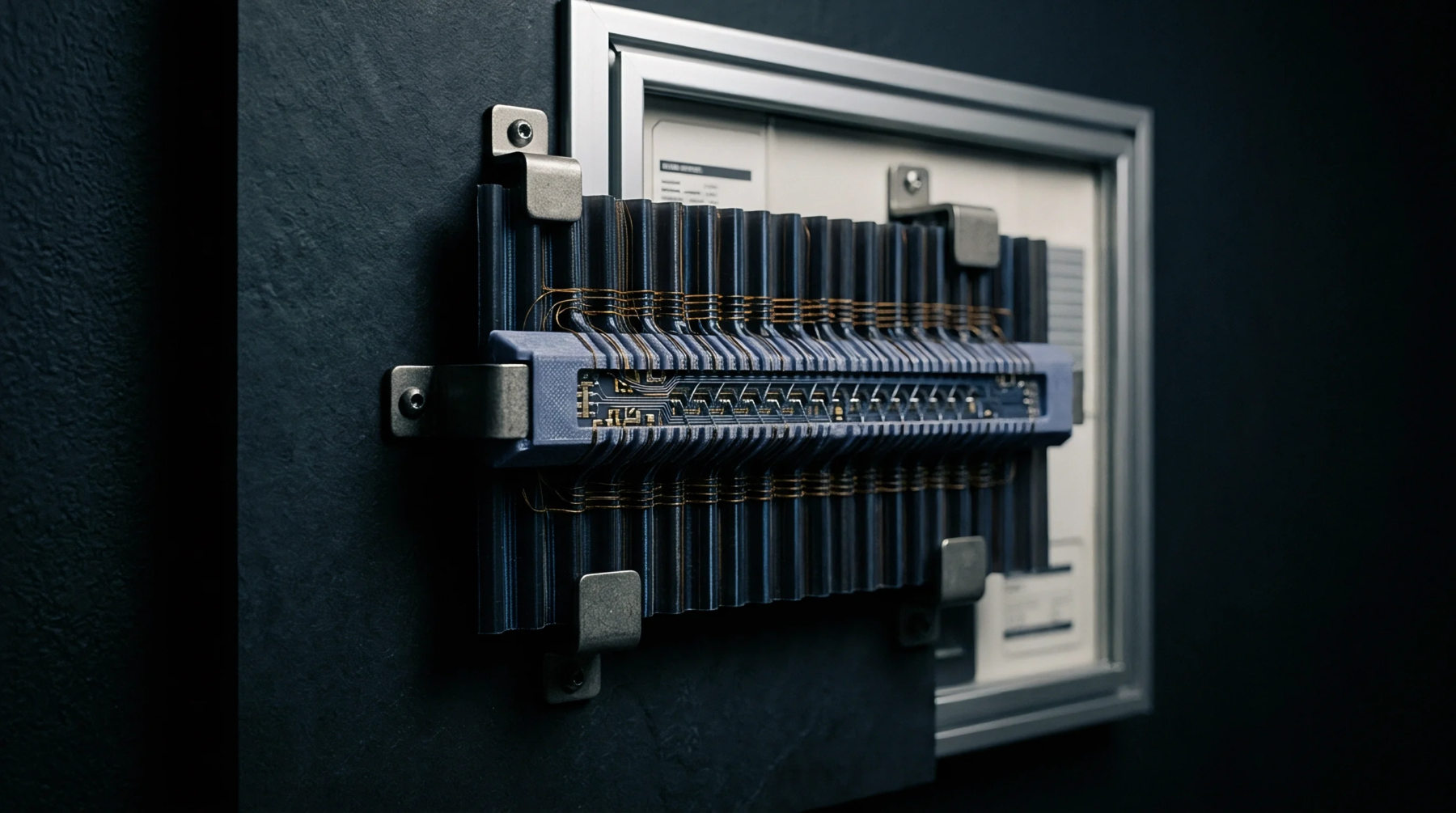
Electrostatic Device
Electrostatic sensing assemblies measure physical displacement, pressure, or liquid level by tracking variation in electrical capacitance across opposing conductive plates. A capacitive transducers system relies on geometric changes or dielectric shifts between sensing electrodes to alter stored charge under an applied voltage. The operating domain of these assemblies stops at conductive media shorting or extreme dielectric breakages.
Displacement Sensitivity
Sensing resolution depends directly on plate geometry, separation distance, and the dielectric constant of the intervening medium. Micro-inch displacements yield detectable picofarad changes when driven by stable high-frequency alternating current excitation signals. Non-linear responses occur as plate separation shrinks relative to total surface area.
Signal processing circuits correct for this non-linearity through mathematical polynomial linearization. Stray capacitance paths across mounting structures degrade overall measurement sensitivity if left ungrounded. Cable movement during operation modulates line capacitance, adding spurious noise to the output signal.
Environmental Interference
Atmospheric humidity alters ambient air dielectric permittivity, introducing drift into baseline capacitance values. Temperature fluctuations cause mechanical expansion of housing materials, which changes physical electrode spacing independently of the measured variable. Shielding enclosures prevent electromagnetic field coupling from corrupting small measurement signals.
Calibration Protocol
Baseline calibration requires multi-point verification against laser interferometer displacement standards under controlled room temperature and humidity. Operational adjustments correct for mounting stress and initial parasitic PCB capacitance. Certificates validate measurement uncertainty across the declared operational span.