Thermal Relaxation Mechanics in Amorphous Soft Magnetic Core Alloys
Thermal relaxation in amorphous cores drives directional pair ordering that pins domain walls, shifting permeability and zero-point offset over time.


Glass
Rapid quenching at cooling rates exceeding 1,000,000 Kelvin per second freezes liquid transition-metal metalloid alloys into a metastable state lacking long-range atomic order. A ribbon of iron-boron-silicon or cobalt-iron-nickel-molybdenum cast by planar flow melt spinning retains an excess enthalpy relative to its crystalline equilibrium state. This thermodynamic configuration traps free volume within the topologically disordered dense random packing of hard spheres.
Magnetic sensor topologies relying on high initial permeability, low coercivity below 1 ampere per meter, or vanishing saturation magnetostriction depend entirely on maintaining this structural disorder. At thermal exposure well below the crystallization temperature, the frozen-in topological disorder begins to shift. Local atomic clusters reposition through diffusive jumps that activate without grain boundaries to guide them.
The resulting physical state dictates the core response in fluxgate sensors, zero-flux current transducers, and magneto-inductive magnetometers. Annealing treatments carried out by alloy mills relieve severe quenching stresses, yet the remaining free volume leaves atomic pairs free to reorient under internal exchange fields and operational thermal baths. Directional pair ordering develops as iron-iron, iron-cobalt, or transition-metal-metalloid nearest-neighbor vectors align with spontaneous local magnetization within magnetic domains.
The system lowers its free energy by establishing local induced magnetic anisotropy along the magnetic vector, creating energy barriers that pin domain walls. Cores left in unenergized inventory or operated inside hot electronic enclosures experience steady shifts in magnetic characteristics without displaying structural changes detectable by standard X-ray diffraction.
Coercivity shifts up to thirty percent can take place inside unenergized cores through directional pair ordering alone, without inducing detectable crystalline diffraction peaks.
Thermal stability rests on three material parameters: the Curie temperature, the crystallization onset temperature, and the activation energy spectrum of structural relaxation. The operational temperature of an amorphous soft magnetic core is constrained by the relaxation kinetics that activate several hundred degrees below crystallization. For a nominal cobalt-based zero-magnetostriction alloy with an initial relative permeability of 100,000, continuous exposure to 393 Kelvin produces measurable permeability drop and coercivity increase within thousands of hours.
The magnitude of this degradation correlates directly with the density of quenched-in free volume and the magnitude of the saturation magnetostriction constant, which ranges from less than 0.1 parts per million in specialized cobalt systems to roughly 30 parts per million in high-saturation iron-based formulations.
Relaxation mechanics divide into topological short-range ordering and chemical short-range ordering. Topological ordering entails the annihilation of excess free volume as migratory atomic species collapse into neighboring vacancy-like defects, leading to densification, ribbon embrittlement, and overall shrinkage on the order of 0.1 percent. Chemical ordering involves the interchange of constituent atomic positions without net volume change, altering local compositional coordination numbers.
Chemical ordering activates at lower thermal energies than topological collapse. This low-energy reorientation governs the directional ordering of magnetic atom pairs, presenting a continuous operational challenge for precision sensor designs operating across industrial temperature spans.
Unrelieved mechanical constraints aggravate these atomic shifts, causing irreversible degradation when high temperatures interact with external mounting stresses.
Kinetics
Mathematical description of atomic movement in amorphous alloys rejects single-activation-energy Arrhenius models. The topological disorder creates a broad, continuous spectrum of activation energies reflecting diverse local atomic environments. Structural relaxation operates under the activation energy spectrum model, where property variations correlate with an integral across energetic states ranging from approximately 0.8 electron volts to 2.5 electron volts.
Experimental observation of permeability decay confirms that isothermal aging causes linear degradation against the logarithm of time across multiple decades. The rate of this relaxation process accelerates with elevated temperature, shifting the active processing window toward higher energy states according to the characteristic kinetic relationship:
E = k T ln(v0 t)
Here, E represents the characteristic activation energy scanned at time t and absolute temperature T, k is the Boltzmann constant, and v0 is an effective atomic attempt frequency typically taken between 10 to the twelfth and 10 to the fourteenth reciprocal seconds. As exposure time accumulates, the active energy front moves into deeper potential wells. Changes in core properties therefore manifest rapidly during initial operating hours before settling into an extended, logarithmic drift regime.
The following data presents activation energy bands and degradation rates observed across primary commercial amorphous alloy families under isothermal conditions.
| Alloy Family | Nominal Composition | Curie Temp (K) | Crystallization Temp (K) | Mean Relaxation Energy (eV) | Permeability Loss Rate (%/decade at 398 K) |
|---|---|---|---|---|---|
| High-Saturation Iron-Based | Fe78Si9B13 | 685 | 765 | 1.45 | 8.5 |
| Zero-Magnetostriction Cobalt-Based | Co68Fe4Mo1.5Si16.5B10 | 490 | 790 | 1.25 | 14.0 |
| High-Permeability Cobalt-Nickel | Co58Ni10Fe5Si11B16 | 455 | 740 | 1.18 | 18.5 |
| Iron-Nickel Low-Coercivity | Fe40Ni38Mo4B18 | 565 | 690 | 1.32 | 11.2 |
| Data measured on toroidal wound strip samples following manufacturer stress-relief anneal in inert atmosphere. | |||||
Reversible and irreversible processes progress in parallel throughout the annealing envelope. When an amorphous core undergoes heating below its Curie point without an applied magnetic field, directional pair ordering aligns with local domain orientations, creating domain stabilization. Subsequent thermal cycling above the Curie temperature, followed by rapid cooling, disperses this domain configuration and restores initial permeability, demonstrating the reversibility of chemical pair ordering.
Conversely, the annihilation of free volume through topological short-range ordering represents an irreversible trajectory. Once free volume collapses, restoring the original low-density disordered state requires remelting the ribbon.
Distinguishing these two relaxation mechanics establishes the baseline for sensor drift mitigation. An instrumentation engineer tracking sensor zero-point drift over thousands of operational hours encounters irreversible permeability degradation combined with reversible domain pinning that shifts whenever operating temperatures traverse magnetic domain reconfiguration boundaries. In cobalt-based alloys with low Curie points, operational thermal excursions routinely cross critical pair-ordering thresholds.
The sensor signal chain experiences this physical shift as an escalating transfer-function asymmetry.
The rate of property decay also depends on the initial quench thickness and casting atmosphere. Ribbons cast under air entrain surface asperities and local oxidation profiles that alter atomic mobility at free ribbon boundaries. Vacuum-cast or inert-gas-cast ribbons exhibit tighter activation spectra, suppressing rapid low-energy pair realignment.
Sourcing specifications that neglect ribbon casting conditions leave the end-stage sensor exposed to uncontrolled kinetic variability.
Standardized qualification metrics establish the boundaries within which these kinetic transformations produce out-of-specification circuit behavior.
Anisotropy
Magnetic anisotropy defines the energetic preference of the magnetic vector to align along specific spatial axes within the alloy ribbon. In crystalline electrical steels, magnetocrystalline anisotropy dominates the energy balance, anchored directly to crystallographic lattice directions. Amorphous materials lack long-range crystalline symmetry, reducing the macroscopic magnetocrystalline term to zero.
Total magnetic anisotropy in an amorphous core simplifies into three distinct terms: internal stress-induced anisotropy governed by magnetostriction, geometric shape anisotropy dictated by core morphology, and induced magnetic anisotropy created through structural relaxation and field annealing.
Stress-induced anisotropy couples the saturation magnetostriction constant directly to residual mechanical stresses through the classic magnetoelastic energy relationship:
E_sigma = -1.5 lambda_s sigma cos(theta)^2
In this expression, lambda_s represents the saturation magnetostriction, sigma denotes the mechanical stress tensor, and theta defines the angle between the stress axis and magnetization direction. For iron-rich formulations where saturation magnetostriction ranges from 20 to 30 parts per million, residual ribbon stresses of 100 megapascals induce uniaxial anisotropy values exceeding 3,000 joules per cubic meter. These internal stress fields enforce severe spatial variations in local permeability.
Cobalt-based formulations engineered for vanishing magnetostriction suppress this magnetoelastic coupling to negligible levels, leaving induced pair-ordering anisotropy as the primary driver of magnetic hysteresis behavior.
Magnetoelastic anisotropy drops below one joule per cubic meter when saturation magnetostriction stays under 0.05 parts per million.
Domain Wall Stabilization and Pinning
When an amorphous core rests at elevated operating temperatures in a demagnetized state, spontaneous magnetization within individual magnetic domains induces directional atomic pair alignment parallel to local domain vectors. This localized thermal relaxation creates potential wells that secure domain walls within their resting positions. The energy necessary to dislodge a domain wall from its stabilized potential trough increases over time, raising the measured coercive field strength.
The classic manifestation of this domain stabilization process is the appearance of perminvar-type hysteresis loops, characterized by constricted loop centers and low magnetic permeability at small excitation amplitudes.
Operating an alternating-current excitation field strong enough to sweep domain walls across their pinning barriers eliminates the localized perminvar constriction temporarily. Once excitation stops or falls below the threshold depinning field, atomic reorientation resumes along the new domain geometry. High-accuracy fluxgate sensors rely on symmetric saturation of the magnetic core during each drive cycle.
If domain wall pinning creates asymmetrical depinning thresholds between positive and negative half-cycles, the sensor bridge produces an erroneous second-harmonic residual voltage, injecting an offset error directly into the measurement signal chain.
Induced Anisotropy by Field Annealing
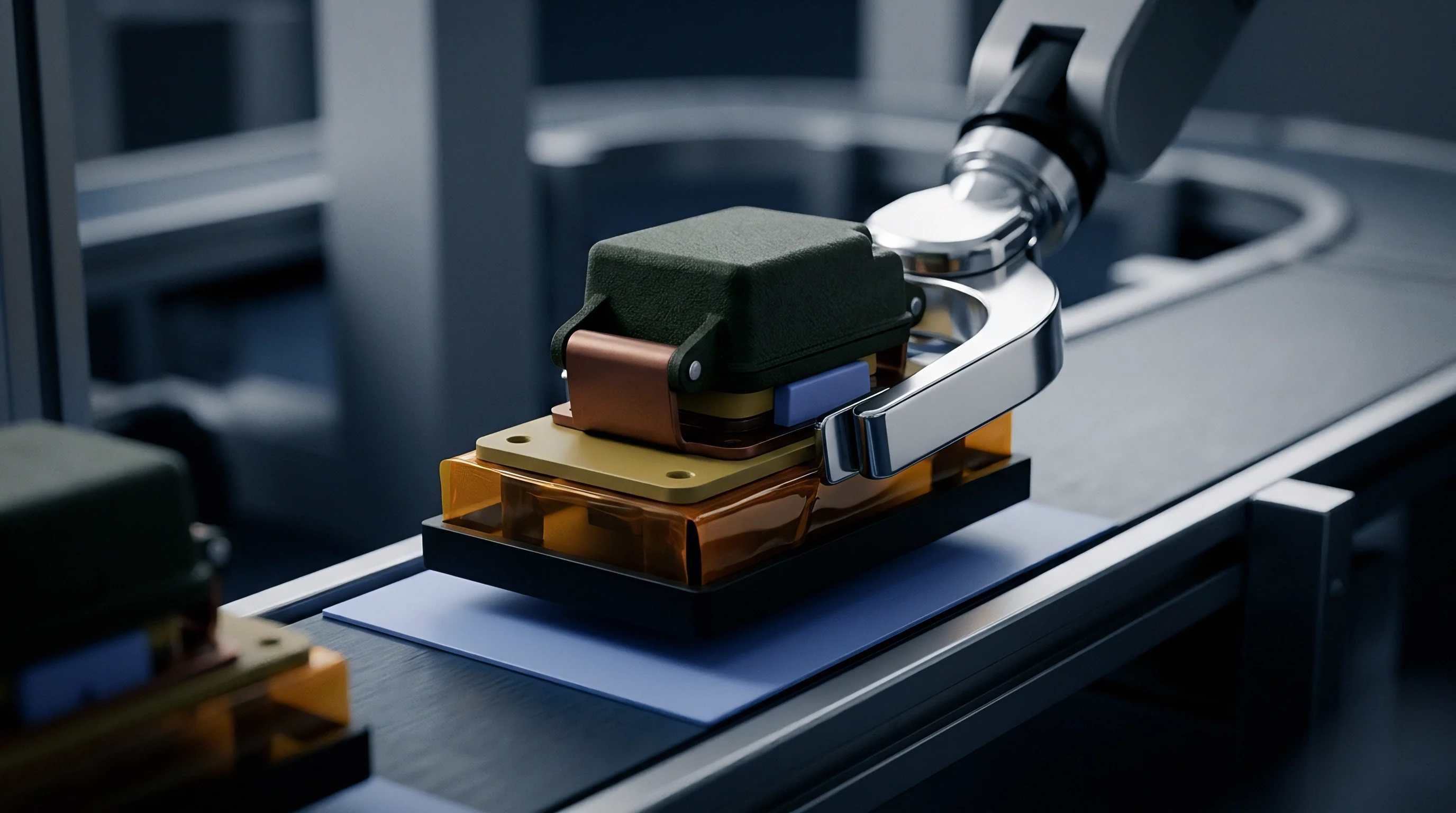
Manufacturers control core anisotropy by applying external forces during thermal processing. Annealing the amorphous alloy above its Curie point or within a high-mobility thermal window under a saturating magnetic field aligns all atomic pairs along a singular axis. Longitudinal field annealing aligns the easy axis parallel to the magnetic path, producing square hysteresis loops with high remanence ratios exceeding 0.9 and high differential permeability.
Transverse field annealing applies the magnetic field perpendicular to the ribbon length, forcing the easy axis across the ribbon width. This processing delivers flat, linear hysteresis loops with remanence ratios below 0.1, constant permeability extending into high excitation levels, and low remanent core losses.
Thermal relaxation mechanics threaten this manufacturer-induced anisotropy during field operation. If a core annealed with transverse anisotropy operates at elevated temperatures under continuous direct-current bias fields, chemical short-range ordering begins realigning atomic pairs along the net vector created by the operational field. Over extended exposure periods, the flat linear loop distorts, the effective transverse anisotropy field weakens, and the dynamic linear range of the sensing element collapses.
Carefully tailored thermal field treatments prove insufficient if downstream assembly techniques introduce uncontrolled mechanical loads into the amorphous ribbon stack.

Strain
Amorphous metal strip exhibits extreme strain sensitivity caused by high ribbon thinness, typically 18 to 25 micrometers, and the absence of crystalline slip planes. When an amorphous ribbon experiences winding tension during toroidal core fabrication, mechanical bending generates asymmetric outer-fiber tensile stresses balanced by inner-fiber compressive stresses. According to beam bending mechanics, the maximum surface strain scales inversely with the winding diameter, reaching significant values in sub-miniature sensor cores.
In iron-based alloys with large magnetostriction, this bending strain establishes an easy magnetic axis along the outer perimeter while compressing the inner circumference into a hard magnetic axis, distorting the cross-sectional flux distribution.
Potting materials, packaging enclosures, and adhesive bonds compound these mechanical influences through mismatched thermal expansion coefficients. The linear coefficient of thermal expansion for cobalt-based and iron-based amorphous ribbons lies between 7 and 12 parts per million per Kelvin. Standard filled potting epoxies exhibit thermal expansion coefficients between 30 and 60 parts per million per Kelvin.
Temperature cycling within industrial sensor operating spans introduces large compressive stresses on the potted core. Even inside silicone gels, curing shrinkage induces stresses exceeding several megapascals, sufficient to collapse permeability in alloys retaining magnetostriction constants above 0.5 parts per million.
Stress relaxation during high-temperature operation permanently converts elastic installation strains into anelastic structural configurations. The atomic structure rearranges under combined thermal activation and applied stress, permanently preserving the bent, distorted geometry even if external packaging loads release. The following sequence establishes standard production procedures for isolating wound amorphous strip from packaging-induced mechanical strain:
- Ribbon Winding Inspection checks bare toroidal cores under optical micromanometers to verify that winding tension stays below two newtons per millimeter of ribbon width, preventing edge buckling and localized plastic deformation.
- Secondary Stress-Relief Heat Treatment executes in a protective argon atmosphere at forty Kelvin below the crystallization threshold to eliminate winding-induced bending moments and restore intrinsic low coercivity.
- Protective Case Enclosure positions the bare wound core within a rigid glass-filled polybutylene terephthalate or aluminum core box featuring internal dimensional clearances that isolate the magnetic metal from casing boundaries.
- Viscous Damping Medium Injection fills core box cavity gaps with non-curing, high-viscosity silicone grease to damp mechanical vibrations without transmitting thermal expansion shear loads into ribbon surfaces.
- Sealing Cap Hermetic Bonding secures the protective cover plate via ultrasonic welding or low-shrinkage adhesive dams, preventing external environmental ingress without exerting axial pressure onto core laminations.
Direct winding of primary and secondary copper wire turns onto bare amorphous cores degrades magnetic parameters. Copper wire tension compresses ribbon perimeters, and insulation shrinkage under elevated temperatures drives severe core loss escalation. Professional sensor manufacturing houses place wound amorphous ribbons into plastic protective housings before adding copper turns.
Designers who dispense with core boxes to reduce sensor dimensions discover that magnetic noise and cross-sensitivity escalate rapidly when ambient temperatures cycle.
The interaction between thermal relaxation and residual strain accounts for significant discrepancies observed between strip-level datasheet claims and assembled sensor performance. A ribbon showing low coercivity on an open testing bench can show tripled hysteresis losses when wound and potted without stress isolation. Relaxation accelerates under stress, as applied mechanical fields lower the activation energy barriers for atomic diffusion, directing atomic pair reorientation along mechanical stress vectors.
Ignoring packaging mechanical isolation converts modest operational temperature rises into permanent sensor drift, driving current measurement errors past regulatory tolerances.


Circuitry
Drift in soft magnetic core properties propagates directly into the operational metrics of sensor signal chains. In closed-loop fluxgate current sensors, the amorphous core serves as a non-linear switching element driven symmetrically into deep magnetic saturation by an alternating excitation current. The signal-chain architecture decodes input current by measuring the second harmonic demodulation voltage induced across a secondary winding.
When thermal relaxation induces directional pair ordering, domain wall stabilization alters the excitation symmetry. The coercive field required to saturate the core in the forward direction diverges from the reverse threshold, generating an unexpected second-harmonic voltage component in the absence of an external magnetic field.
This relaxation-induced asymmetry manifests as zero-point offset drift. In high-precision current transducers measuring microampere leakage currents alongside hundreds of amperes of primary load, an offset drift of five milliamperes destroys sensor operational validity. The analog front end cannot distinguish between a real magnetic field offset and a core-level second harmonic induced by stabilized domain walls.
Signal-chain engineers incorporate specific excitation topologies to overcome this magnetic core behavior, as detailed in the structural comparison below.
| Transducer Topology | Primary Sensed Parameter | Core Degradation Mechanism | Direct Signal-Chain Symptom | Circuit Mitigation Technique |
|---|---|---|---|---|
| Second-Harmonic Fluxgate | Magnetic field via differential saturation | Asymmetric domain wall pinning | Zero-point offset drift and false residual harmonics | Demagnetization pulse injection at sensor startup |
| Current Equalizer Zero-Flux | Direct-current to high-frequency current balance | Permeability decay over time | Phase margin loss and high-frequency loop oscillation | Adaptive loop compensation with auto-zero calibrator |
| Magneto-Inductive Element | Core discharge relaxation time | Coercivity growth and anisotropy rotation | Full-scale gain slope error and timing jitter | Bipolar current driving with ratiometric period conversion |
| Variable Inductance Choke | Dynamic complex permeability | Topological short-range densification | Resonant peak frequency drift and Q-factor collapse | Continuous excitation matching via tracking filters |
In zero-flux current transducers using high-permeability amorphous cores to bridge the low-frequency transfer function, relaxation-driven permeability decay compromises overall loop gain. As relative permeability drops from 120,000 to 70,000 over thousands of hours at 378 Kelvin, magnetic transfer impedance collapses. The feedback loop compensation network, tuned for the initial high permeability state, loses critical phase margin.
The sensor exhibits elevated noise floors and can break into sustained high-frequency limit-cycle oscillation under transient step loads.
Signal processing stages that sample core inductance through relaxation-oscillator timing loops experience direct gain slope variations. As structural relaxation pins domain walls, initial permeability falls while differential saturation permeability shifts, altering both the charge and discharge intervals of the magnetic sensing multivibrator. Compensating for these core-level physical variations requires active digital recalibration routines, adding firmware overhead and hardware cost to what was intended as a basic analog transducer.
Compensating for core-level permeability drift in firmware adds processing overhead that simple hardware selection avoids from the start.

Would Operating an Active Demagnetization Cycle Prevent Offset Shift?
Periodic demagnetization protocols inject decaying alternating-current waveforms into the excitation winding to randomize domain alignments and strip away temporary pair-ordering potentials. In laboratory bench environments, this excitation cycle resets sensor offsets to baseline values. In continuous industrial monitoring applications, interrupting measurement tasks to run demagnetization routines creates operational blind spots.
If the core operates at elevated temperatures under continuous non-zero magnetic fields, the newly demagnetized atomic pairs immediately re-order along the applied operational field vector. Demagnetization sweeps eliminate temporary domain wall memory, yet fail to reverse permanent topological short-range ordering or suppress chemical ordering driven by permanent external bias fields.
Analog designers must construct signal chains that tolerate gradual core degradation without functional failure. Excitation current sources should provide sufficient compliance voltage to drive the core into deep saturation despite coercivity increases across the operating lifecycle. Driving the magnetic material to twice its nominal saturation field ensures rapid domain depinning, reducing the influence of thermal relaxation on switching timing at the expense of higher continuous power consumption.
The cost consequences of over-engineering power budgets to offset core degradation lead directly to material selection choices during component specification.
Allocation
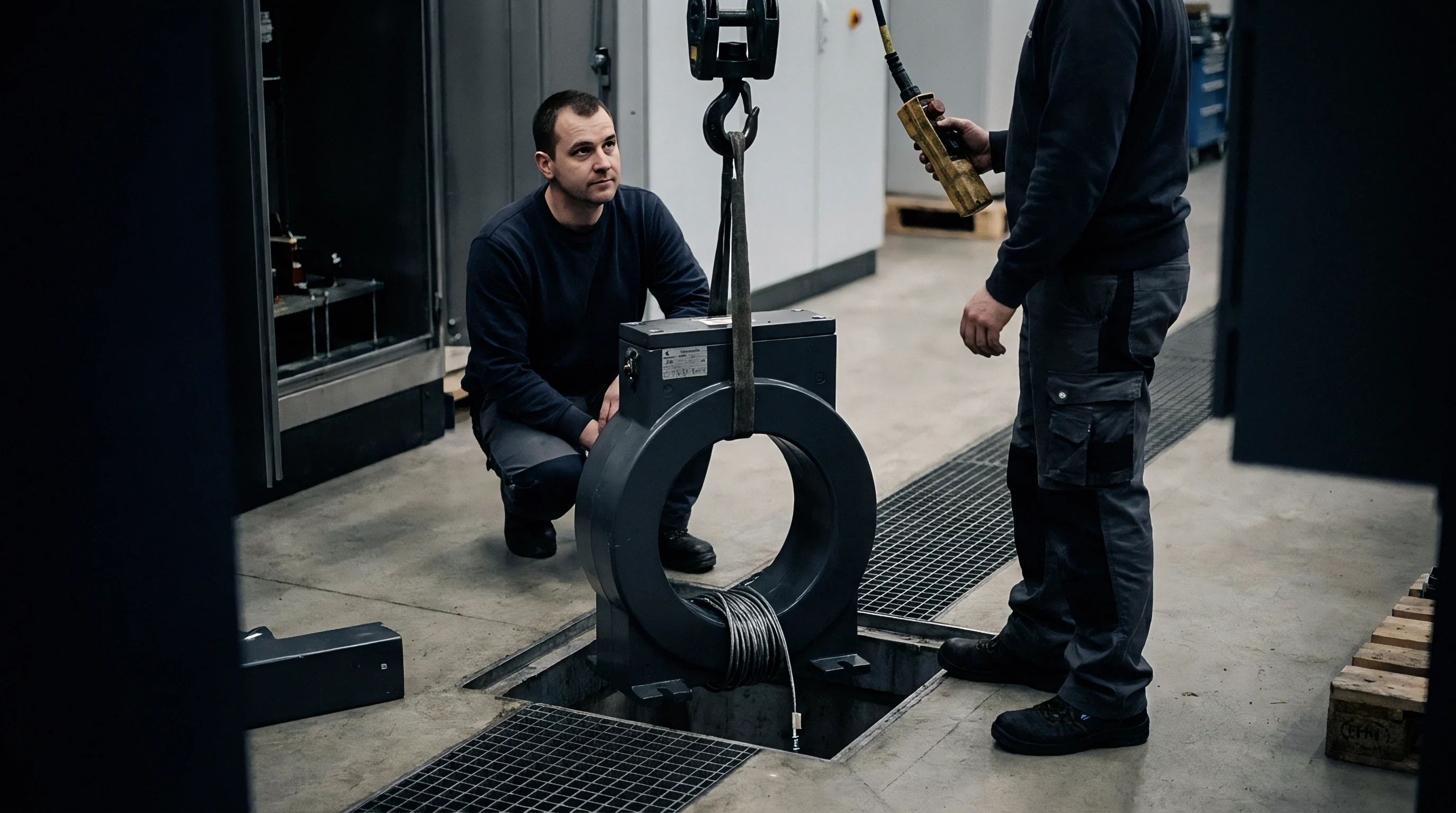
Procuring soft magnetic amorphous cores requires strict commercial discipline, balancing core physical behavior against global supplier limitations. The primary supply base for amorphous alloy ribbons centers within a consolidated group of global producers, primarily situated across Japan, Germany, China, and the United States. High-performance cobalt-based zero-magnetostriction formulations rely on refined chemical precursor streams subject to raw material market volatility.
Cobalt raw material spikes increase ribbon prices, incentivizing sourcing teams to consider iron-rich alloys for applications where high magnetostriction introduces field reliability hazards.
A typical commercial failure occurs when purchasing teams substitute lower-cost iron-based amorphous ribbon into fluxgate current sensor bills of materials initially qualified using cobalt-based alloys. The purchase price difference appears compelling on paper, with iron-based strip running between twelve and twenty dollars per kilogram compared to seventy to one hundred and thirty dollars per kilogram for specialized zero-magnetostriction cobalt ribbon. In open bench testing at room temperature, both alloys achieve comparable functional accuracy.
The operational penalty surfaces after deployment in harsh industrial environments. Elevated enclosure temperatures and packaging stresses activate magnetoelastic relaxation, inducing zero-point drift that exceeds system limits, requiring field service updates and product redesigns.
Specifying engineers should write unambiguous thermal stability requirements directly into purchasing specifications to prevent unapproved alloy substitution. Incoming inspection protocols must include magnetic verification following accelerated thermal aging, rather than relying exclusively on room-temperature permeability and coercivity certificates provided by mills. An effective receiving verification methodology requires aging core lots at 398 Kelvin for 168 hours in an inert chamber, followed by B-H loop characterization to establish drift percentages for coercivity, permeability, and remanence.
Lead times for specialized transverse-field annealed amorphous cores range from sixteen to thirty-two weeks due to batch processing constraints inside vacuum annealing ovens. Sourcing strategies should qualify secondary sources that use identical continuous annealing field geometries. If an alternate vendor provides longitudinal-field annealed cores or inadequately stress-relieved ribbons, switching suppliers destabilizes the sensor signal chain.
The buyer must enforce verified chemical compositions, defined casting environments, and traceable field-annealing profiles across every production lot.
Procurement teams negotiating long-term supply agreements must tie material acceptance to post-thermal-aging performance boundaries. When suppliers decline to warrant magnetic drift metrics over operating temperature ranges, sensor manufacturers shoulder the complete financial and operational risk of physical degradation. Sourcing success requires aligning the underlying physical metallurgy with purchasing contracts, ensuring sensor longevity in field installations.
Contractual terms should stipulate that material lots exhibiting permeability decay greater than fifteen percent after thermal qualification undergo immediate rejection at the supplier expense.