Elastomeric Viscoelastic Modulus Transition Dynamics Driving Optical Path Phase Skew under Multi Axis Resonant Excitation
Dynamic self-heating in resonant elastomeric mounts shifts storage modulus and refractive index, driving spatial phase skew across optical sensing paths.

Shear
Elastomeric components supporting precision optomechanical elements undergo internal mechanical friction during cyclic stress cycles. When exposed to high-amplitude vibration near structural eigenfrequencies, energy dissipation within the polymer network creates localized internal heating. This self-heating raises the core temperature of the material, driving the polymer from a vitrified or highly elastic state toward its glass transition region.
As the internal temperature climbs, the dynamic shear modulus transforms from a high storage modulus state to a loss-dominated regime. The ratio of loss modulus to storage modulus, defined as tan delta, reaches its peak inside this transition window. Under constant mechanical drive amplitudes, the softening polymer alters structural boundary constraints, changing the physical position and orientation of the optical surface.
Energy dissipates quickly.
The viscoelastic response of an elastomer subjected to multi-axis mechanical inputs is dictated by temperature- and frequency-dependent complex shear modulus components. High frequency excitation shifts the material glass transition to higher temperatures, whereas low frequency excitation permits structural compliance at lower thermal thresholds. In an optomechanical housing, elastomeric seals or dampeners experience simultaneous shear and axial compression during multi-axis resonance.
Dynamic mechanical thermal analysis shows that dynamic storage modulus values can drop by more than seventy percent during continuous resonant excitation across a 100 Hz to 2 kHz bandwidth. This stiffness drop alters structural resonance frequencies, driving the optomechanical system into non-linear feedback loops where vibration amplitude and internal temperature mutually reinforce deformation.

Viscoelastic Heat Generation under Dynamic Mechanical Stress
Polymer backbone movement under harmonic deformation generates thermal energy per unit volume proportional to the square of the applied strain amplitude and the loss modulus. The localized heat accumulation remains trapped inside thick elastomeric cross-sections due to low thermal conductivity, typical of unfilled or lightly filled silicone and fluorosilicone polymers with thermal conductivities below 0.3 W/m K. This thermal concentration creates sharp temperature profiles from the core of the mount outward to its aluminum or titanium retaining structures. Because the complex modulus directly determines physical mounting stiffness, spatial variations in core temperature yield non-uniform structural compliance across the optic holding perimeter.
Heat alters index.
During steady resonant excitation, the mechanical strain field inside the elastomer couples with localized thermal expansion. Shear strains reaching values above 0.05 within the mounting contact region produce anisotropic physical displacement of the optic. This displacement manifests as both a static tilt vector and high-frequency dynamic jitter along the optical axis.
The mechanical boundary conditions around an optical window or mirror consequently change from a uniform elastic constraint to a time-varying, spatially asymmetric stress field.
Dynamic mechanical thermal analysis at 1.2 kHz resonant excitation demonstrates a core temperature increase of 18 K in fluorosilicone dampeners, decreasing storage modulus by 64 percent.
A compound vendor asserts that dynamic thermal equilibrium prevents structural modulus degradation under steady mechanical vibration.


Tensor
Refractive index variations inside transparent elastomeric optics arise from the direct interaction of mechanical stress fields and photoelastic coefficients. Applying stress to an isotropic polymer breaks optical isotropy, inducing stress birefringence described by the photoelastic tensor. The spatial distribution of refractive index changes along principal stress axes follows linear relationships with applied normal and shear strains.
Higher strain concentrations along dynamic mounting edges generate localized optical path variations across the clear aperture. When monochromatic laser light passes through the stressed polymer, the phase front experiences differential spatial delay, degrading spatial phase uniformity.
Strain fields shift.
The absolute optical path length through a deformed optical element depends on both the physical thickness change and the integral of the refractive index along the propagation path. Mechanical compression reduces physical thickness while simultaneously increasing local density, raising the refractive index through the Clausius-Mossotti relationship. Conversely, dynamic shear deformation induces anisotropic optical path alterations where orthogonal polarization components experience distinct phase shifts.
The combination of structural deformation and stress-induced birefringence creates a two-dimensional phase skew across the optical wavefront.
Photoelastic Modulation across Deformed Optical Apertures
Evaluating stress-optic interactions requires coupling the structural strain tensor to the optical index ellipsoid via the material photoelastic constants. Silicone elastomers possess stress-optic coefficients ranging from 1000 to 4000 brewsters, which are several orders of magnitude higher than synthetic fused silica. Small dynamic mechanical stresses on the order of 50 kPa alter refractive indices in the fourth decimal place.
Spatial gradients in these stresses transform a uniform flat wavefront into an aberrated optical surface characterized by astigmatism, coma, and higher-order Zernike polynomials.
Thermal gradients grow.
Concurrently, the thermo-optic coefficient governs refractive index change as a function of localized temperature rise. For most optomechanical polymers, the thermo-optic coefficient is negative, operating between -1.5 x 10^-4 K^-1 and -4.5 x 10^-4 K^-1. As internal hysteretic heating generates spatial temperature gradients, index reduction from thermal expansion opposes index increases driven by mechanical compression.
The net optical path difference represents a coupled thermal-mechanical vector sum that varies continuously over the vibration exposure duration.
| Elastomer Compound Class | Storage Modulus G’ (MPa) | Loss Factor tan delta | Stress-Optic Coeff (Brewsters) | Thermo-Optic dn/dT (10^-4 K^-1) |
|---|---|---|---|---|
| Optical Grade Methyl Silicone | 1.4 to 3.8 | 0.08 to 0.15 | 1350 to 2200 | -3.1 to -3.8 |
| Fluorosilicone Optomechanical Grade | 2.8 to 6.5 | 0.12 to 0.28 | 1800 to 3100 | -2.6 to -3.4 |
| Polyurethane Dampener Compound | 8.5 to 24.0 | 0.25 to 0.55 | 3200 to 4800 | -1.8 to -2.7 |
| Ethylene Propylene Diene Terpolymer | 4.2 to 12.0 | 0.18 to 0.35 | 2100 to 3900 | -2.2 to -3.1 |
Coupled Thermo Optic Index Gradients
Thermal conduction through boundary hardware establishes non-uniform steady-state temperature fields inside the elastomer mass. Heat flow toward cool mounting flanges creates radial thermal gradients from the center of the optical aperture to its periphery. The resulting refractive index profile mimics a negative gradient-index lens, adding spatial focal power and spherical aberration to the transmissive beam path.
Dynamic excitation modulates this thermal lens effect at both the vibration frequency and the thermal time constant of the assembly.
Wavefront error increases.
Ignoring phase skew during thermal dynamic transits degrades laser receiver signal-to-noise ratio past operational recovery thresholds, forcing optic redesigns late in sensor production.


Resonance
Structural excitation along multiple motion axes activates complex vibration modes within optical housing geometry. Simultaneous orthogonal inputs break symmetry, coupling translational modes into torsional and bending resonances. Elastomeric mounts experience non-uniform strain fields where peak deformation shifts dynamically between structural support points.
The superposition of X, Y, and Z excitation forces drives the glass transition region across localized material volumes, altering structural damping factors in real time. Phase relationships between input motion vector components dictate whether optical wavefront distortion remains symmetric or develops strong spatial skew.
Modulus drops sharply.
Under three-axis resonant excitation at 1.2 kHz with an input amplitude of 15g acceleration, an optical assembly housing a 10 mm thick fluorosilicone window experiences dramatic phase front degradation. Hysteretic dissipation within the seal elevates local elastomer core temperature by 14 K above ambient within 45 seconds. The corresponding storage modulus decreases from 4.8 MPa to 1.7 MPa, while the loss factor increases from 0.14 to 0.31.
Mechanical shear strain across the clear aperture boundary reaches 0.022 peak-to-peak. Coupling the photoelastic tensor with the negative thermo-optic coefficient yields a peak spatial refractive index difference of 8.4 x 10^-5 across the window diameter, resulting in an optical path phase skew of 1.34 radians at a wavelength of 1064 nm.
Multi Axis Modal Overlap and Spatial Phase Anisotropy
Modal overlap occurs when adjacent structural resonance frequencies fall within the dissipation bandwidth of the elastomeric material. High loss factors broaden structural response curves, causing simultaneous excitation of orthogonal bending modes. Spatial phase distributions across the optical aperture lose rotational symmetry when X-axis and Y-axis mechanical modes operate out of phase.
The optical path length matrix across the aperture becomes asymmetric, generating non-spherical wavefront distortion that standard Zernike modal decompositions describe through uncompensated off-axis astigmatism and trefoil terms.
Tolerance budgets fail.
ASTM E1309 testing establishes that multi-axis harmonic vibration elevates polymer internal thermal dissipation by 40 percent compared to single-axis excitation of equivalent kinetic energy.
Can Viscoelastic Damping Mitigate Optical Phase Skew?
Increasing material damping reduces resonant mechanical displacement amplitudes, limiting physical thickness changes of the optical element. High loss factors extract energy from structural modes, preventing mechanical stress peaks from reaching failure limits. Higher viscoelastic dissipation increases internal heat generation rates, accelerating thermo-optic index shifts.
Optimizing optomechanical stability demands balancing physical displacement reduction against thermally induced refractive index gradients across the operational temperature range.
Damping changes state.
Whether active closed-loop thermal compensation can track sub-millisecond viscoelastic transitions under transient multi-axis shock bursts remains unverified across production optical benches.
Interference
Phase skew across an optical aperture degrades the performance of interferometric sensing architectures by disrupting phase uniformity across the detection beam. In heterodyne laser interferometers, spatial variation in optical path length prevents coherent phase addition across the surface of the photodetector. Portions of the beam arriving out of phase produce destructive interference with the reference local oscillator light.
This phase mismatch reduces the amplitude of the intermediate frequency beat signal, dropping overall signal-to-noise ratio and elevating phase noise floors. The optical heterodyne efficiency falls rapidly as spatial phase skew exceeds a small fraction of the laser wavelength.
Demodulation fails completely.
Spatial fringe degradation impacts homodyne and phase-shifting interferometers by introducing spatial modulation errors across CCD or CMOS detector arrays. Non-uniform phase skew distorts straight fringe patterns into irregular curved structures, creating systematic error in phase extraction algorithms. When phase skew varies dynamically at vibration frequencies, intensity integration over frame exposure times blurs fringe contrast.
Reduced fringe visibility increases phase reconstruction uncertainty, limiting displacement measurement resolution from sub-nanometer levels down to tens of nanometers.
Heterodyne Carrier Demodulation Floor Collapse
Demodulation electronics track intermediate frequency phase signals to extract velocity and displacement data. Spatial phase skew across the optical detector surface introduces phase variance across the photodiode active area. Integrating this spatially phase-skewed wavefront over a single-element photodetector yields carrier signal suppression proportional to the spatial variance of the optical phase error.
When spatial phase skew exceeds 0.5 radians RMS, carrier amplitude degradation drops below tracking thresholds, causing loss of phase lock in digital phase-locked loops.
Fringe visibility drops.
| Spatial Phase Skew (Radians RMS at 1064 nm) | Heterodyne Efficiency Factor | Carrier Suppression (dB) | Displacement Noise Floor (pm/sqrt Hz) | Phase-Locked Loop Status |
|---|---|---|---|---|
| 0.02 | 0.998 | -0.02 | 0.12 | Locked High Margin |
| 0.10 | 0.951 | -0.44 | 0.45 | Locked Nominal |
| 0.30 | 0.670 | -3.48 | 2.80 | Locked Reduced Margin |
| 0.60 | 0.165 | -15.65 | 42.00 | Phase Lock Unstable |
| 1.00 | 0.003 | -50.46 | 1250.00 | Cycle Slip Demodulation Failure |
Phase noise rises.
Optomechanical assemblies operating near structural resonances require elastomer damping peak temperatures to stay twenty degrees below glass transition thresholds to preserve phase linearity.


Metrology
Quantifying viscoelastic phase skew demands integrated testing protocols combining dynamic mechanical thermal analysis, phase-shifting interferometry, and high-speed laser Doppler vibrometry. Environmental test chambers must apply precise multi-axis mechanical excitation while maintaining controlled optical access windows. Test equipment records real-time surface temperature profiles using calibrated micro-bolometer infrared cameras, correlating thermal maps with phase front distortions.
Environmental qualification follows standardized vibration profiles specified in IEC 60068-2-6 and ISO 16063-11 transducer calibration procedures.
Bench testing fixes risk.
Qualification dossiers for optomechanical sensors intended for high-vibration platforms contain documented verification steps:
- Dynamic Mechanical Spectrum Mapping establishes storage and loss moduli across the complete target temperature range from -40 degrees C to 85 degrees C under sweeps from 10 Hz to 5 kHz.
- Multi-Axis Resonant Mode Identification isolates housing eigenfrequencies using three-axis laser Doppler vibrometry under low-level random excitation.
- High-Speed Phase Skew Measurement captures spatial optical path distortion at 100 kHz frame rates during full-amplitude resonant vibration exposure.
- Thermal Hysteretic Mapping measures core elastomer temperature rise using embedded fiber-optic Bragg grating sensors to isolate self-heating effects from ambient changes.
Simultaneous Dynamic Thermal and Phase Characterization
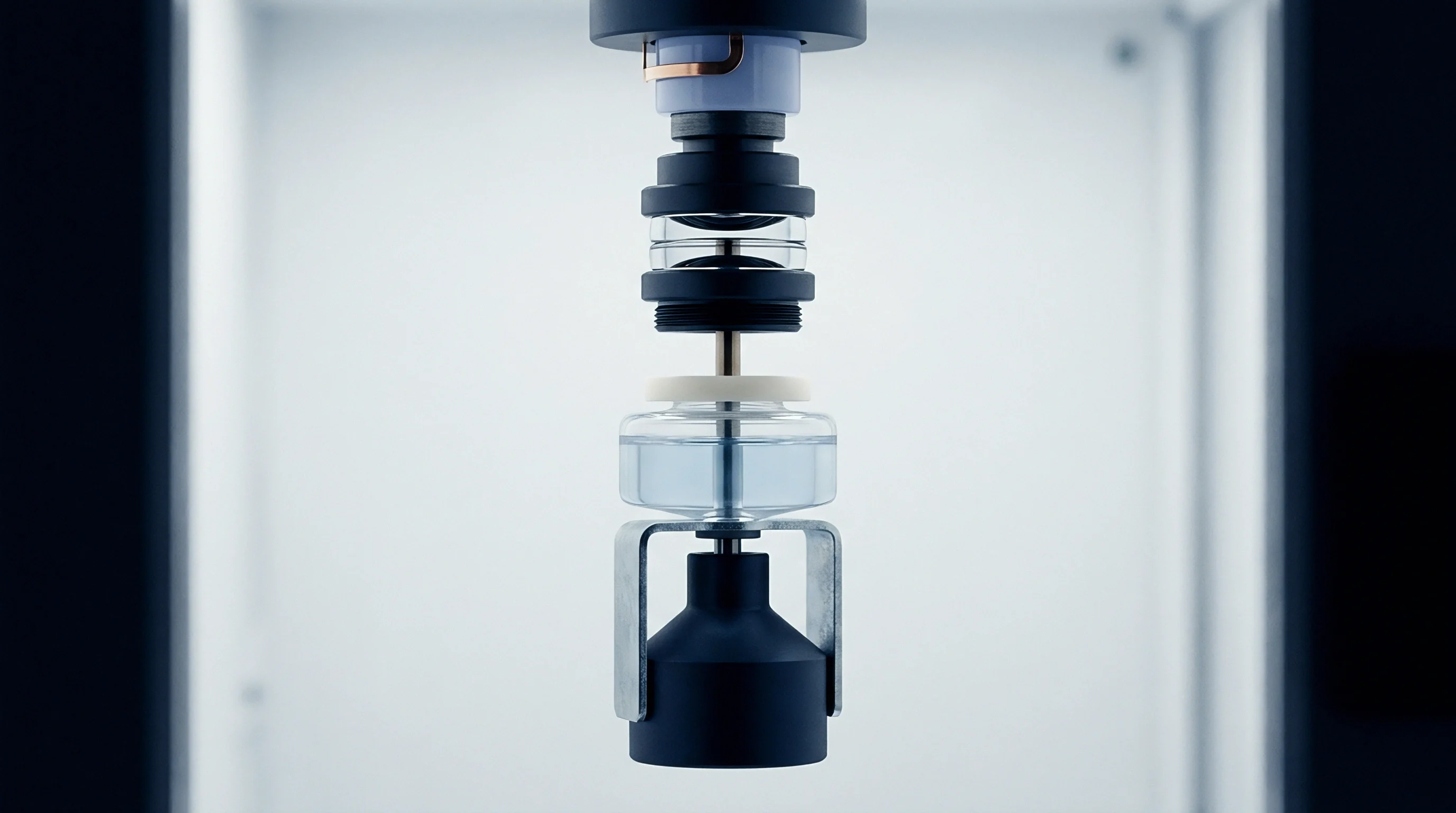
Test setups align a stabilized laser beam through the test optic mounted inside a multi-axis shaker frame. Interacting physical mechanisms are separated by measuring spatial surface displacement with laser vibrometers while simultaneously monitoring wavefront optical path differences with a high-speed interferometer. Synchronizing data acquisition clocks across vibration controllers, thermal cameras, and optical digitizers resolves phase shifts down to microsecond timescales.
Subtracting rigid-body displacement components leaves residual wavefront distortion caused by stress-optic and thermo-optic polymer transitions.
Refractive gradients expand.
ISO 16063-11 verification guidelines mandate phase measurement accuracy better than 0.01 radians under multi-axis vibration up to 2 kHz.
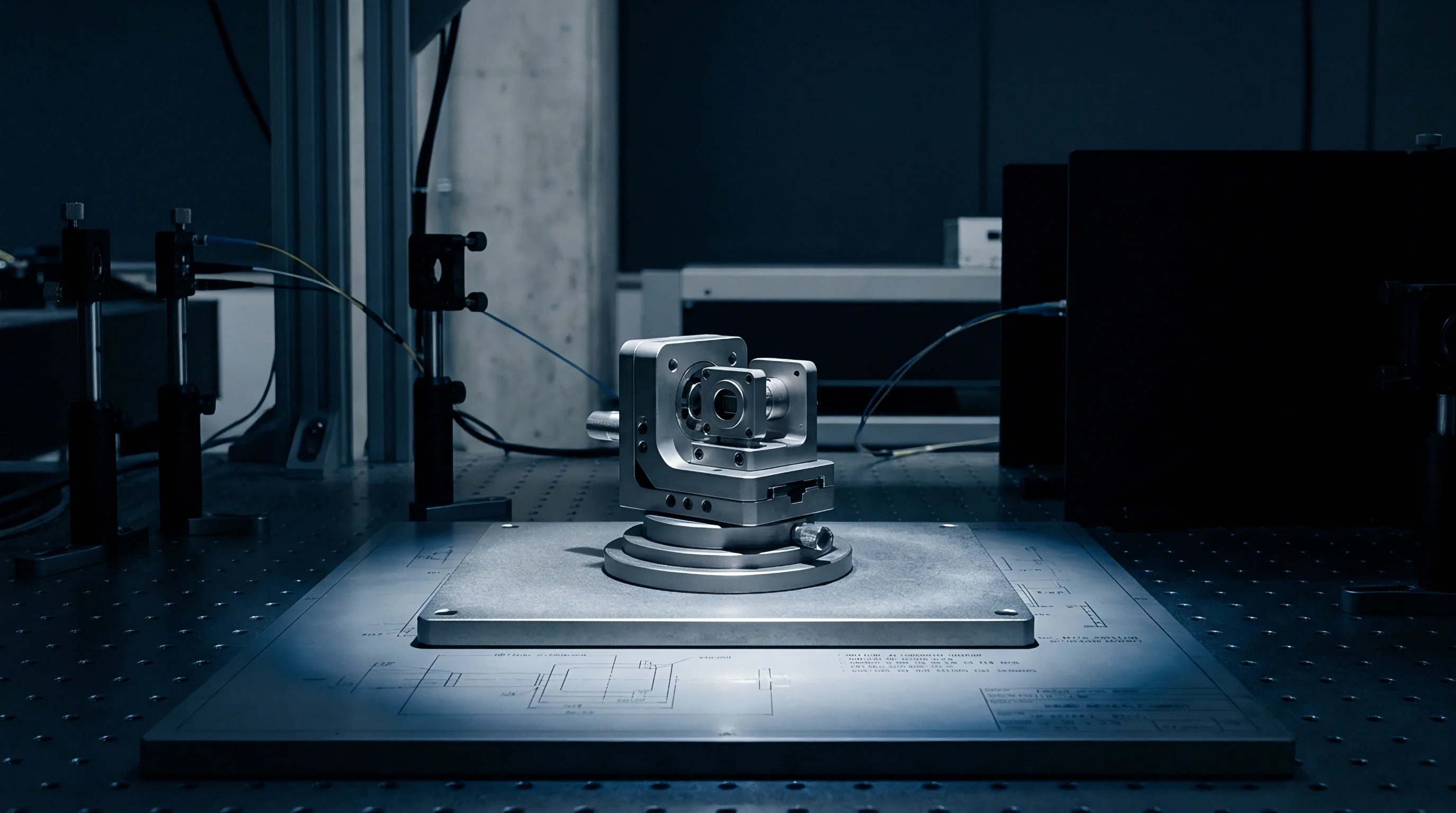
Contractual verification under MIL-STD-810H Method 514.8 requires dynamic wavefront phase error mapping across the full temperature-frequency operational matrix before assembly signoff.

Yield
Selecting elastomeric materials for optical mounts requires balancing structural damping performance against optical phase stability. Raw material procurement specification documents control polymer formulation tolerances, filler loading consistency, and crosslink density metrics. Variations in batch-to-batch polymer synthesis alter the glass transition temperature, shifting the operational frequency band where hysteretic heating reaches peak rates.
Dual-sourcing strategies protect production schedules but demand strict cross-qualification of dynamic mechanical properties across multiple resin manufacturers.
Raw material varies.
Silicone polymers formulated for optomechanical mounting applications utilize specific additions of phenyl groups to modify refractive index and improve radiation resistance. Fluorosilicone alternatives provide solvent resistance and lower thermal expansion coefficients, though they exhibit higher stress-optic constants and elevated loss factors in ambient temperature bands. Polyurethane mounts offer exceptional structural stiffness and mechanical toughness, but their steep viscoelastic transition curves induce rapid modulus drops under dynamic self-heating conditions.
Material Sourcing Tradeoffs for Low Phase Skew Optics
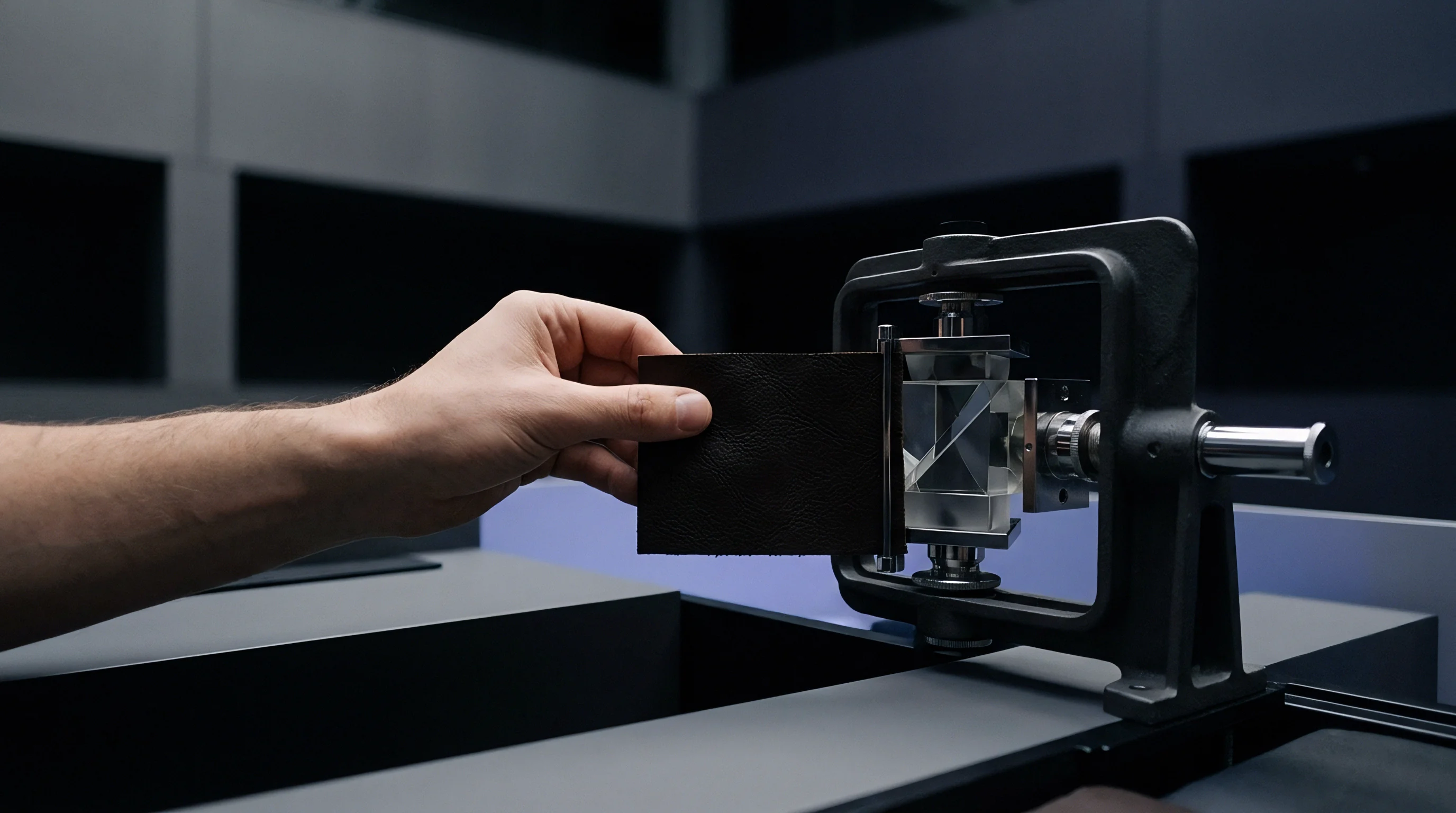
Commercial qualification protocols evaluate raw material suppliers based on batch consistency and dynamic mechanical property documentation. Relying on single-source polymer blends exposes production lines to allocation risks and unauthorized formulation adjustments. Specifying tight material property acceptance windows limits raw lot variability, lowering assembly yield loss during final environmental testing.
| Elastomer Base Polymer | Supply Base Diversity | Raw Lot Tg Variance (degrees C) | Relative Unit Landed Cost | Primary Phase Skew Risk Factor |
|---|---|---|---|---|
| Phenyl Methyl Silicone | Moderate (4 to 6 suppliers) | +/- 1.5 | 1.0x Baseline | High stress-optic coefficient |
| Opto-Grade Fluorosilicone | Limited (2 to 3 suppliers) | +/- 2.8 | 2.4x Baseline | Elevated dynamic loss factor |
| Precision Polyurethane | Broad (10+ suppliers) | +/- 4.2 | 0.7x Baseline | Steep thermal glass transition |
| Specialty EPDM Compound | Broad (8+ suppliers) | +/- 3.0 | 0.5x Baseline | High outgassing and optical haze |
Incoming lot inspection protocols compel testing of dynamic shear modulus and loss factor on sample buttons before releasing resin lots for production molding. Molds designed for optomechanical seals maintain tight wall-thickness tolerances to control cure uniformity and minimize residual thermal stress. Molded seals undergo secondary post-cure baking cycles at 200 degrees C for 4 hours to drive off volatile low-molecular-weight siloxanes, preventing condensation on sensitive optical apertures during operational self-heating cycles.
Receiving records verify that post-bake mass loss stays below 0.1 percent by weight before parts proceed to final optic mounting assembly steps.