Amorphous Magnetic Core Thermal Aging and Structural Relaxation
Thermal aging in amorphous magnetic alloys alters atomic ordering, causing permeability drops and offset drift that require pre-aged cobalt alloy selection.

Glass

Thermodynamic Non-Equilibrium in Metallic Ribbons
Rapid liquid quenching at cooling rates exceeding one million Kelvin per second freezes molten transition-metal alloys into a non-crystalline atomic configuration. This rapid solidification prevents the formation of a periodic crystal lattice, producing a metastable amorphous state trapped high on the free-energy landscape. Iron-based formulations such as Fe78B13Si9 and cobalt-based formulations like Co66Fe4Ni1B14Si15 retain significant excess free volume within their atomic structures.
Thermal energy supplied during normal device operation enables localized atomic mobility, initiating structural relaxation toward lower energy configurations well below the crystallization temperature.
Thermal activation drives atomic diffusion.
Structural relaxation proceeds via two distinct atomic mechanisms: Topological Short-Range Ordering and Chemical Short-Range Ordering. Topological Short-Range Ordering involves the irreversible annihilation of free volume as vacancy-like defects migrate out of the ribbon matrix. This densification increases physical density by 0.1 to 0.3 percent and alters macro-scale ribbon dimensions.
Chemical Short-Range Ordering describes the reversible spatial rearrangement of constituent atom pairs without altering the overall free volume distribution. In iron-silicon-boron ribbon matrices, nearest-neighbor iron-iron and iron-silicon pairs rearrange relative to local magnetization vectors, shifting local exchange coupling and altering saturation magnetostriction.

Atomic Migration and Free Volume Annihilation
Vacancy-like defects trapped within the ribbon matrix move toward surface boundaries during thermal exposure. Free volume declines monotonically.
As free volume vanishes, structural rigidity increases while atomic mobility decreases. This reduction in atomic mobility slows subsequent relaxation kinetics, making structural relaxation a self-retarding process. The structural relaxation rate scales logarithmically with aging time.
Initial exposure to elevated ambient temperatures produces rapid changes in atomic structure, followed by a decaying rate of structural evolution over thousands of operating hours.
Annealing below the crystallization point reduces free volume while altering directionally ordered atomic pairs.
The temperature at which structural relaxation initiates depends on the glass transition temperature and the cooling rate during melt-spinning. Amorphous magnetic alloys typically exhibit measurable relaxation at temperatures as low as 80 degrees Celsius, despite glass transition values exceeding 400 degrees Celsius. Operating tape-wound magnetic elements near their Curie threshold accelerates atomic mobility and permanently degrades initial permeability.


Anisotropy

Thermally Induced Directional Pair Ordering
Dipolar interactions between constituent iron and cobalt atoms align along local magnetization vectors during sustained thermal exposure. This temperature-driven rearrangement generates a macroscopic uniaxial magnetic anisotropy energy barrier within the ribbon matrix. When internal magnetic domain structures remain fixed during high-temperature exposure, directional pair ordering aligns preferentially parallel to the local domain magnetization.
The resulting induced anisotropy energy locks magnetic domain boundaries in their origin positions, creating pinning sites that restrict domain wall motion under subsequent drive fields.
Local magnetic domains lock permanently.
The magnitude of induced uniaxial magnetic anisotropy depends on thermal exposure duration, local operating temperature, and saturation magnetization of the alloy. In zero-magnetostriction cobalt-based amorphous alloys, thermal aging at 120 degrees Celsius induces anisotropy fields ranging from 10 to 80 Amperes per meter. This induced anisotropy alters the shape of the B-H hysteresis loop, converting an initially linear loop into a skewed or constricted shape with elevated remanence or increased coercivity.
Macroscopic Degradation of Permeability and Core Loss
Permeability decay follows a logarithmic relationship relative to operating time. As directional pair ordering stabilizes domain structures, initial magnetic permeability drops significantly because domain wall displacement requires higher threshold excitation fields. Simultaneously, coercive force increases as domain walls encounter larger energy barriers to motion across localized pair-ordered regions.
| Alloy Composition | Initial Permeability (at 1 kHz) | Permeability Shift (Percent) | Coercive Force Change (Percent) | Specific Core Loss Increase (at 100 kHz, 0.2 T) |
|---|---|---|---|---|
| Fe78B13Si9 (High Saturation) | 12,000 | -22.5 | +34.0 | +28.0% |
| Fe40Ni38Mo4B18 (High Permeability) | 45,000 | -31.0 | +48.0 | +42.0% |
| Co66Fe4Ni1B14Si15 (Zero Magnetostriction) | 80,000 | -14.0 | +18.0 | +12.5% |
| Co68Fe4Cr1Si15B12 (Linear Loop Form) | 25,000 | -8.5 | +11.0 | +9.0% |
Continuous dynamic losses rise alongside coercive force shifts. Elevated coercive force increases micro-structural hysteresis loss per magnetization cycle, while structural relaxation alters ribbon resistivity by less than 0.5 percent, leaving eddy current losses mostly unchanged. Total core dissipation expands under sustained thermal stress.
High-frequency magnetic transducers operating under continuous excitation experience self-heating, which elevates internal operating temperatures and accelerates structural relaxation kinetics.
Tape manufacturers frequently assert that post-production field annealing permanently eliminates subsequent thermal property shifts within standard operating boundaries.

Kinetics
How Does Activation Energy Shift over Extended Thermal Exposure?
Relaxation mechanisms in non-crystalline ribbons operate across a broad spectrum of energy barriers rather than a single discrete rate constant. Activation energies range from 1.1 electron-volts for localized atom-pair rotations up to 2.5 electron-volts for collective long-range atomic displacement. Low-activation-energy processes react at modest ambient temperatures, dominating early operational property drift.
As low-energy structural relaxation paths exhaust their available atomic sites, aging kinetics transition to higher activation energy barriers, reducing the rate of ongoing property changes.
Activation energy spans a broad continuum.
The Activation Energy Spectrum Model quantifies property evolution by mapping changes in total magnetic permeability or induced anisotropy as a integral over activation energy. The total relaxation state at operating time t and absolute temperature T is governed by the thermal scanning function E0 = kB T ln(ν0 t), where kB is the Boltzmann constant and ν0 represents the characteristic atomic attempt frequency, typically taken as 1013 Hertz. Processes with activation energies below E0 reach completion, while processes with activation energies above E0 remain unreacted.
Arrhenius Degradation Modeling and Lifespan Extrapolation
Predicting thirty-year operating lifespans relies on elevated-temperature stress testing. The rate of structural relaxation k(T) follows Arrhenius behavior across specified temperature boundaries:
k(T) = A · expleft(-fracEakB Tright)
Temperature accelerates structural decay.
Calculating operational lifespans requires measuring structural property drift across multiple elevated temperatures to establish the effective activation energy Ea. A single activation energy model understates early-life relaxation and overstates long-term aging rates when extrapolated across broad temperature gaps. Time-temperature superposition algorithms combine multiple isothermal annealing curves into a single master relaxation curve, permitting lifespan projection for continuous exposure at elevated temperatures.
Cobalt-based amorphous ribbon aging at 125 degrees Celsius for 1000 hours exhibits a permeability drop of 14 percent under zero external magnetic field.
The exact interaction between localized structural relaxation and dynamic domain wall pinning under high-frequency excitation magnetic fields remains open for experimental clarification.


Transduction

Precision Current Sensing and Zero-Flux Offset Instability
Fluxgate magnetometers rely on symmetrical saturation transitions within opposing amorphous magnetic elements. Thermal aging induces uneven magnetic anisotropy across paired toroids exposed to micro-thermal gradients within a sensor enclosure. As asymmetric coercive force drift takes place, saturation timing between opposing magnetic elements splits, generating an artificial second-harmonic signal in the sense winding without an external magnetic field.
Zero-flux current sensors drift positive.
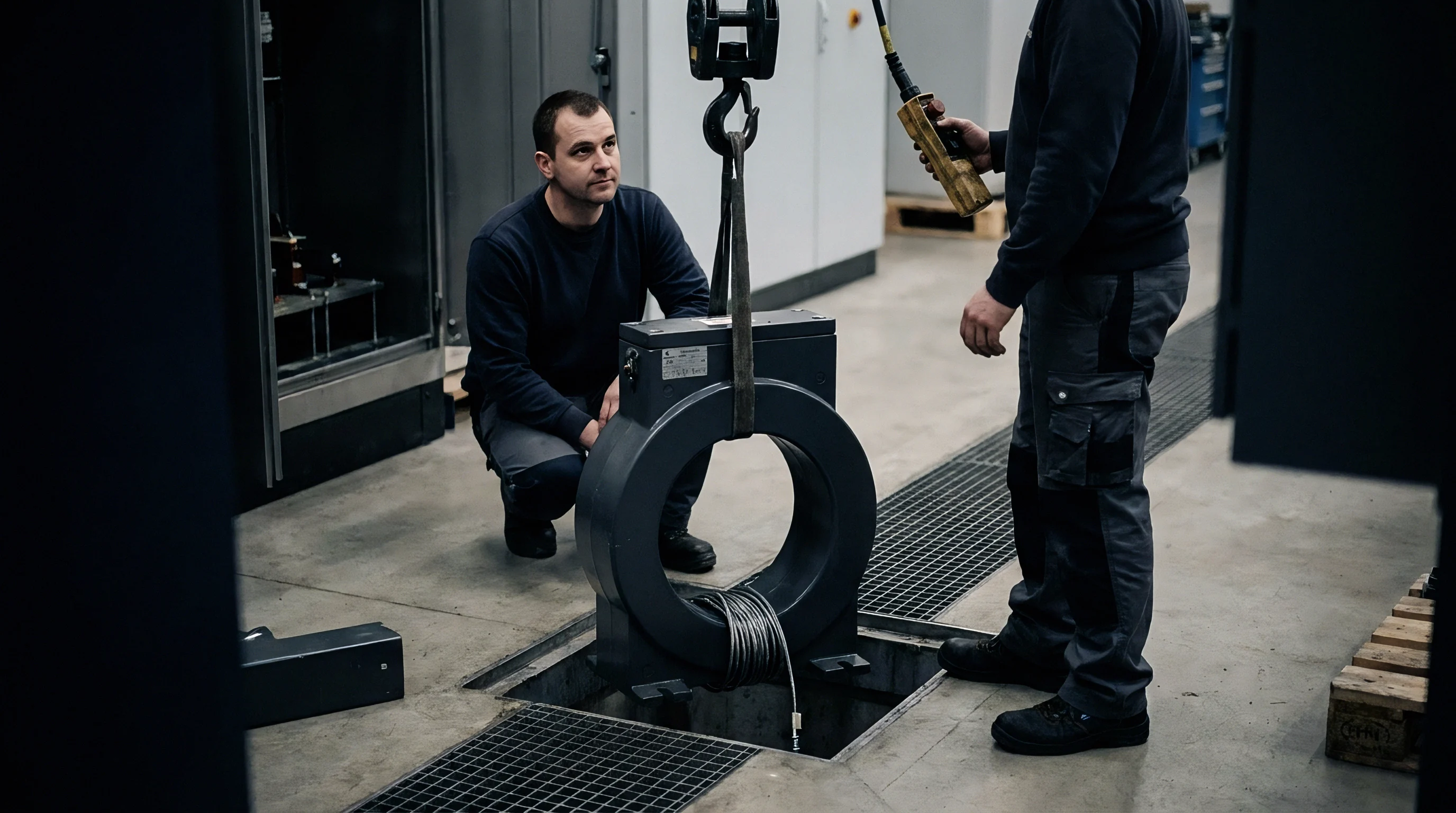
Consider a closed-loop fluxgate current transducer utilizing a Cobalt-based tape-wound toroid with a magnetic path length lm = 0.04 meters and a feedback winding N = 1000 turns. Thermal aging over 5000 operating hours at 105 degrees Celsius produces an asymmetric coercive force shift Δ Hc = 0.12 Amperes per meter between paired core elements. The offset error current Δ Ioffset induced in the feedback circuit is computed as follows:
Δ Ioffset = fracΔ Hc · lmN = frac0.12 A/m · 0.04 m1000 turns = 4.8 μA
In a 100-Milliampere full-scale measurement system, this 4.8-Microampere offset error consumes nearly 50 ppm of the total sensor error budget. Initial factory calibration cannot remove this drift because structural relaxation accumulates throughout the operating life of the transducer.
Excitation Current Rises and Harmonic Distortion
Lower initial permeability elevates the reactive magnetizing current required to saturate the magnetic element. Excitation drivers built for un-aged tape cores experience higher peak current demands as initial permeability drops. Increased drive currents elevate I2 R copper losses inside sensor excitation windings, generating localized heat that accelerates structural aging in a positive feedback loop.
- Zero-Point Calibration Drift Asymmetric coercive force shifts create false differential magnetic signals inside zero-flux transducer detection circuits.
- Excitation Power Overload Reduced saturation permeability increases magnetizing drive current requirements, elevating driver operational temperatures.
- Harmonic Distortion Elevation Skewed hysteresis loops generate odd-harmonic distortion in precision signal transformer outputs.
- Magnetic Noise Density Rise Atomic domain rearrangement increases low-frequency magnetic noise floors inside fluxgate sensing elements.
| Transduction Principle | Primary Magnetic Parameter | Direct Signal-Chain Impact | Measured Performance Error |
|---|---|---|---|
| Closed-Loop Fluxgate Current Sensor | Coercive Force Symmetry | Zero-point offset baseline shift | +45 to +120 ppm full-scale drift |
| Differential Residual Current Monitor | Initial Permeability (μi) | Trip threshold calibration drift | -8.5% trip current sensitivity drop |
| Precision Instrument Transformer | Phase Angle / Core Loss | Secondary phase lag angle drift | +12 arcminutes phase error shift |
| Magnetic Amplifier (Magamp) Control Element | Squareness Ratio (Br/Bs) | Reset flux control characteristic change | +3.2% output voltage regulation offset |
Inductance drops shift transducer calibration.
Failing to compensate for structural relaxation shifts forces unexpected field recalibration cycles that erode operational profit margins.

Annealing
Magnetic Field Heat Treatments for Structural Stabilization
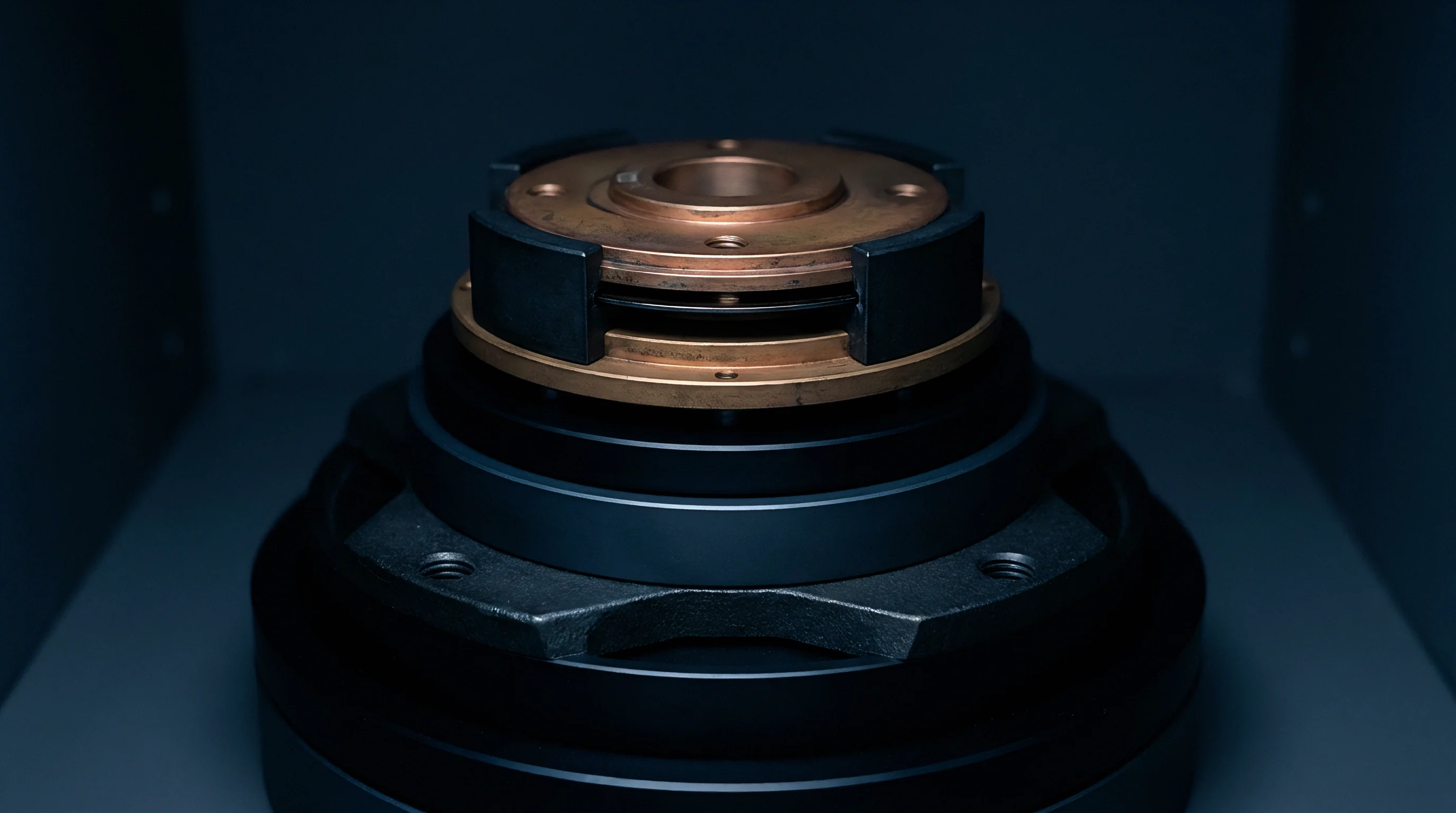
Thermal processing above the Curie temperature followed by controlled cooling under a magnetic field establishes a stable domain structure. Applying a transverse magnetic field perpendicular to the ribbon length creates an easy magnetic axis across the ribbon width. Transverse field annealing suppresses magnetic remanence (Br / Bs 0.95) with minimal coercive force.
Pre-aging resets internal relaxation states.
Thermal stabilization treatments perform artificial pre-aging on wound magnetic elements before final assembly. Exposing wound tape toroids to temperatures 30 to 50 degrees Celsius above their maximum rated operational limit for 24 to 48 hours accelerates low-activation-energy structural relaxation paths. This pre-aging treatment exhausts atomic pair ordering mechanisms that would otherwise occur over years of ambient service, stabilizing permeability and coercive force against subsequent temperature fluctuations.

Thermal Acceleration Protocols and Standardized Verification
Environmental verification protocols evaluate thermal stability by subjecting tape cores to accelerated aging cycles inside dry nitrogen chambers.
- Unencapsulated tape samples undergo baseline magnetic characterization at 23 degrees Celsius using an automated hysteresisgraph per IEC 60404-6.
- Samples enter a zero-field environmental chamber purged with dry nitrogen gas and heat to 130 degrees Celsius.
- Hysteresis loops and complex permeability spectra are recorded at logarithmic time intervals of 24, 96, 240, 500, and 1000 hours.
- Arrhenius kinetic models calculate activation energy spectra to project permeability decay over a twenty-year operating lifespan at 60 degrees Celsius.
Contractual compliance with IEC 60404-6 limits maximum allowable permeability drift to five percent following 1000 hours of thermal stress testing at 125 degrees Celsius.
Mandating compliance with AEC-Q200 passive component qualification stress standards forces vendors to supply pre-aged magnetic elements guaranteed against thermal relaxation drift.

Supply

Alloy Selection and Mechanical Impregnation Trade-Offs
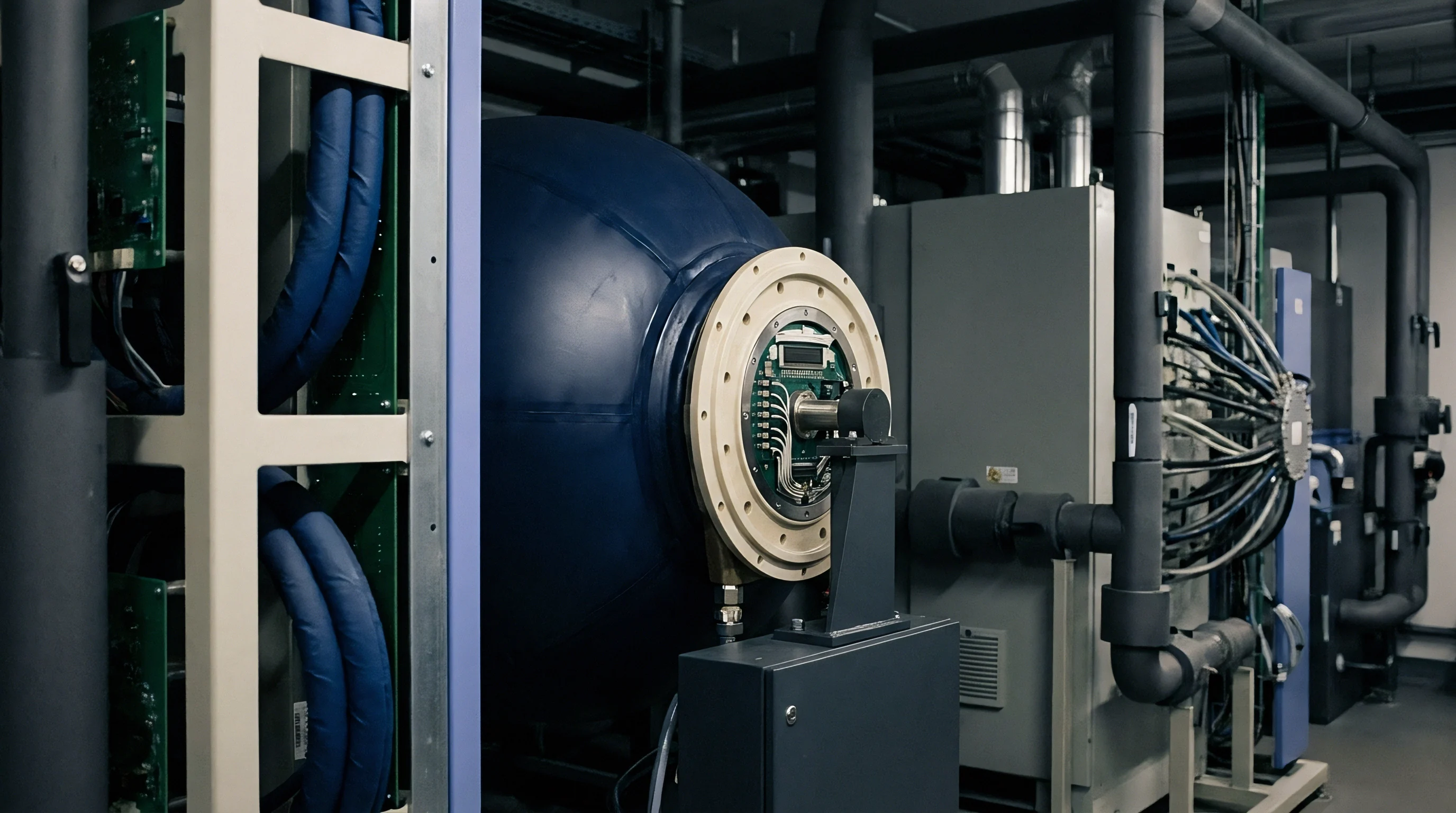
Cobalt-based amorphous ribbons provide near-zero saturation magnetostriction, minimizing sensitivity to mechanical potting stresses. Iron-based alloys offer high saturation flux density near 1.56 Tesla at lower raw material cost, but carry saturation magnetostriction constants (λs) between 20 and 30 ppm. When iron-based amorphous tape cores are potted in rigid epoxy resins, thermal expansion mismatches between the resin and metallic ribbon induce severe mechanical compressive stress, activating magnetoelastic coupling that severely degrades initial permeability.
Epoxy encapsulation induces severe mechanical strain.
Cobalt alloys exhibit minimal magnetostriction.
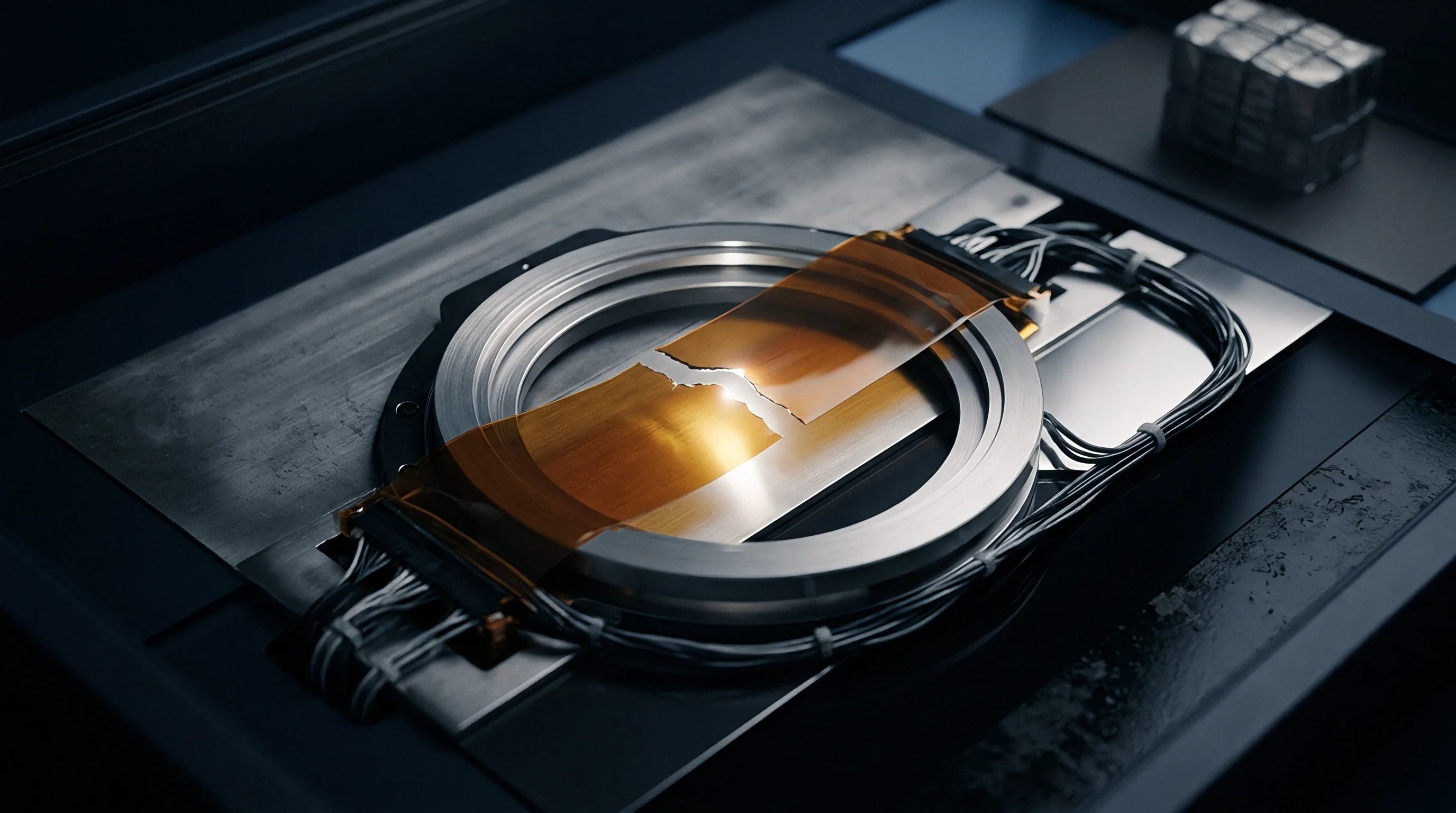
Preventing stress-induced aging requires flexible encapsulation systems. Wrapping wound magnetic cores in protective glass-filled nylon boxes filled with micro-fine silicone fluid isolates the amorphous ribbon from potting resin shrinkage during thermal cycling. This compliant mounting structure allows the metallic ribbon to undergo localized thermal expansion without accumulating compressive magnetoelastic anisotropy.
Commercial Qualification and Specification Metrics
Procurement documents establish explicit boundaries for allowable magnetic degradation across component lifespans.
- Magnetostriction Constant Limits Cobalt alloy lots must demonstrate saturation magnetostriction absolute values below 0.5 ppm to prevent encapsulation strain shifts.
- Pre-Aging Stabilization Proof Supplier certificates of compliance confirm tape elements underwent pre-aging thermal stabilization heat treatments before final packaging.
- Compliant Encapsulation Integrity Visual and dimensional inspections confirm silicone-filled protective boxes prevent resin intrusion into the ribbon matrix.
- Dual-Source Thermal Qualification Secondary ribbon suppliers pass equivalent 1000-hour thermal degradation audits before production release approval.
| Material Family | Saturation Flux Density | Raw Material Relative Cost Index | Magnetostriction Sensitivity | Thermal Relaxation Drift Risk |
|---|---|---|---|---|
| Fe-Si-B (Standard Melt-Spun) | 1.56 T | 1.0 | High (27 ppm) | High under stress |
| Fe-Ni-Mo-B (High Permeability) | 0.88 T | 2.4 | Moderate (12 ppm) | Severe permeability drop |
| Co-Fe-Ni-Si-B (Zero Magnetostriction) | 0.58 T | 4.2 | Negligible (<0.2 ppm) | Low when pre-aged |
| Co-Fe-Cr-Si-B (Linear Field Loop) | 0.65 T | 4.8 | Negligible (<0.4 ppm) | Minimal anisotropy drift |
Thermal stabilization prevents field failures.
Initial permeability loss limits sensor accuracy.
Selecting low-magnetostriction cobalt alloys reduces encapsulation strain but increases raw material cost by a factor of four.
Cross-qualifying alternate ribbon foundries requires full 1000-hour thermal degradation testing across both unencapsulated and potted core configurations. Variations in melt-spinning quench rates between manufacturers alter initial free volume ratios, shifting the onset temperature of structural relaxation by up to fifteen degrees Celsius.