Viscoelastic Deformation
Time dependent strain occurs when a constant force acts upon a metallic interconnect at temperatures above half of the melting point on the absolute scale. Solder joint creep mechanical stress identifies this gradual yielding of the alloy structure under sustained thermal or physical loads. Designers calculate these values using the Norton Bailey power law to estimate the rate of material flow.
This metric determines the operational longevity of surface mount devices by predicting when plastic flow leads to electrical discontinuity.
Thermal Load
Temperatures cycling within a printed circuit board cause periodic expansion and contraction of differing substrate materials. These cycles introduce solder joint creep mechanical stress as the coefficient of thermal expansion mismatch forces the interconnect to accommodate shear displacement. A steady increase in ambient heat lowers the yield strength of the alloy and accelerates the migration of grains within the metal lattice.
Accelerated life testing regimes employ high temperature dwell times to replicate decades of field exposure in a few weeks.
Structural Integrity
Rigid connections suffer from the accumulation of microcracks once the displacement exceeds the elastic limit of the lead free or tin lead composition. Solder joint creep mechanical stress drives the propagation of these voids along the grain boundaries until the joint fracture becomes complete. Microscopic analysis confirms that grain boundary sliding prevents the relief of internal tension and concentrates energy at the interface between the pad and the solder mass.
Failure happens abruptly once the internal voids link into a single macro crack.
Calibration Metric
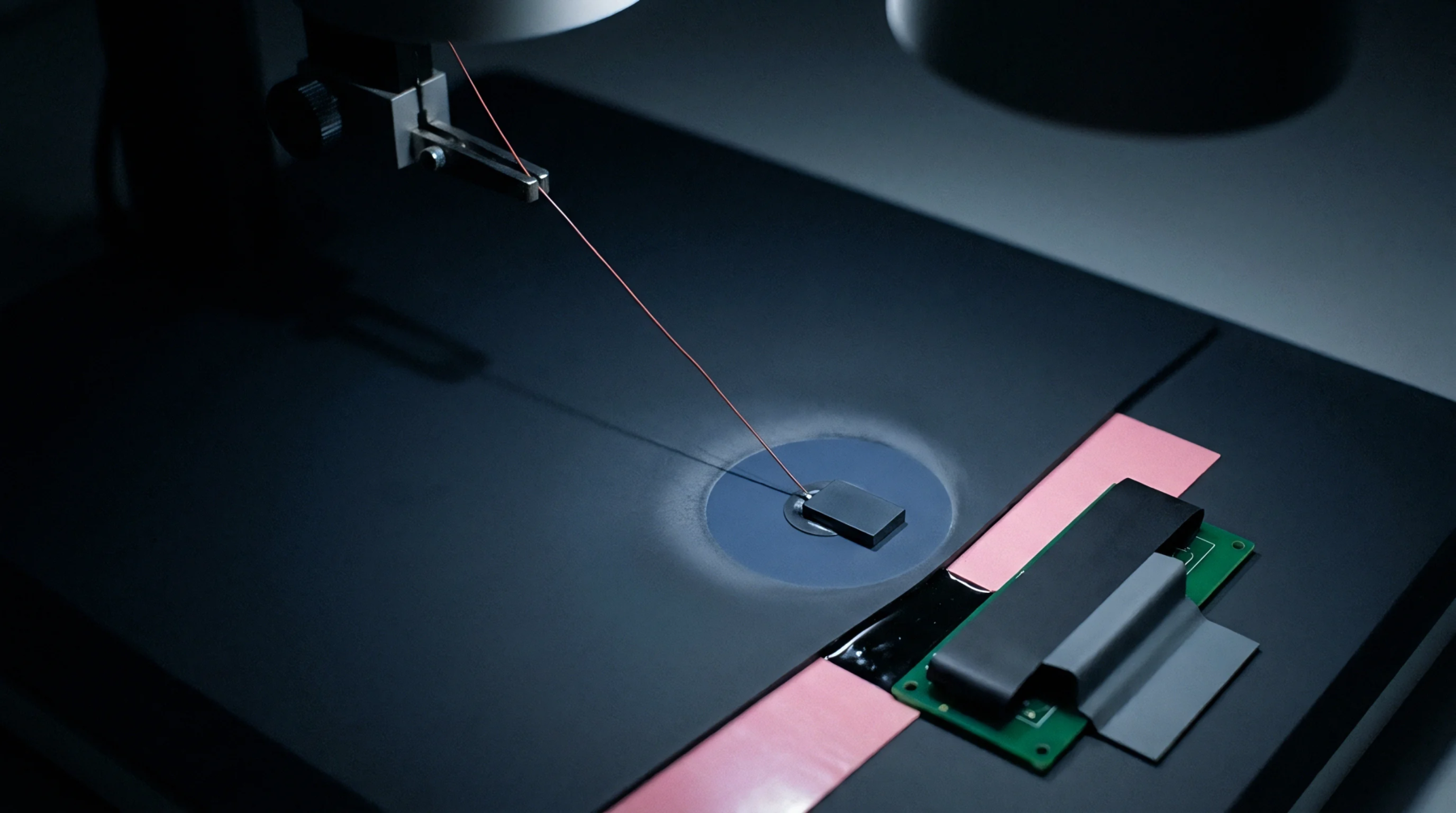
Laboratories perform shear strength verification to establish the baseline response of a sample against controlled displacement velocities. Metrologists monitor solder joint creep mechanical stress to distinguish between ductile behavior and brittle fracture modes in high reliability electronics. Adjustments to the alloy chemistry often aim to suppress the diffusion rates that govern this degradation.
Precision instrumentation provides the data required for modeling the performance of microelectronic packaging under harsh environmental conditions.