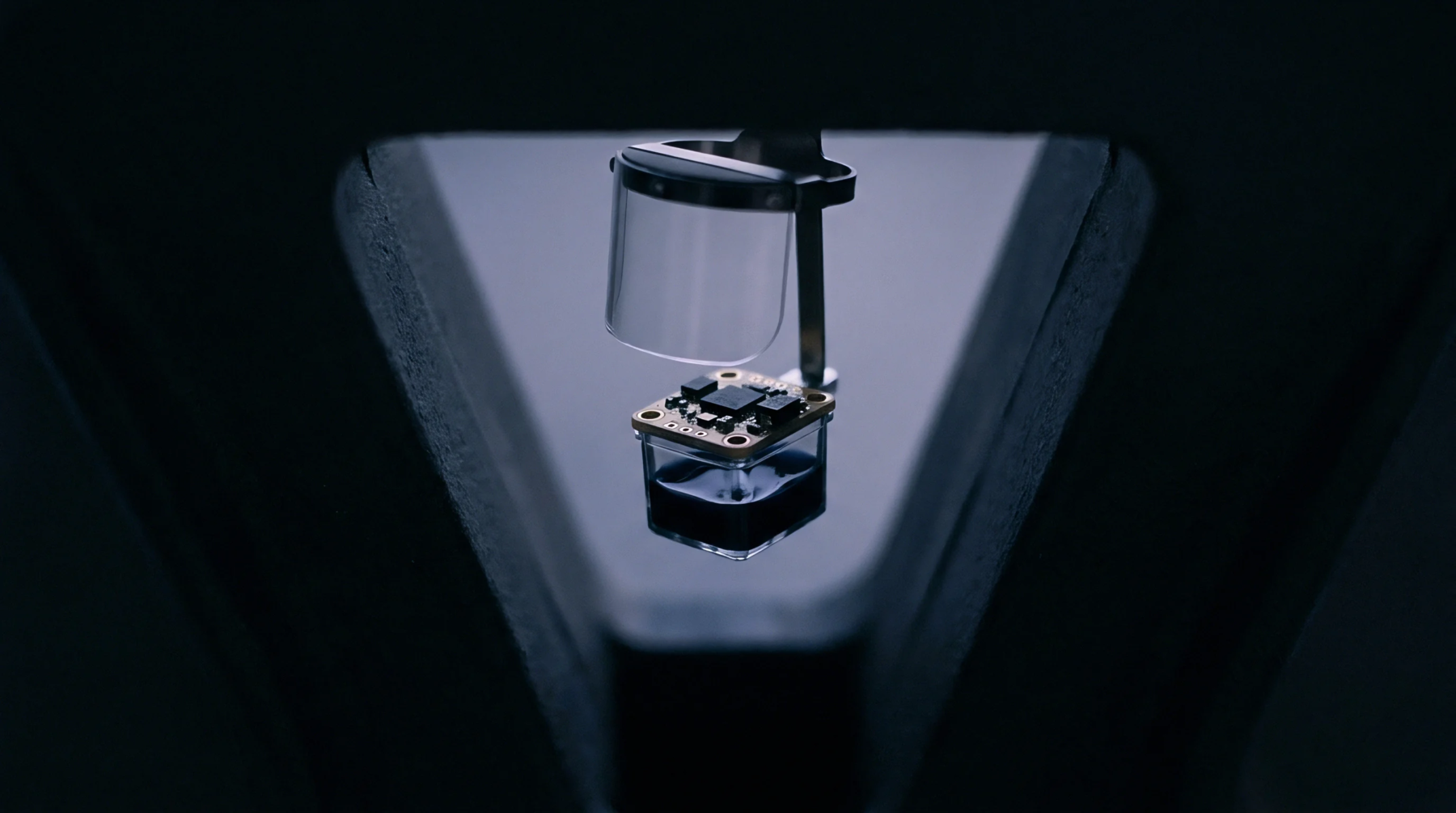
Volumetric Dilatation
Thermal expansion dynamics describe the physical displacement of compliant polymeric potting compounds utilized to protect electronic sensor dies from liquid moisture and atmospheric contaminants. In absolute pressure sensors, silicone gel expansion quantifies the volumetric growth of the soft, uncrosslinked or lightly crosslinked siloxane network across operational thermal ranges. The material response remains functional only while the gel remains inside its designated housing cavity, ending where over-expansion breaches containment seals or overfills external port recesses.
This volumetric expansion behaves nearly isotropically, generating hydrostatic pressure within constrained physical packages.
Hydrostatic Transmission
Incompressible behavior under uniform constraint causes confined gels to transmit thermal expansion forces directly onto micro-machined silicon structures. When temperatures rise, silicone gel expansion elevates internal hydraulic pressure against the sensor diaphragm, introducing a false pneumatic reading that shifts baseline calibration. If the gel reservoir contains trapped air bubbles, thermal expansion forces compress the gas inclusions non-linearly, distorting temperature compensation curves programmed into the sensor signal conditioning electronics.
Soft gels with low Shore OO hardness ratings minimize sheer stress transfer, yet their bulk volumetric expansion remains governed by invariant thermodynamic properties.
Package Constraint
Enclosure geometry and fill-volume precision dictate whether thermal swelling generates destructive internal package stress. During packaging assembly, silicone gel expansion requires designed expansion voids or flexible sealing membranes to accommodate volumetric changes without generating internal pressure heads. Overfilled cavities push gel into protective port caps, clogging capillary openings or creating external contamination that attracts airborne dust.
Thermal cycling over wide operating spans accelerates gel hardening and siloxane oil bleed-out, permanently shifting the baseline volume and degrading environmental protection over service lifetimes.
Thermal Verification
Environmental qualification profiles monitor sensor zero-point drift inside sealed climatic test chambers across full operating spans from minus forty to one hundred and twenty-five degrees Celsius. Verification engineers isolate silicone gel expansion effects by comparing raw output signals against identical dry unpotted control units under identical temperature ramps. Multi-point thermal stabilization measurements establish that internal compensation engines nullify gel expansion pressures within allowable device accuracy bands.
Packaging configurations that exhibit non-repeatable thermal hysteresis during continuous thermal sweeps are rejected for automotive or industrial deployment.