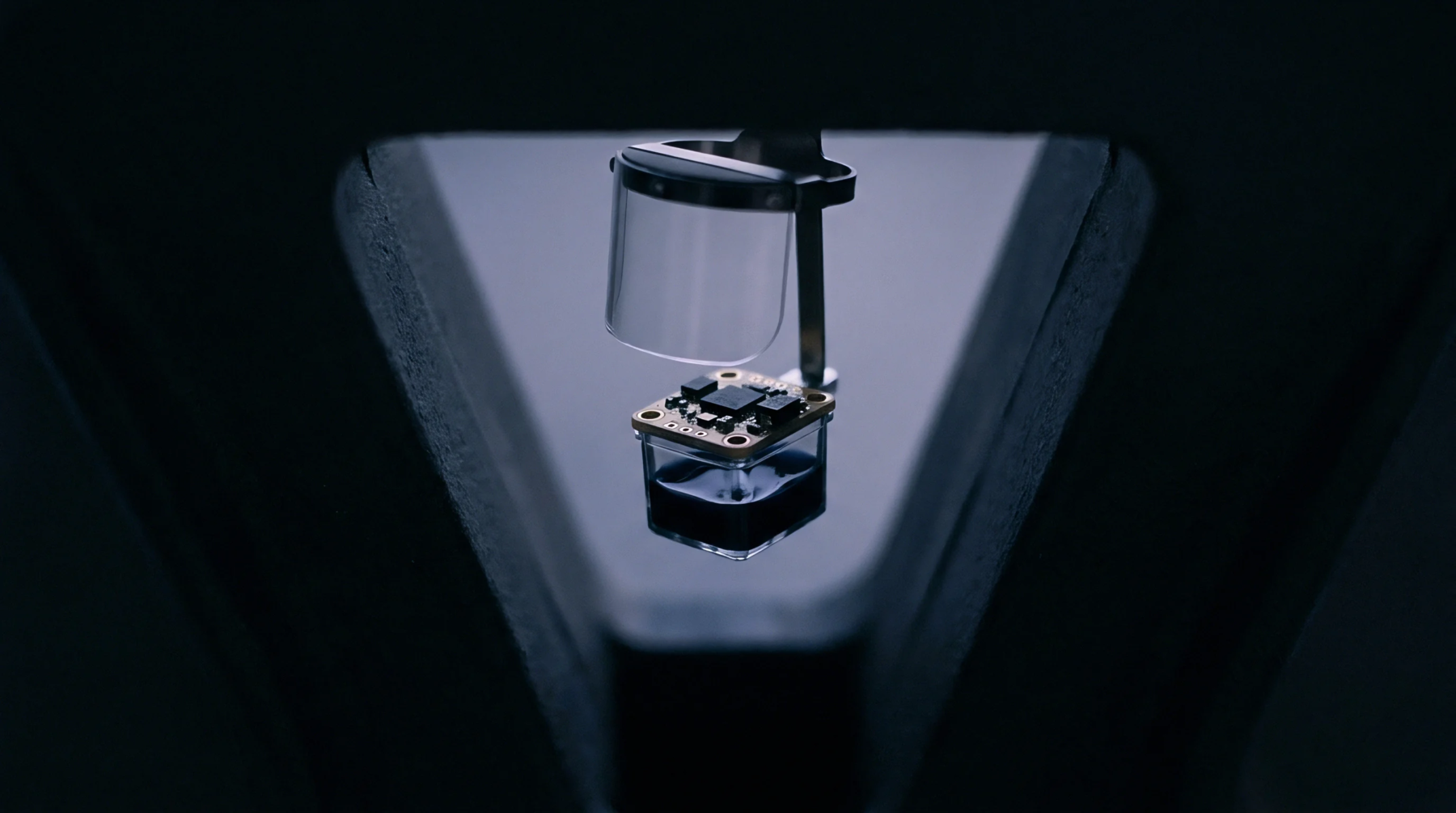
Piezoresistive Transducer
Precision absolute barometric transducers integrate suspended micro-electromechanical diaphragms with embedded resistors or capacitive pickoffs to calculate vertical displacement through atmospheric air column metrics. In modern aviation systems and portable consumer devices, the mems altimeter converts static air pressure into elevation estimates by calculating pneumatic gradients relative to a reference datum. Diaphragm movement remains bounded within sub-micrometre deflections to prevent mechanical non-linearity and physical rupture under sudden overpressure spikes.
The measurement domain terminates at the outer port screen, leaving velocity-induced dynamic pressure variations to pitot-static instrumentation.
Hypsometric Conversion
Vertical position derivation employs the standard international barometric formula, assuming a standardized tropospheric temperature lapse rate of 6.5 degrees Celsius per thousand metres. Because ambient temperature profiles deviate from ideal atmospheric models, the mems altimeter incorporates an internal temperature sensor to adjust raw silicon strain measurements and linearize altitude computations. Sudden weather front movements introduce apparent altitude errors by shifting local barometric pressure independently of physical elevation changes.
Barometric drift requires ground-based calibration or external reference cross-checks to maintain target navigation accuracy.
Packaging Stress
Surface-mount assembly introduces mechanical forces that travel through lead-free solder terminations into the sensor substrate, distorting the micro-machined diaphragm suspension. When an unshielded mems altimeter encounters variable light sources, incident photons generate electron-hole pairs within the exposed silicon, causing photoelectric offset shifts that masquerade as rapid altitude excursions. Manufacturers counter packaging strain by utilizing soft silicone gel encasings and mounting sensing dies on compliant pedestals within metal-lidded packages.
Gel voids or uneven fill volumes alter hydrostatic pressure distribution, inducing measurement errors under varying environmental humidity or elevated temperatures.
Verification Standard
Qualification routines calibrate sensor output within hermetically sealed environmental chambers against automated primary pressure balances traceable to national measurement institutions. Metrological certification records noise spectral density, confirming that root-mean-square altitude noise remains below ten centimetres in standard digital filtering modes. Secondary verification stages mandate long-term thermal dwell testing to confirm that solder-induced baseline shifts stabilize within specified production tolerances.
Instruments failing isothermal repeatability checks over ten successive pressure sweeps are rejected prior to system integration.