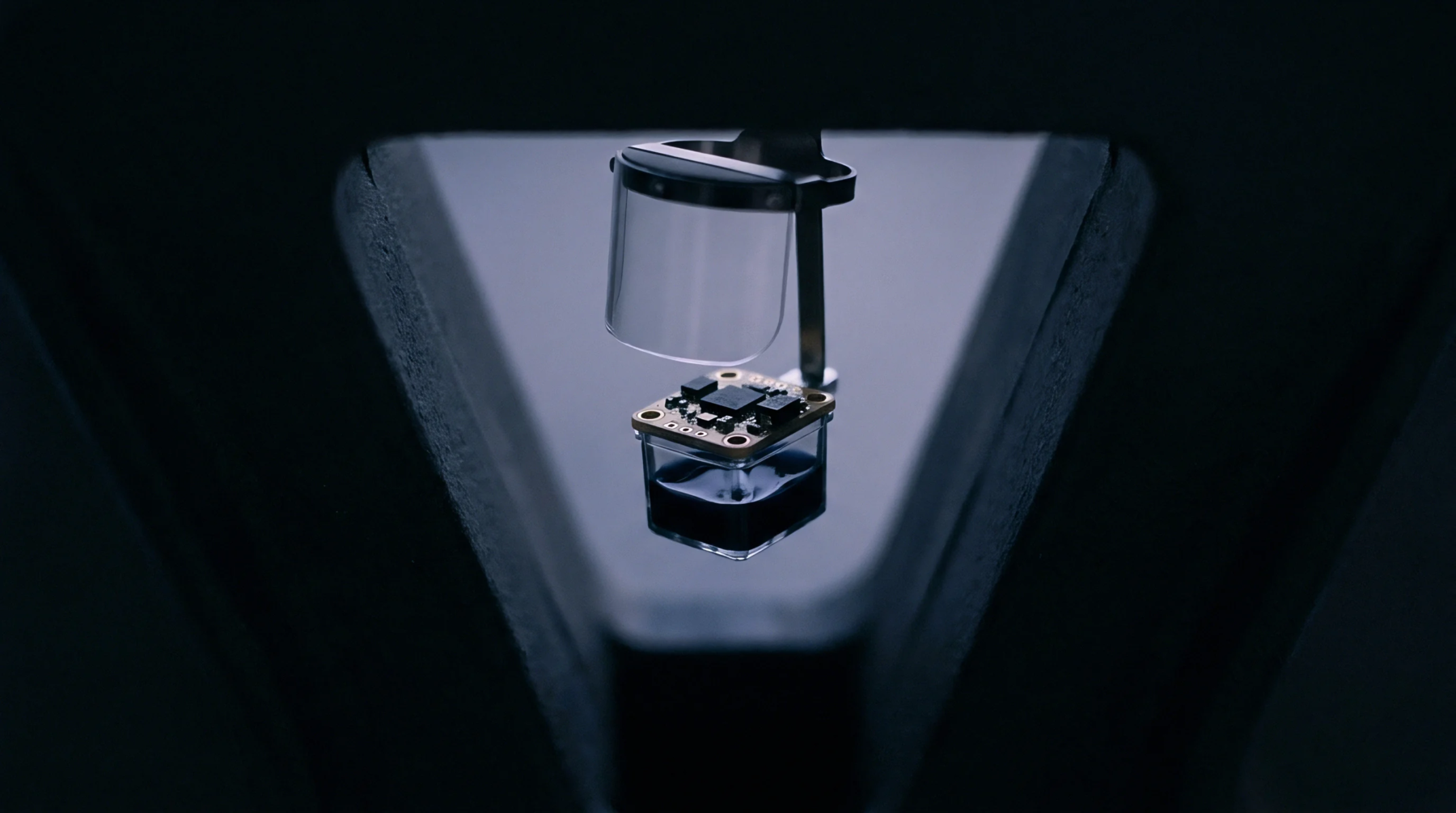
Volatile Release
Vacuum compatibility standards quantify the release of volatile organic chemical species from polymeric potting materials, adhesives, and coatings into surrounding low-pressure environments. The term resin outgassing designates the desorption of absorbed moisture, unreacted monomers, and volatile degradation products under vacuum exposure. Standard test method ASTM E595 evaluates total mass loss and collected volatile condensable material using high-vacuum thermal chambers held at one hundred twenty-five degrees Celsius for twenty-four hours.
Optical elements and sensitive electrical contacts suffer severe performance degradation when liberated volatile compounds condense onto cold active surfaces. Material selection for spaceborne and ultra-high vacuum sensor systems requires strict compliance with low volatile release thresholds.
Mass Loss
Analytical test chambers measure specimen mass before and after thermal exposure under high vacuum conditions. Precision analytical balances accurate to microgram levels determine total mass loss percentages against strict aerospace qualification limits.
Contamination Effect
Condensates formed on optical windows impair light transmission in spectroscopic sensors and target tracking detectors. Cold finger collectors held at twenty-five degrees Celsius condense high molecular weight species while lower boiling point compounds remain in gas phase. Spacecraft instruments require total mass loss below one percent and collected volatile condensable material below zero point one percent.
Thermal vacuum bakeout procedures accelerate volatile release prior to final instrument integration, reducing field contamination risks. Absorbed atmospheric moisture accounts for a large portion of initial mass loss, requiring pre-test conditioning at controlled humidity levels. Polyimide and space-grade silicone formulations exhibit lower volatile release rates than standard room-temperature vulcanizing sealants.
Vacuum Limit
Outgassing rates that exceed allowed volatile condensation levels permanently dim optical sensor throughput and cause high-voltage electrical arcing across printed circuit traces. Incomplete bakeout cycles lead to ongoing gas release that degrades vacuum chamber pressure in scientific analytical instruments.