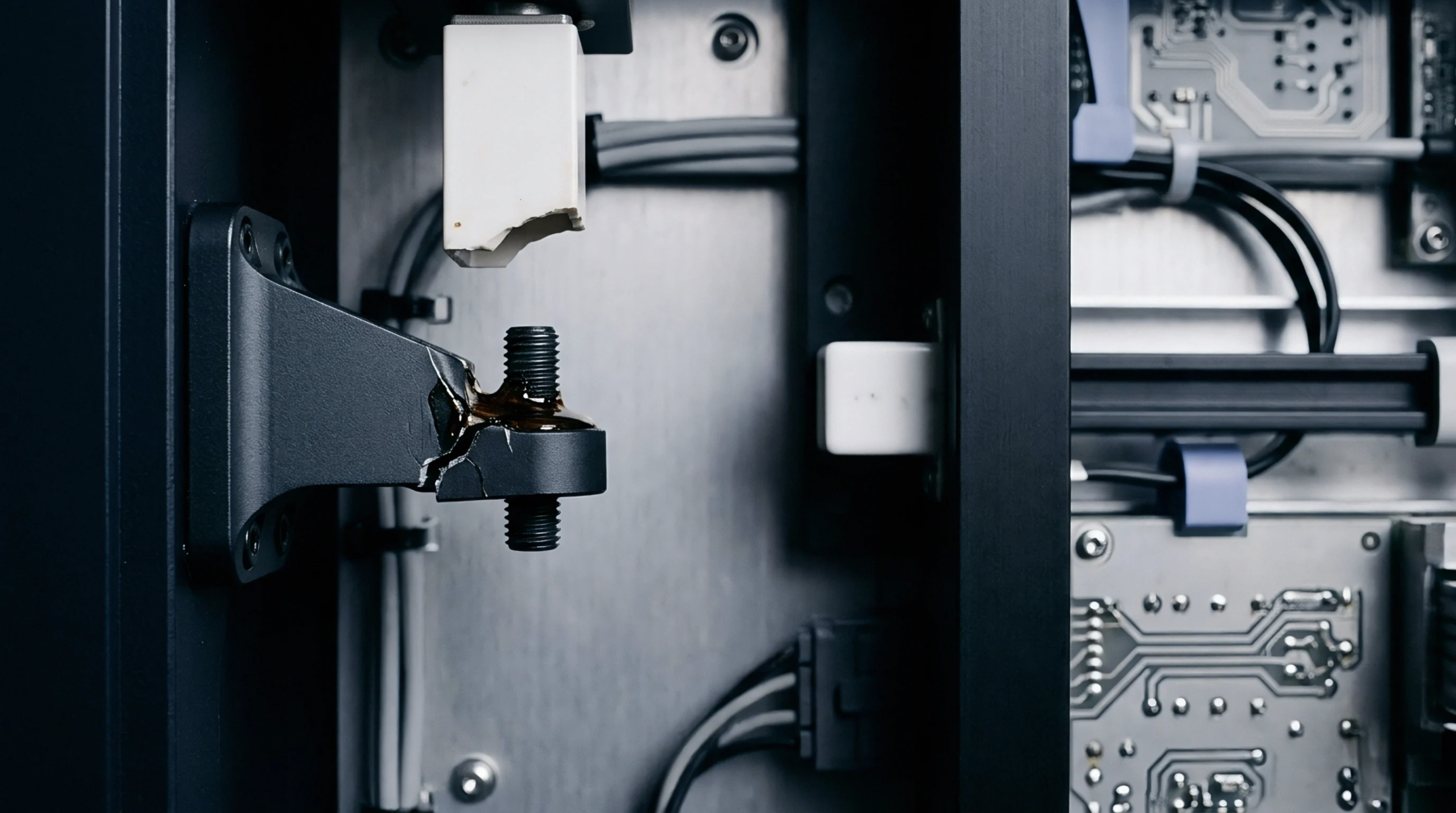
Failure Mechanism
Semiconductor power devices undergo mechanical fatigue when internal self-heating creates cyclic thermal expansion stresses across material interfaces. The phenomenon of power cycling degradation damages wire bonds and substrate die attaches through repeated operational heating and cooling. Localized thermal mismatches cause microcrack initiation and void growth in solder layers under die contacts.
Qualification limits define maximum allowable thermal resistance increases before a device is deemed failed. Accelerated testing speeds evaluation by applying high electrical current pulses at short repetition intervals.
Thermal Interconnect
Solder joint degradation increases junction-to-case thermal resistance, raising chip operating temperatures under constant electrical loads. Higher junction temperatures accelerate material fatigue rates, creating a destructive feedback loop in power modules. Bond wire heel cracking causes resistance increases that elevate localized heating at electrical connection points.
Die attach voiding reduces heat transfer areas, creating hot spots that accelerate structural breakdown.
Diagnostic Monitoring
On-chip thermal diodes measure transient junction temperature shifts during periodic test pulses throughout endurance testing. Forward voltage changes at low sensing currents provide precise junction temperature readings without modifying device power state. On-line monitoring detects early degradation before total electrical open-circuit failure occurs.
Acoustic microscopy inspections verify internal void formation and delamination at periodic cycling intervals.
Endurance Limit
Testing standards define cycling lifetimes based on junction temperature swing amplitude and mean operating temperature. High temperature swings drastically reduce cycle counts before thermal interface failure. Package design choices, such as silver sintering, improve cycling resistance compared to standard tin-based solders.
Test documentation certifies power cycling capability for automotive and industrial mission profiles.