
Mixed Mode Delamination Analysis in Molded Power IC Packages
Delamination in molded power IC packages stems from combined normal and shear interfacial stresses during reflow, mitigated by micro-etched leadframes and low-moisture resins.
Delamination in molded power IC packages stems from combined normal and shear interfacial stresses during reflow, mitigated by micro-etched leadframes and low-moisture resins.
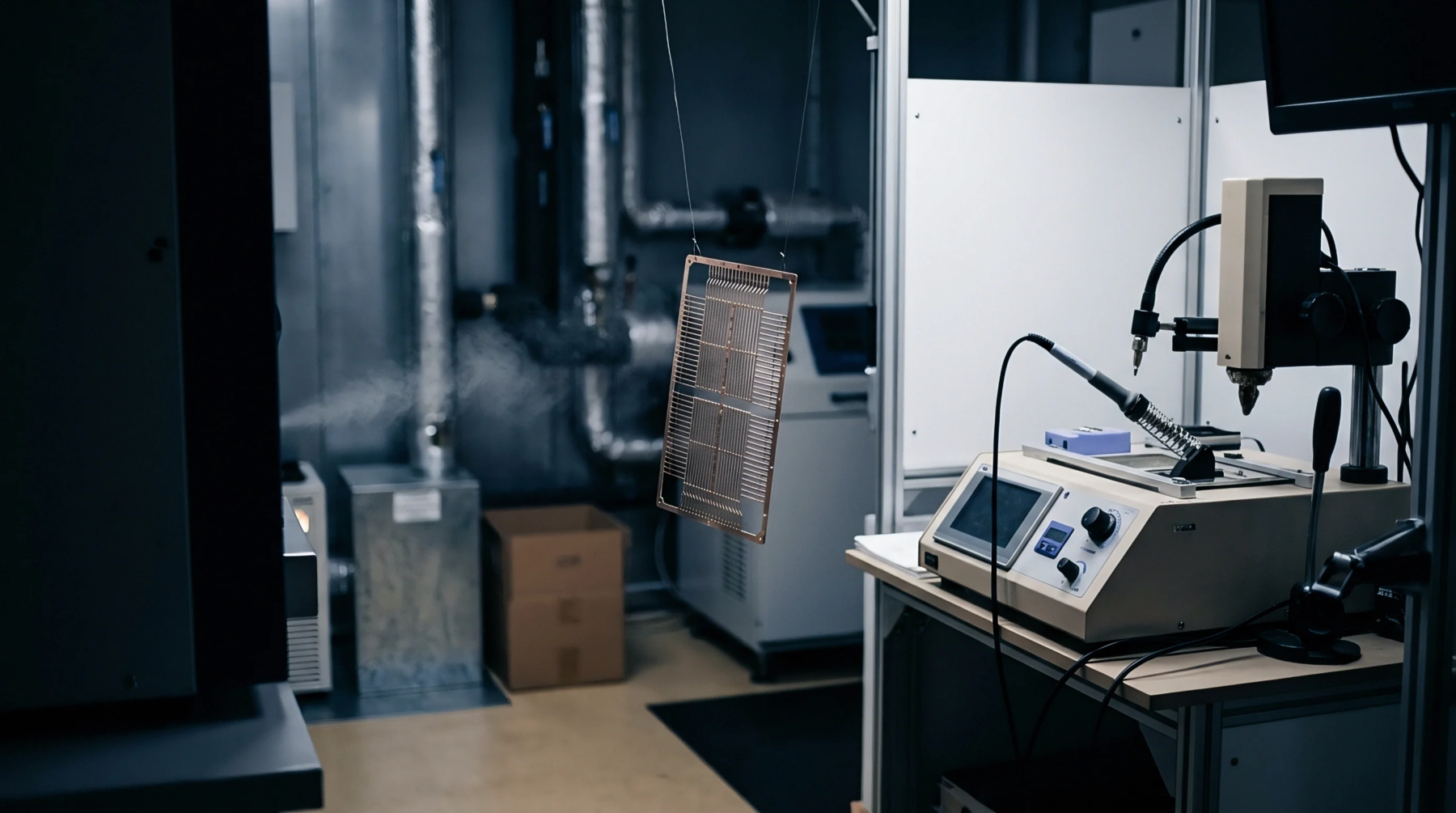
Triaxial confinement in thin die bondlines retards stress relaxation while moisture ingress depresses Tg, requiring post-cure thermal stabilization to control sensor drift.

Nonlinear hydrothermal coupling drives delamination through 4.7 MPa vapor pressure, depressed resin Tg, and CTE mismatch, causing permanent sensor offset drift.

Hygrothermal interfacial stress calculation requires superimposing thermal mismatch stresses, moisture expansion swelling forces, and internal vapor pressure.

Polymer interface degradation stems from moisture hydrolysis and thermomechanical stress, requiring targeted acoustic screening and activation energy mapping.

Dual stage Langmuir kinetics dictate that bound moisture desorbs into steam during reflow, driving delamination and sensor offset drift unless bake profiles clear bound water.
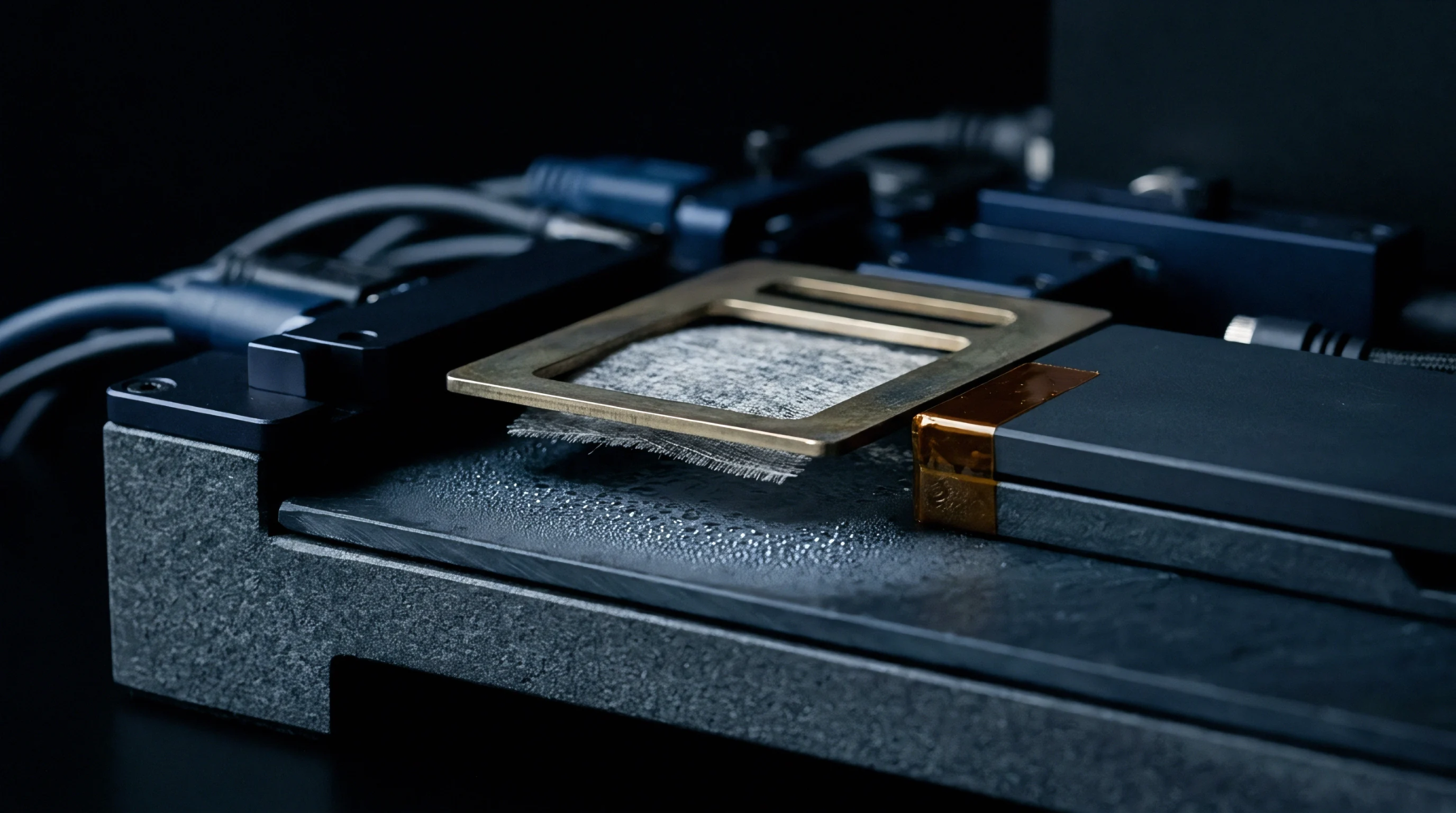
Epoxy molding compounds absorb moisture according to temperature-dependent diffusion rules, requiring strict MSL floor life management to avoid popcorning during reflow.
Expertise is a utility, not a secret. sentiention™ publishes its working knowledge as open reference: intelligence layer covering the materials it sources, the markets it enters, and the reference that serves both.