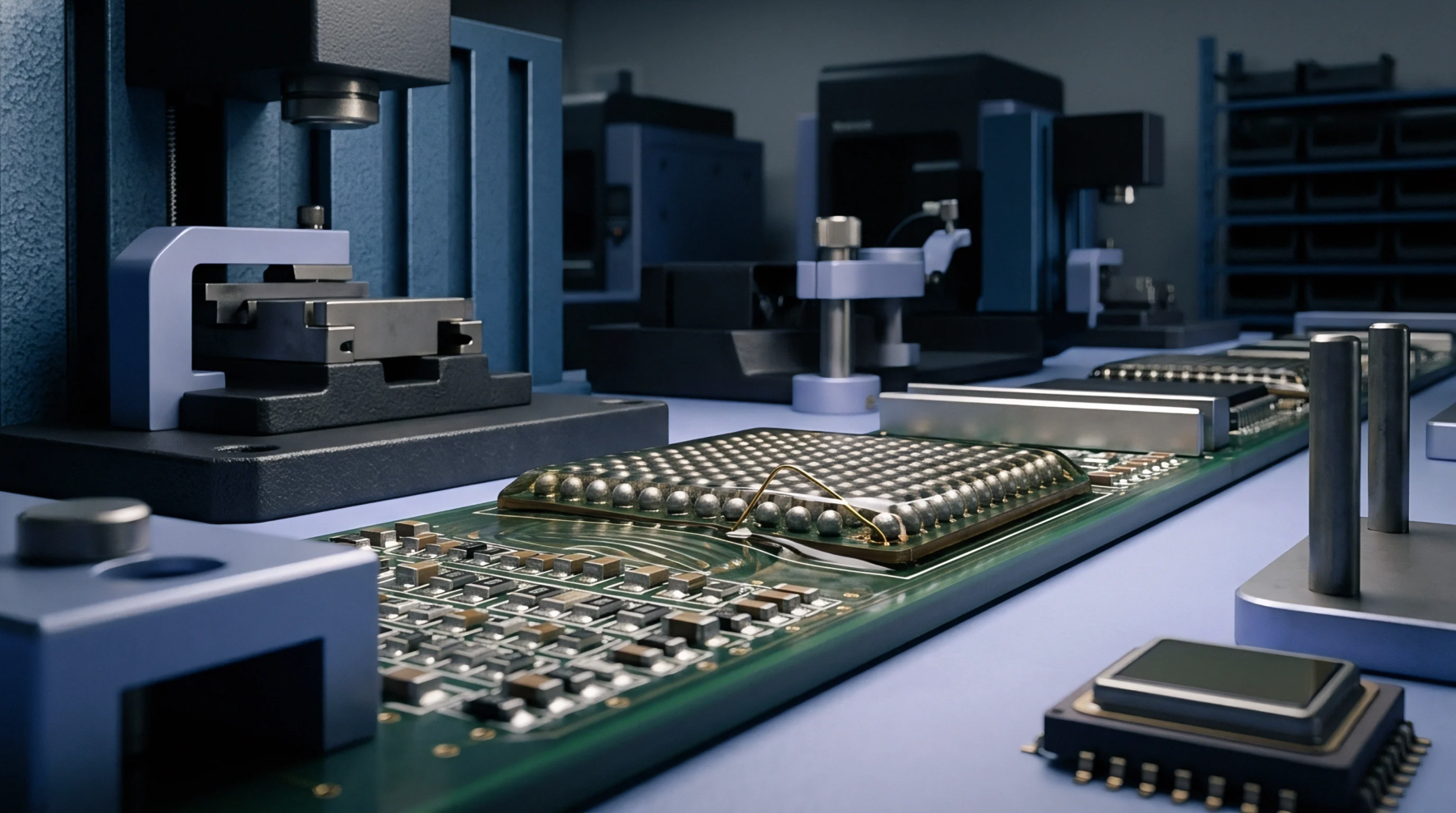
Positional Deviation
Surface mount assembly machinery exhibits gradual kinematic offsets over continuous automated component placement operations. Uncorrected pick and place drift shifts component leads away from target solder paste pads on circuit boards. Calibration protocols reset robotic axis home positions periodically.
Alignment Loss
Thermal expansion of feeder banks and mechanical wear on placement head spindles cause systematic placement errors over operating shifts. Accumulated pick and place drift results in tombstoning or solder bridging during surface mount reflow. Optical vision systems recalculate component centerlines before vacuum nozzles release parts onto board pads.
Nozzle Motion
Laser placement sensors measure nozzle position errors relative to board fiducial markers prior to component mounting. Progressive pick and place drift forces optical inspection systems to trigger machine recalibration routines when component offset vectors exceed control thresholds. Spatial calibration glass plates establish absolute coordinate accuracy for high-speed placement heads.
Mechanical backlash in drive belts creates positional hysteresis during rapid directional changes. Vision algorithms detect component lead skew relative to camera centerlines. Regular nozzle maintenance eliminates mechanical play within Z-axis rotation shafts.
Machine vision calibration routines correct thermal expansion drift across extended production runs.
Placement Error
Component placement accuracy directly dictates achievable assembly density and joint reliability on modern circuit boards. Unchecked pick and place drift increases manufacturing yield loss across high-density packaging lines. Calibration logs record positional deviation trends across production shifts.