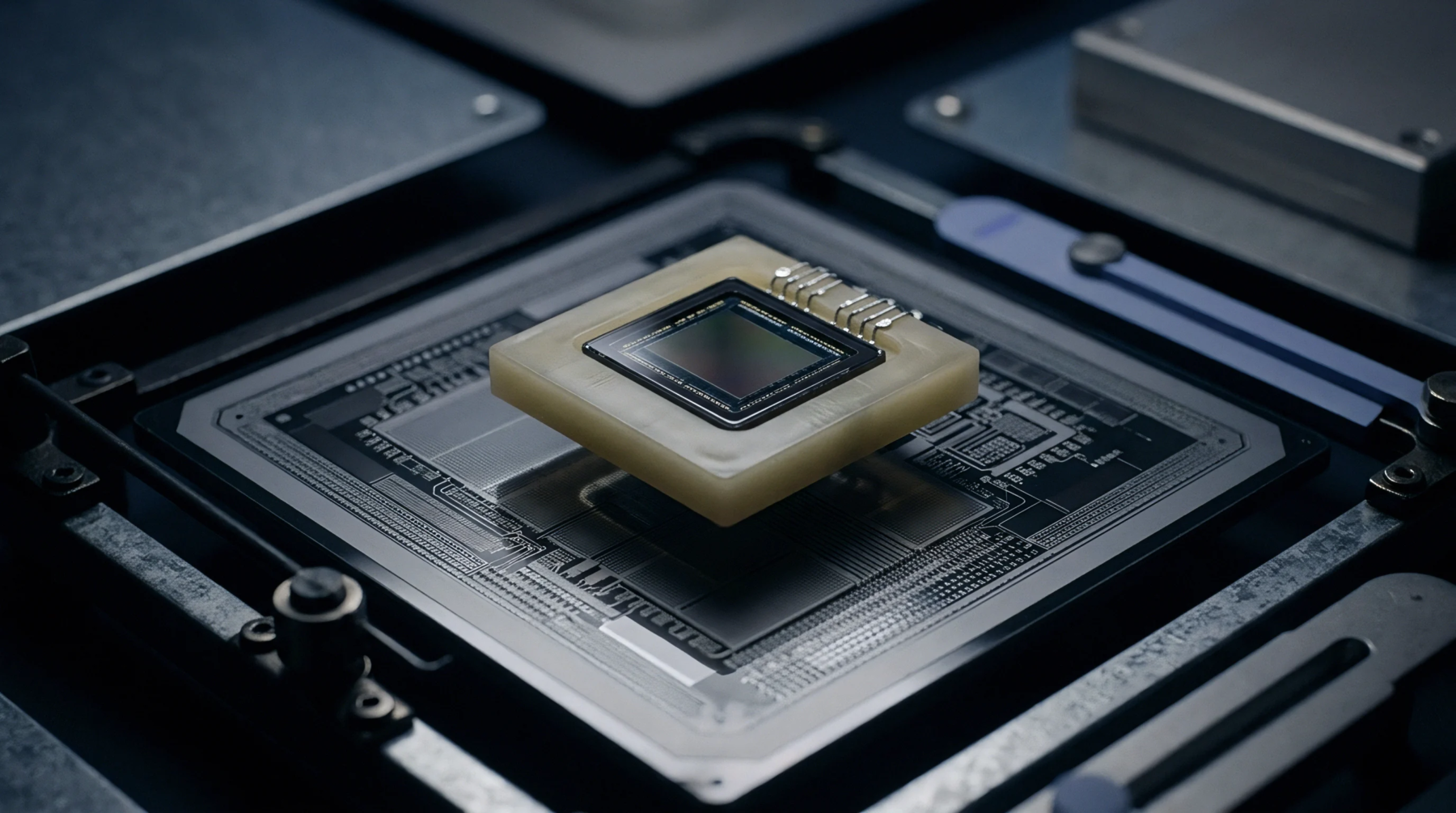
Thermal Test
A military standard test method establishing formal procedures for determining the thermal resistance and junction temperatures of microelectronic devices under powered operational conditions governs package qualification. Compliance with MIL-STD-883 Method 1012 ensures consistent extraction of internal thermal metrics across packaged integrated circuits, hybrid modules and electronic sensor assemblies. The test protocol defines standardized approaches for measuring junction-to-case and junction-to-mount thermal resistances under controlled baseplate conditions.
It ensures manufactured semiconductor packages dissipate operational heat loads without exceeding internal junction limits. The standard scope stops at packaged microelectronic devices, excluding free-convective bare circuit boards and loose thermal interface materials.
Measuring Procedure
Device thermal evaluation uses temperature-sensitive electrical parameters such as forward-biased diode voltages or bipolar transistor base-emitter drops to detect junction temperatures indirectly. The operational sequence applies a calibrating sense current through the device under variable external thermal bath temperatures to establish a precise temperature calibration slope. Once calibrated, a continuous power pulse heats the component until thermal equilibrium settles across internal package interfaces.
Technicians interrupt heating current briefly with high-speed switching circuitry to measure the temperature-sensitive voltage drop under calibration current, deriving junction thermal rise without physical probe contact.
Error Factors
Thermocouple placement errors, insufficient clamping forces and uncontrolled contact thermal resistance between device cases and heat sinks introduce testing variability. Inadequate thermal grease application leaves insulating air gaps that artificially elevate measured case temperatures and skew calculated junction values. Electrical switching transients mask initial diode cooling curves if amplifier response times lack sufficient operational bandwidth.
Non-uniform power dissipation across multi-die arrays creates localized hot spots that single diode measurement techniques fail to represent accurately.
Standard Compliance
Qualification reporting requires documented baseline sensor calibration slopes, steady-state junction temperatures, applied heating power levels and total thermal resistance calculations. Testing personnel position primary reference thermocouples directly below the internal heat source at the warmest external case surface point. Baseplate temperature stabilization criteria require drift rates to fall within rigid fractions of a degree Celsius before recording data.
Final thermal values state explicitly whether measurements reflect junction-to-case or junction-to-ambient test configurations alongside total measurement uncertainty bounds.