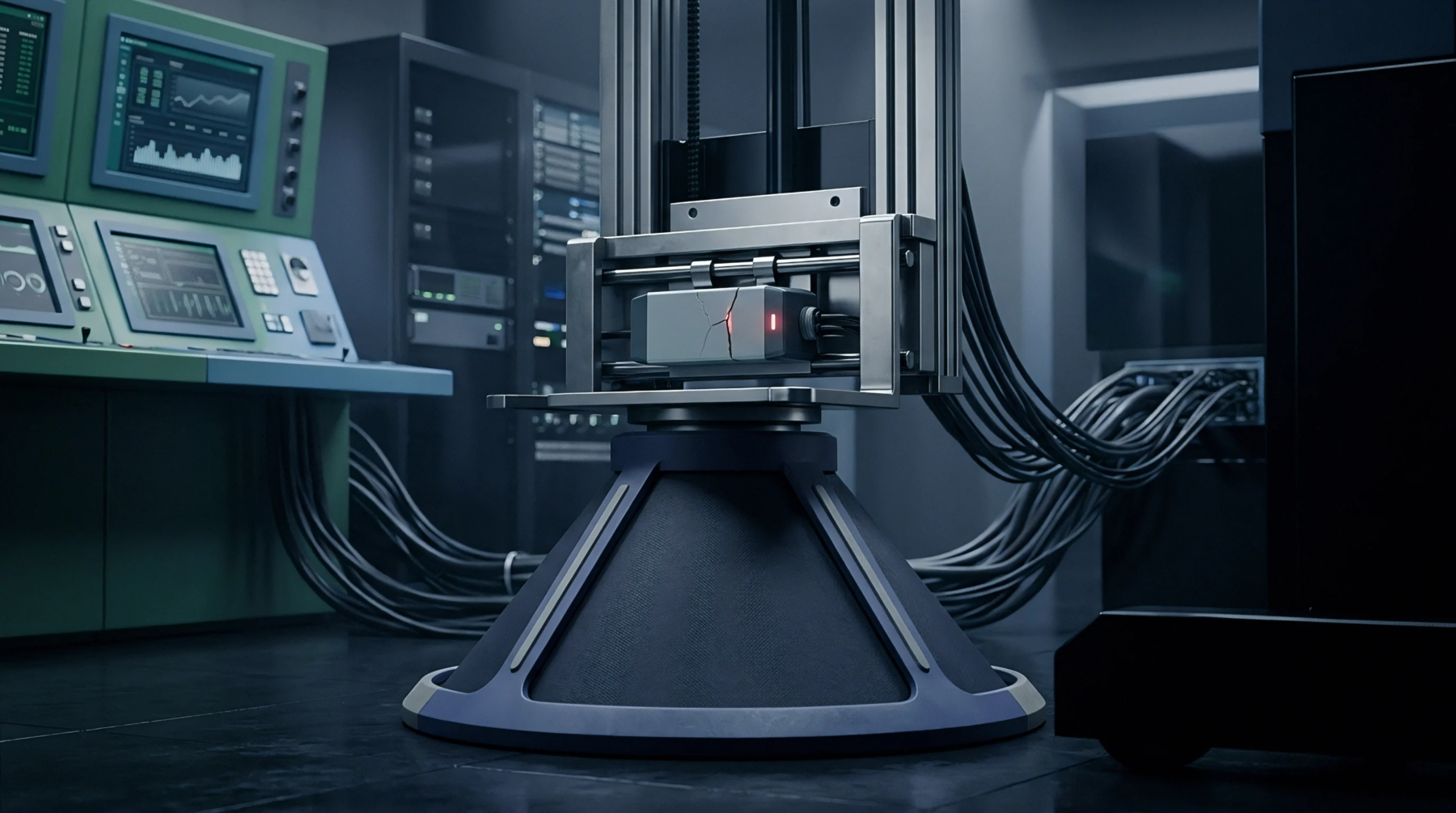
Mechanical decoupling
Rigid interface components protect sensitive signal processing electronics from structural shock and vibration transmitted through the primary chassis. A mechanical isolation daughtercard serves this defensive purpose by physically buffering the high precision circuit board from the main assembly. It attenuates acceleration forces that would otherwise distort the output of delicate oscillators or capacitive sensors.
Attachment dynamics
Mounting brackets attach this circuit carrier to the host board using elastomeric standoffs or spring loaded fasteners. These fixings provide the necessary dampening while maintaining electrical continuity through flexible grounding straps or high compliance interconnects. Sudden shifts in the ambient environment trigger kinetic energy dissipation within these soft mounts rather than through the rigid silicon pathways.
Metrological implications
Stability under load defines the performance boundary for these secondary boards during high frequency measurement cycles. Bias shift often occurs when transient stress alters the relative alignment of reference components located on the daughtercard. Calibration procedures distinguish this displacement drift from thermal noise by applying a controlled force profile and monitoring the deviation in the return signal.
Verification criteria
Manufacturers define the maximum permissible displacement of the card before the signal path exceeds the specified jitter tolerance. Qualification testing subjects the assembly to random vibration profiles that simulate harsh industrial deployment conditions. A successful result confirms that the mechanical impedance of the mounting hardware keeps the component resonance frequencies well outside the target acquisition band.