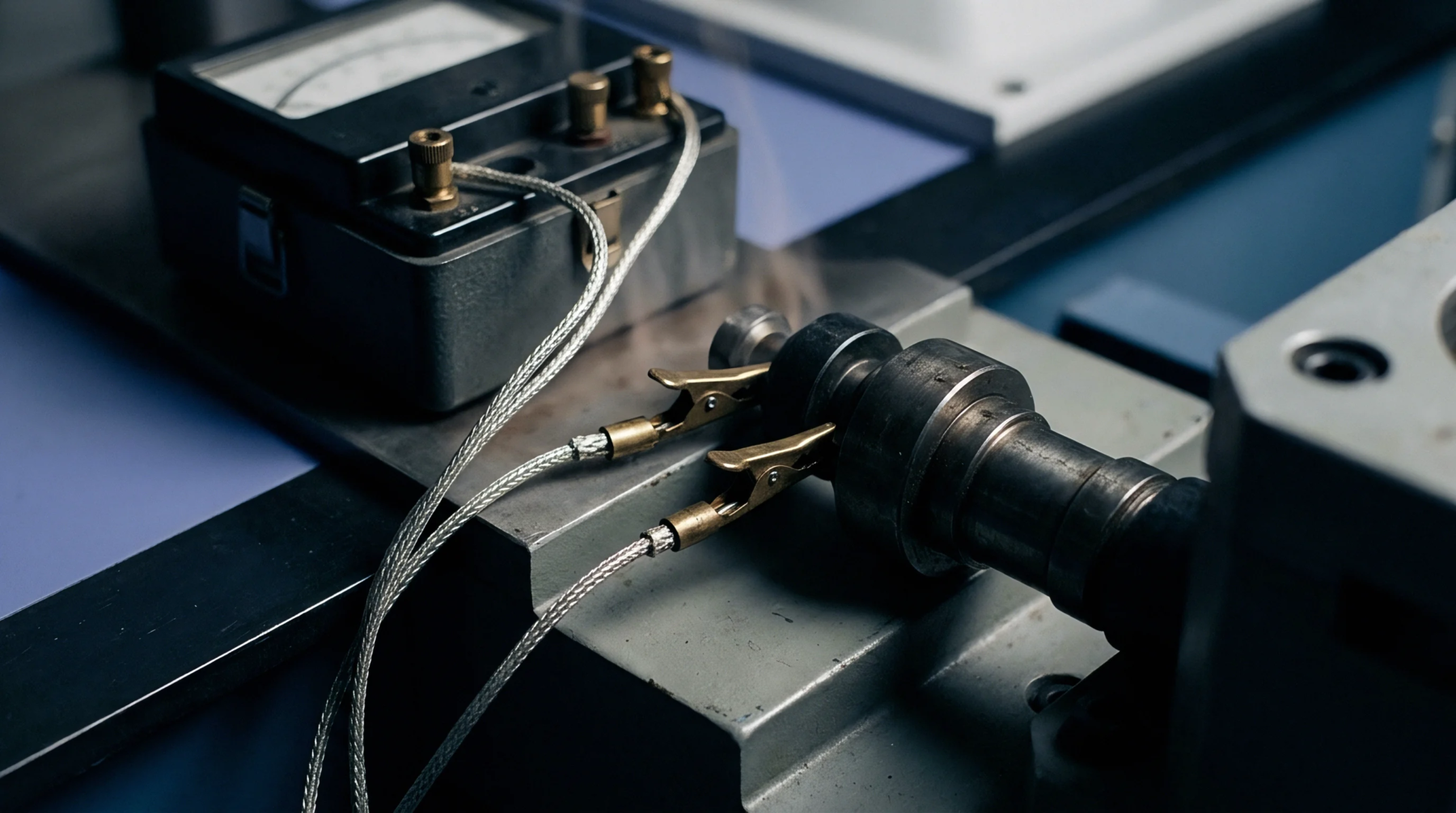
Groundwork for Dynamic Group Delay in Primary Sensor Front Ends
Dynamic group delay flatness in primary sensor front ends preserves transient signal waveforms and prevents time-domain phase distortion across temperature.
Primary interface circuitry positioned between raw physical transducers and downstream digitization stages executes initial signal conditioning, protection and impedance matching. A front end establishes baseline system sensitivity while isolating subsequent analog to digital converters from destructive overvoltage transients and external interference. Architectures typically combine low noise instrumentation amplifiers, anti-aliasing filters, input protection clamps and programmable gain blocks.
The operational boundary of the stage ends at the input terminals of the analog to digital converter or primary digitizing element.
Thermal noise generated by input resistors and semiconductor junctions in the first amplifier stage limits the overall sensitivity of the entire measurement instrument. Friis formulas for noise show that the gain of the initial stage suppresses noise contributions from all subsequent filter and conversion stages. Input bias currents flowing through sensor source resistances produce input offset voltages that drift with ambient temperature fluctuations.
Precision thin film resistor networks with tracking temperature coefficients minimize differential offset drift across operational cycles. Electromagnetic interference entering through sensor cabling corrupts front end operation unless balanced differential topologies and common mode chokes suppress external pick up.
Sensor transducers often exhibit high output impedances that require exceptional input resistance to prevent voltage divider loading errors. Piezoelectric and electrochemical sensors mandate input stages with gigohm input impedances realized through field effect transistor inputs. Low impedance current output sensors require transimpedance amplifiers that maintain virtual ground summing nodes.
Bandwidth roll-off occurs when high sensor source impedances interact with stray circuit board trace capacitances. Guard rings routed around sensitive input traces divert surface leakage currents directly to ground, shielding sub-picoampere sensor currents. Input clamp diodes must exhibit ultralow leakage currents to avoid introducing non linear measurement errors at elevated operating temperatures.
Overvoltage protection resistors must withstand continuous overvoltages without suffering resistance drift or thermal breakdown.
Verification protocols evaluate input voltage noise density, common mode rejection ratios and harmonic distortion across nominal operational bandwidths. Sourcing specifications mandate testing common mode rejection up to one hundred kilohertz to confirm interference rejection in industrial environments. Automated test benches inject calibrated reference voltages to verify gain accuracy, offset drift and phase linearity across operating temperature extremes.
Calibration certificates detail input impedance values, residual offset voltages and total harmonic distortion thresholds measured against national standards. Factory acceptance protocols reject assemblies that fail minimum noise figure requirements or display excessive baseline drift during thermal cycling. Component sourcing requires strict qualification of input operational amplifiers to ensure consistent input bias current and offset specifications across manufacturing lots.
Routine calibration checks track long term gain stability and input offset drift to sustain measurement accuracy throughout field deployment. Traceable calibration procedures ensure that front end performance aligns with published data sheet boundaries under specified environmental conditions.
Dynamic group delay flatness in primary sensor front ends preserves transient signal waveforms and prevents time-domain phase distortion across temperature.
Expertise is a utility, not a secret. sentiention™ publishes its working knowledge as open reference: intelligence layer covering the materials it sources, the markets it enters, and the reference that serves both.