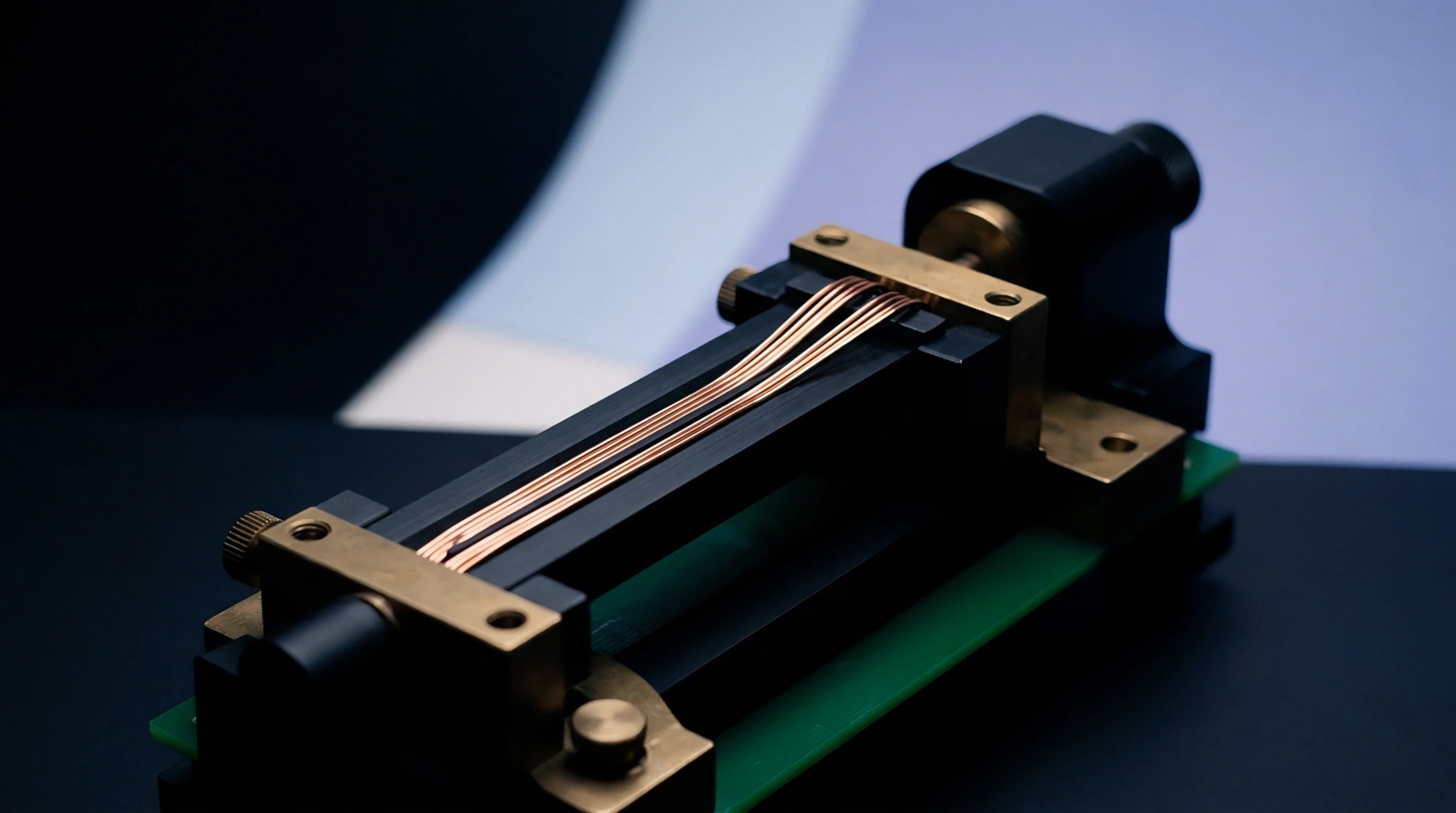
Measurement Methodology
High-precision measurement techniques determine the local variation in acceleration due to gravity by comparing observations from multiple spatial points. Differential gravimetry employs two or more co-located sensor elements to isolate local mass anomalies from large-scale background fluctuations. The technique provides a baseline for geodetic and geological studies.
Instrument Calibration
Calibration routines establish the relative scale factor between the sensor chambers. In differential gravimetry, the sensors are aligned along a common vertical axis to cancel out common-mode vibration while exposing both to the target gravity gradient. Technicians verify the alignment by rotating the instrument assembly through a full circle and observing the sinusoidal output.
This procedure establishes the zero-point stability of the relative measurement.
Environmental Interference
Environmental disturbances represent the primary challenge to sensor resolution. In typical applications, localized thermal gradients introduce small density changes that disrupt the internal balance mechanism. Consequently, the entire assembly operates within a sealed vacuum chamber.
Analytical Consequence
Data processing corrects for the remaining instrument drift and tidal variations. If the temperature of the housing fluctuates, the spring tension or electrostatic suspension force in differential gravimetry changes, which alters the output and requires the application of a correction algorithm based on the measured temperature. High-precision calculations use these temperature files to correct the raw data and produce a stable gravity gradient map.