End of Life Notices That Take One Package and Spare Another
When component vendors end leaded packages, identical active silicon dies often survive in surface-mount forms that demand revised land patterns and thermal layouts.
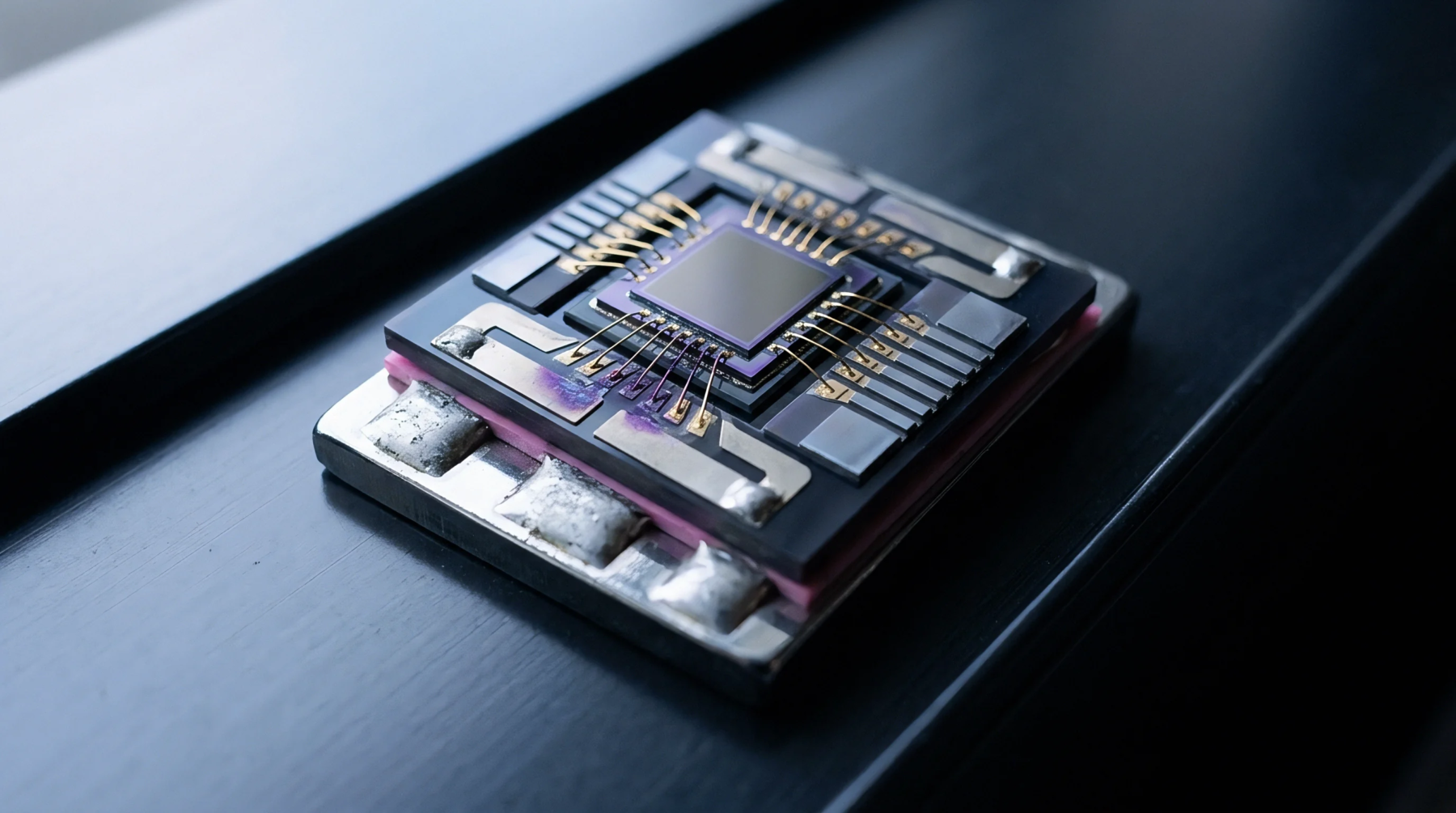
Metal-to-metal welding creates permanent electrical paths between a silicon die and a lead frame or substrate surface. High-purity copper wirebonding utilizes a pressurized ultrasonic energy method to form an intermetallic compound at the interface. Manufacturers choose this process for superior thermal conductivity and electrical resistance qualities compared to traditional gold alternatives.
The metallurgical bond relies on precise heat and mechanical force application to deform the wire against the bond pad. Oxidation prevention remains the primary technical constraint because oxygen exposure degrades the integrity of the connection. Nitrogen or forming gas shielding maintains an inert atmosphere throughout the bonding cycle.
Consistent atmospheric control prevents brittle phase formation that causes long-term reliability failures in packages. Operators verify the bond strength through destructive pull testing or shear testing according to standard industrial criteria. These metrics confirm the structural stability of the attachment before final encapsulation occurs.
Ultrasonic vibration generates frictional heat to soften the metal at the contact point. This deformation occurs within milliseconds as the tool presses the wire onto the metallic surface. Subsequent loop formation requires extreme control over wire trajectory to avoid contact with adjacent pads or the chip edge.
Variations in capillary pressure or vibration amplitude directly alter the growth rate of the copper-aluminum alloy layers. Technicians maintain calibration through regular adjustment of the power output and bonding force settings to compensate for ambient thermal drift. Drift interference arises from temperature fluctuations within the bonding chamber that modify the metallurgical response of the wire.
Periodic validation against a known reference surface identifies deviations before hardware wear causes production variances.
Failure analysis labs monitor the thickness of intermetallic compounds to predict the lifespan of the connection under thermal cycling. Excessive growth of these phases leads to voiding and subsequent electrical discontinuity. Stress testing involves exposing the finished packages to extreme humidity and heat levels to accelerate potential corrosion.
Equipment vendors specify the target window for bond force and frequency to ensure uniformity across the entire die area. Measurement errors often result from sensor instability or misalignment in the wire bonder itself. Calibration certificates attest to the accuracy of the force sensors within specified environmental limits.
Proper setup ensures the bond adheres to the pad without damaging the underlying silicon structures.
Corrosion susceptibility dictates the necessity for protective coatings or high-quality mold compounds in environments with moisture ingress. Chlorine ions penetrate standard materials and initiate galvanic reactions that destroy copper interconnects. Design engineers specify the spacing between bond pads to mitigate risks associated with bridging or electrical shorts during the wire placement stage.
The bond integrity holds only when environmental oxygen levels stay below the threshold defined for the specific wire diameter. Production lines maintain high throughput by balancing the bonding speed against the precision required for tight pitch applications. Rigid adherence to these process parameters ensures the electrical resistance remains stable across the operational lifespan of the final device.
When component vendors end leaded packages, identical active silicon dies often survive in surface-mount forms that demand revised land patterns and thermal layouts.
Expertise is a utility, not a secret. sentiention™ publishes its working knowledge as open reference: intelligence layer covering the materials it sources, the markets it enters, and the reference that serves both.