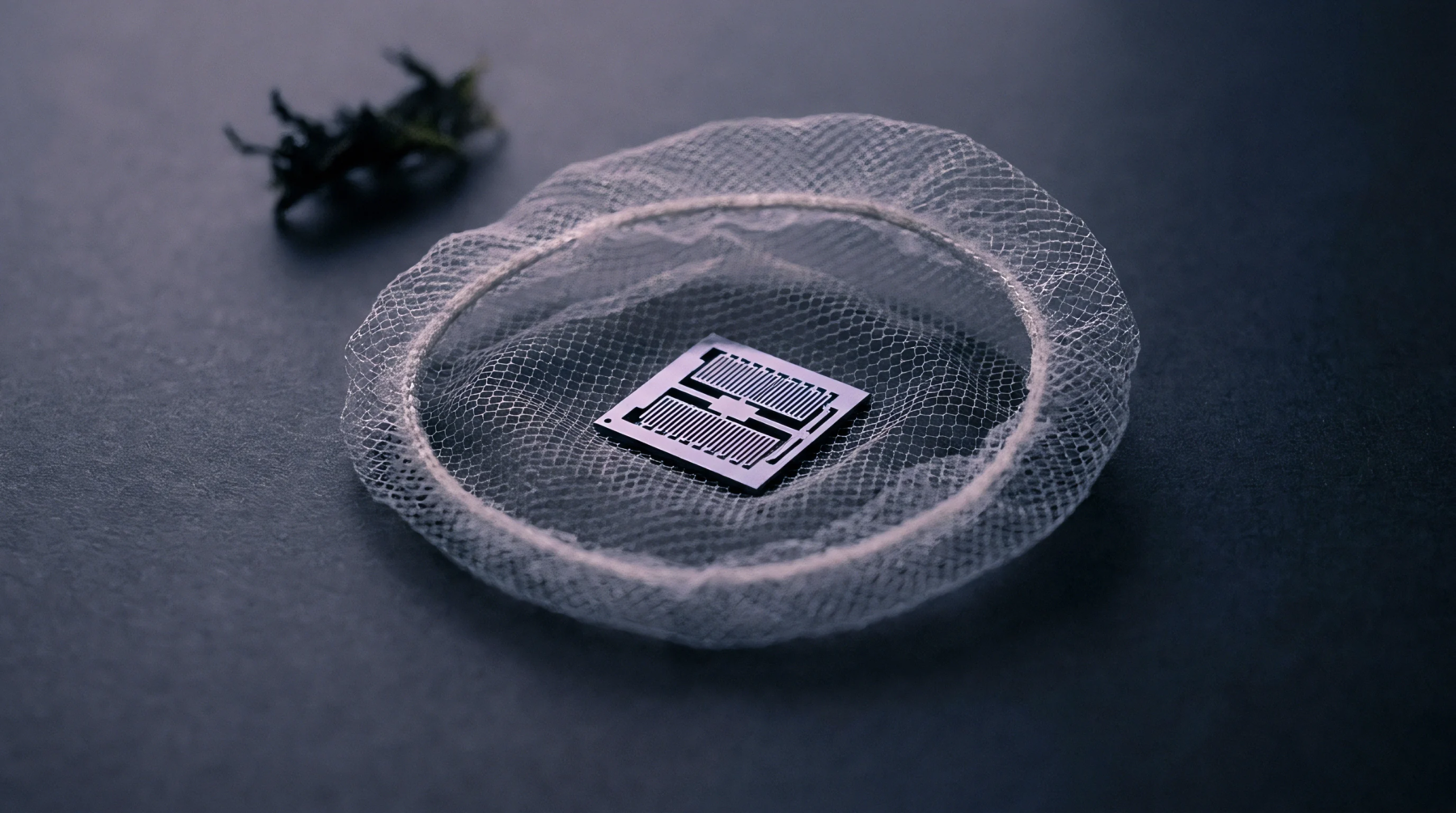
Reflow Popcorning Inspection Procedures and Acoustic Microscopy Delamination Criteria
Component reflow popcorning occurs when trapped moisture vaporizes during soldering; acoustic microscopy detects internal delamination via signal phase inversion.
Ultrasonic imaging technology maps internal material boundaries by capturing high-frequency acoustic echoes across transverse axes. Transducers emit sound pulses into solid components while measuring the precise time of flight for returning echoes. When acoustic impedance changes abruptly at internal defects or material interfaces, a portion of the sound wave reflects back toward the sensor.
A c-scan translates these collected echo amplitudes and transit times into a two-dimensional plan view projection. Technicians use this spatial data format to evaluate structural integrity without destroying the tested asset. Calibration blocks establish baseline sensitivity before any inspection run begins.
Signal attenuation within composite materials reduces depth penetration during high-frequency testing. Transducer wear introduces phase distortion that degrades spatial resolution over prolonged usage. Ambient temperature fluctuations alter acoustic velocity within couplant layers, causing depth measurement errors unless compensation factors apply.
Piezoelectric crystal arrays generate directional sound beams that must remain perpendicular to the test surface during scanning operations. Mechanical gantry systems guide the acoustic probe along programmed rectilinear paths across the component face. Angular misalignment between the beam axis and internal interfaces blurs echo amplitude maps, obscuring micro-defects.
Calibration procedures verify transducer frequency response against reference reflectors of known geometry. Mechanical backlash within automated scanning fixtures introduces positional jitter into the resulting image matrix. Acoustic coupling efficiency depends directly on fluid film thickness between the probe face and the component.
Excessive couplant entrapment attenuates high-frequency signal components, lowering the signal-to-noise ratio at deep inspection planes.
Electronic timing gates isolate specific depth intervals within the returning acoustic signal train for amplitude evaluation. Signal processors monitor echo heights within these defined temporal windows to map planar defects located at precise depths. Threshold settings determine the minimum echo amplitude required to register a hit on the output display.
Improper gate placement misses critical laminar separations that occur outside the active temporal zone. Electronic jitter in timing circuits shifts the effective depth gate, introducing dimensional inaccuracy into volumetric measurements. Signal saturation from near-surface reflections forces operators to adjust damping controls to protect receiving electronics from damage.
Reference standards containing artificial flat-bottom holes establish the operational relationship between echo amplitude and reflector size. Verification checks occur at regular intervals using certified blocks to confirm system linearity and repeatability. Transducer frequency degradation over time shifts the central operating band away from nominal specification values.
Signal amplification circuits drift due to component aging, requiring electronic zero adjustments before testing commences. Operator interpretation introduces subjective variation into defect sizing when signal envelopes overlap adjacent noise bands. Component surface roughness scatters incident acoustic energy, reducing specular reflection intensity and complicating automated defect classification algorithms.
Acoustic velocity variations across anisotropic materials distort depth calculations derived from time of flight data.
Component reflow popcorning occurs when trapped moisture vaporizes during soldering; acoustic microscopy detects internal delamination via signal phase inversion.
Expertise is a utility, not a secret. sentiention™ publishes its working knowledge as open reference: intelligence layer covering the materials it sources, the markets it enters, and the reference that serves both.