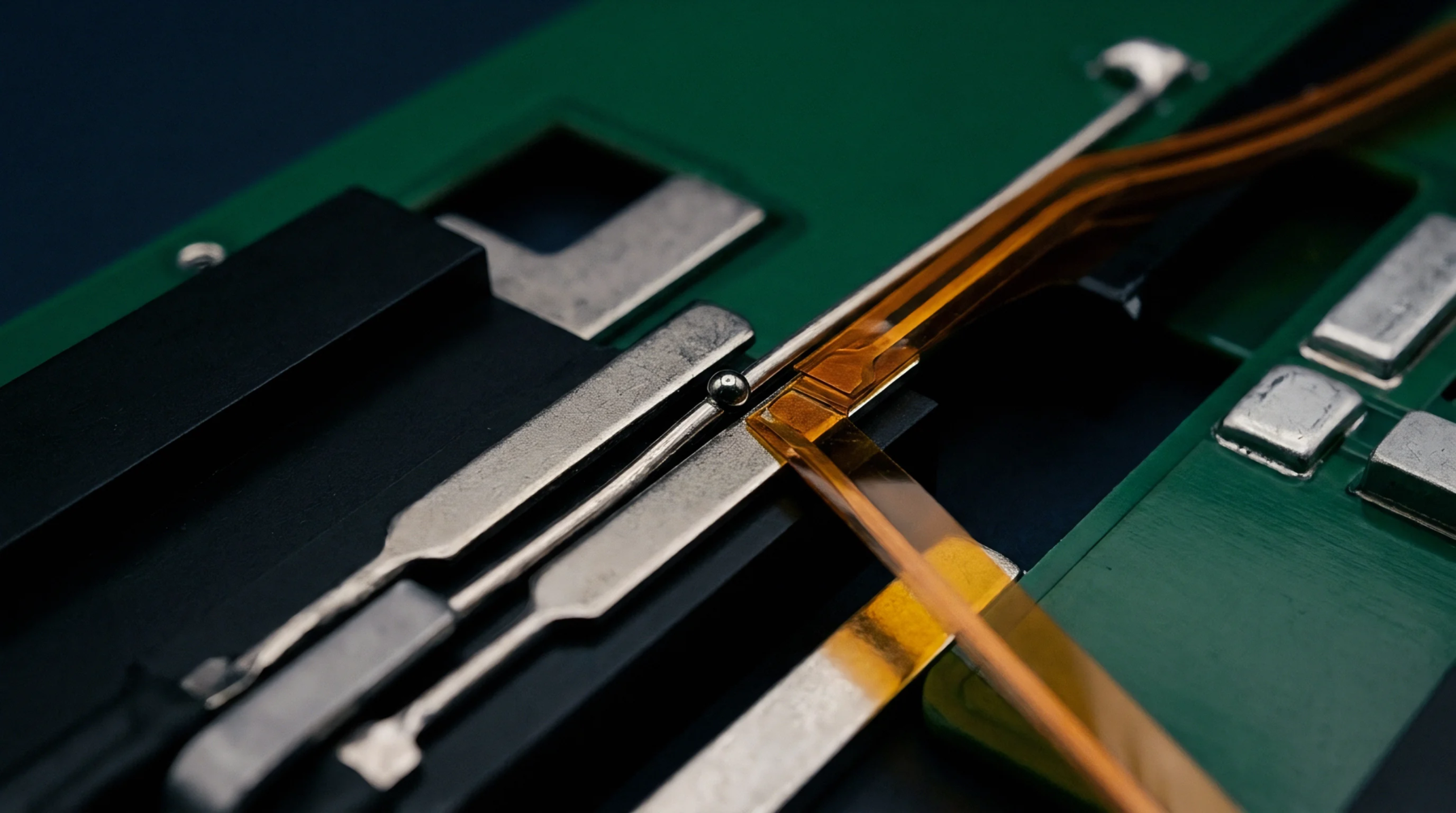
Alloy Composition
Fusible metal mixtures containing bismuth and tin provide low-melting interconnection points for electronic assemblies. Solder formulations with high bismuth fractions, typically around fifty-eight percent, reduce the necessary liquidus temperature to approximately one hundred and thirty-eight degrees Celsius. This reduction prevents thermal damage to sensitive components during assembly.
Manufacturers employ bismuth solder to form reliable connections without exposing modern multilayer boards to the high temperatures required by standard sacrificial alloys.
Processing Temperature
Soldering profiles must be closely controlled to prevent incomplete melting or excessive thermal stress. While tin-lead alternatives require peaks above two hundred degrees, the low-melting point of bismuth solder allows thermal profiles to peak below one hundred and seventy degrees. This thermal ceiling preserves delicate plastics and thin substrates.
Mechanical Constraint
Brittleness characterizes the crystal structure of bismuth-rich phases under sudden mechanical stress. When subjected to high strain rates, bismuth solder exhibits lower impact resistance than standard lead-free alternatives. This behavior demands careful placement away from board edges or flex points.
Assembly Reliability
Long-term stability under thermal cycling depends on minimizing the segregation of the bismuth phase within the joint. Interfacial voids can form when the alloy undergoes prolonged operation near its melting point. Using a secondary alloy for mixed-technology boards minimizes these voids.