Differential Core Soft Magnetic Alloy Cryogenic Zero Drift
Cryogenic zero drift in differential soft magnetic cores stems from thermal expansion mismatch and anisotropy shifts, requiring zero-magnetostriction alloy pairing.
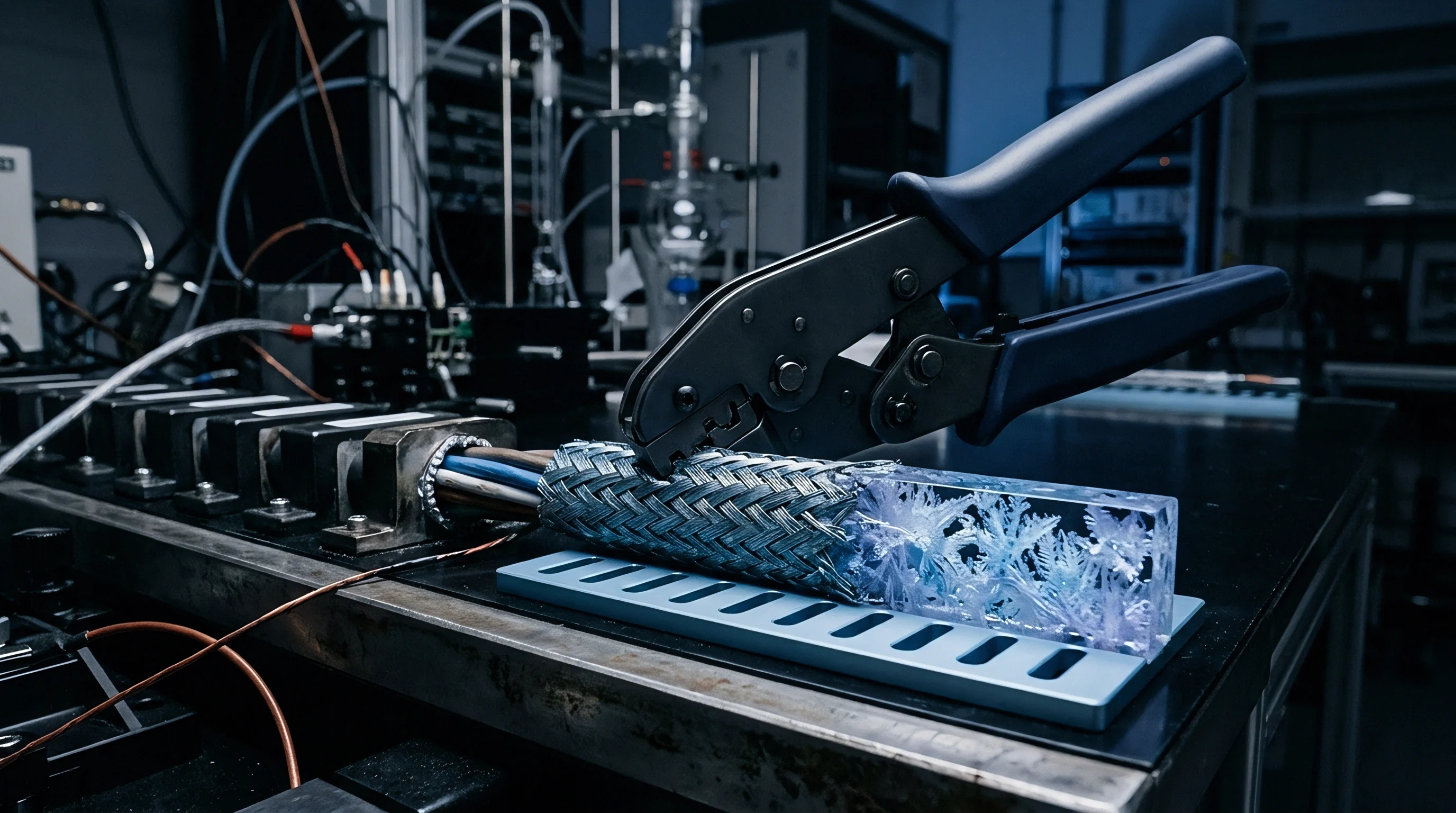
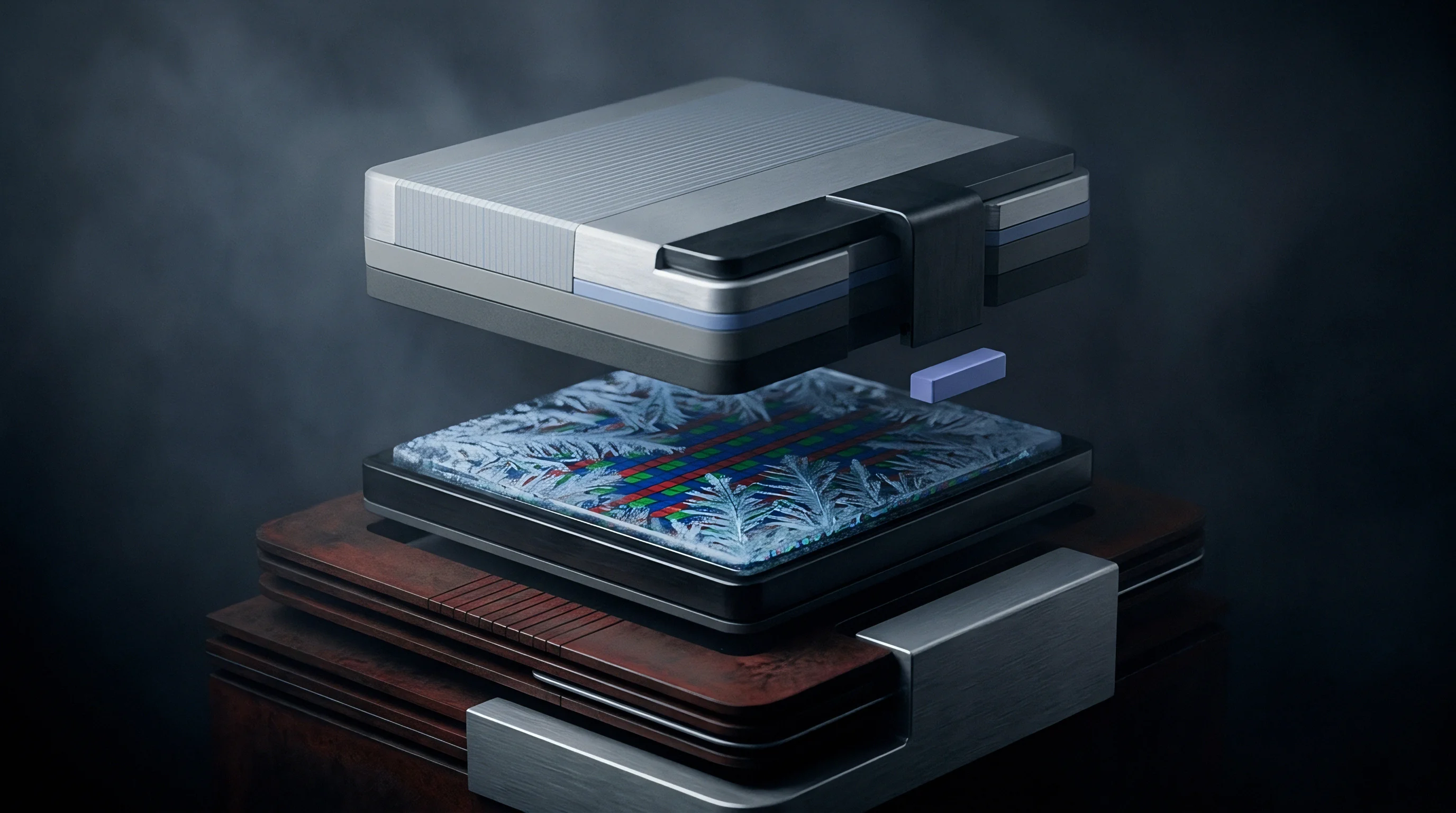
Chill
Liquid helium immersion dropping soft magnetic core temperatures down to 4.2 kelvin alters the magnetocrystalline anisotropy constant K1 by up to two orders of magnitude compared to room ambient baseline values. Soft magnetic alloys operating in precision differential magnetic sensors depend on ultra-low magnetic anisotropy to maintain symmetrical permeability across twin core elements. As thermal energy declines toward absolute zero, the thermal agitation that assists domain wall motion vanishes.
Magnetic domains freeze along preferred crystallographic axes, sharply elevating coercivity and suppressing initial permeability. In a differential topology, any microstructural asymmetry between the two core halves causes unequal permeability degradation, producing an uncompensated output voltage at zero applied magnetic field.
Thermal contraction mismatch introduces severe mechanical strain into wrapped core assemblies during chill down. High-permeability alloys exhibit isotropic thermal expansion coefficients near 10 ppm per kelvin at room ambient, but copper drive windings expand at 16.5 ppm per kelvin while ceramic or quartz coil bobbins expand at less than 3 ppm per kelvin. Differential thermal strain generates localized compressive stress fields across the core ribbon.
Through magnetoelastic coupling, stress converts directly into magnetic anisotropy, skewing the differential flux linkage. Thermal contraction breaks core symmetry. Domains freeze along hard axes.
Differential strain generates unwanted offset. Coercivity rises as temperature plummets.
The operational impact of low-temperature shifts manifests in differential fluxgate sensors, zero-flux current transformers, and low-frequency magnetic pickup coils. Below 77 kelvin, the reduction in initial permeability degrades signal-to-noise ratio by dropping the mutual inductance of excitation coils. Differential balance that holds within sub-millivolt limits at 293 kelvin drifts into tens of millivolts at 4.2 kelvin.
The offset shift exhibits thermal hysteresis, failing to return to initial values upon warming due to irreversible domain relaxation and permanent mechanical displacement within core encasements.
| Alloy Class | Composition (Weight Percent) | Initial Permeability at 293 K | Initial Permeability at 77 K | Initial Permeability at 4.2 K | Coercivity Shift (293 K to 4.2 K) |
|---|---|---|---|---|---|
| Molybdenum Permalloy | 80 Ni, 15 Fe, 5 Mo | 50,000 | 12,000 | 3,200 | 0.8 A/m to 4.5 A/m |
| High-Cobalt Amorphous | 67 Co, 4 Fe, 2 Ni, 15 Si, 12 B | 80,000 | 65,000 | 42,000 | 0.3 A/m to 0.9 A/m |
| Nanocrystalline | 73.5 Fe, 13.5 Si, 9 B, 3 Nb, 1 Cu | 100,000 | 82,000 | 58,000 | 0.2 A/m to 0.6 A/m |
| Vanadium Permendur | 49 Fe, 49 Co, 2 V | 800 | 750 | 620 | 120 A/m to 145 A/m |
| Data recorded under quasi-static excitation at 10 Hz with an applied magnetic field strength of 0.1 A/m inside a shielded cryostat. | |||||
A temperature reduction from 293 kelvin to 4.2 kelvin increases the coercivity of molybdenum permalloy from 0.8 amperes per meter to 4.5 amperes per meter under zero applied field.
Mismatching thermal expansion coefficients between core material and coil bobbins introduces uncontrolled mechanical stress, destroying zero-point stability and triggering permanent magnetic offset during thermal recovery.
Chemistry
Alloy stoichiometry determines whether soft magnetic materials retain high initial permeability or undergo lattice degradation upon cryogenic exposure. Conventional nickel-iron alloys containing 80 percent nickel rely on precise atomic ordering to achieve zero magnetocrystalline anisotropy and zero magnetostriction at room temperature. Lowering the temperature alters the balance of atomic interactions, moving the alloy away from its zero-magnetostriction point.
Saturation magnetostriction values that sit near zero at ambient conditions drift positive or negative at cryogenic levels, making the core exponentially more sensitive to mounting pressure and bobbin contact.
Cobalt-based amorphous alloys eliminate crystalline anisotropy by omitting a periodic crystal lattice entirely. Rapid solidification produces an amorphous ribbon where magnetostriction depends strictly on short-range atomic arrangements. Selecting a precise composition of cobalt, iron, and nickel yields a saturation magnetostriction coefficient below 0.1 ppm that remains stable from 293 kelvin down to 4.2 kelvin.
Amorphous ribbons avoid temperature-driven magnetocrystalline anisotropy spikes, suppressing differential zero drift under cryogenic conditions. Composition defines magnetostriction. Nickel content shifts the Curie point.
Cobalt addition stabilizes saturation flux. Nanocrystalline grains bound domain walls.
Nanocrystalline soft magnetic alloys combine ultrafine alpha-iron-silicon grains embedded within a residual amorphous matrix. Grain sizes averaging 10 to 15 nanometers sit below the magnetic exchange length, forcing the effective magnetocrystalline anisotropy to average out to virtually zero. Heat treatment under longitudinal or transverse magnetic fields creates custom hysteresis loops tailored for low-offset differential applications.
Control of the copper nucleation agent and niobium grain-growth inhibitor prevents coarsening, securing low magnetostriction across liquid nitrogen and liquid helium transitions.
| Alloy Designation | Curie Temperature (K) | Cryogenic Magnetostriction (77 K) | Saturation Flux Density (T) | Core Loss at 10 kHz, 0.2 T (W/kg) |
|---|---|---|---|---|
| Supermalloy (80Ni-5Mo-Fe) | 673 | +2.8 ppm | 0.78 | 14.2 |
| Zero-Strain Cobalt Amorphous | 493 | +0.05 ppm | 0.58 | 3.1 |
| Finemet-Type Nanocrystalline | 843 | +0.2 ppm | 1.24 | 1.8 |
| Grain-Oriented 3% Silicon Steel | 1018 | +12.0 ppm | 2.01 | 45.0 |
Compliance with ASTM A753 Alloy 4 composition limits prevents cryogenic phase degradation during extended immersion cycles.
Mill representatives frequently attribute zero offset shifts to unannounced raw heat variation across raw ingot melt batches.
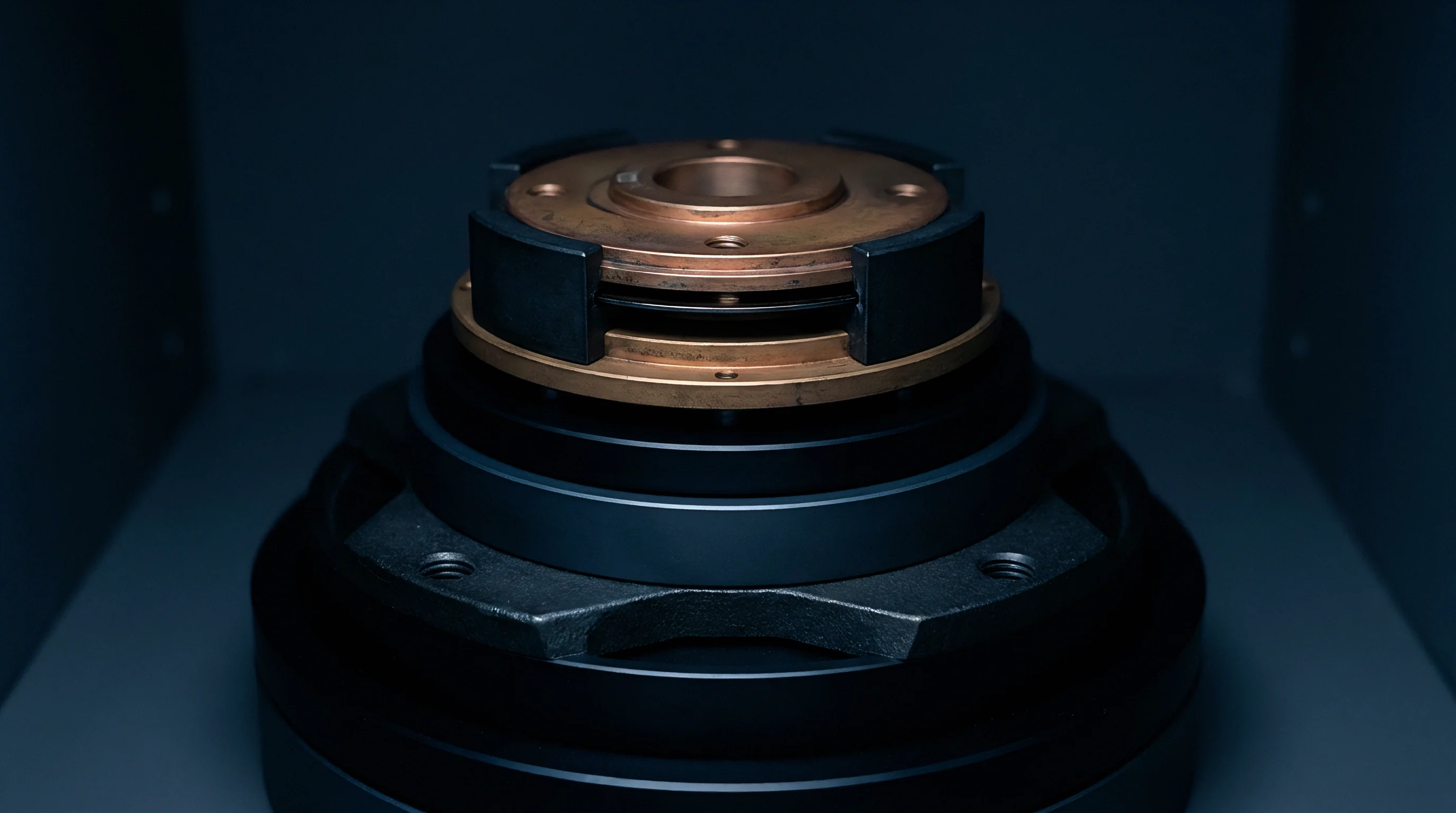
Coils
Differential magnetic fluxgate structures rely on exact geometrical symmetry between twin core elements excited in opposite phase. Primary drive windings wrap both cores in series-opposing configurations to cancel primary excitation voltage in the secondary sense winding. When soft magnetic properties drift unevenly between the twin cores, excitation currents generate odd and even harmonics that fail to cancel at the secondary terminal.
The resulting second-harmonic voltage component simulates an external magnetic field signal, generating a false baseline reading.
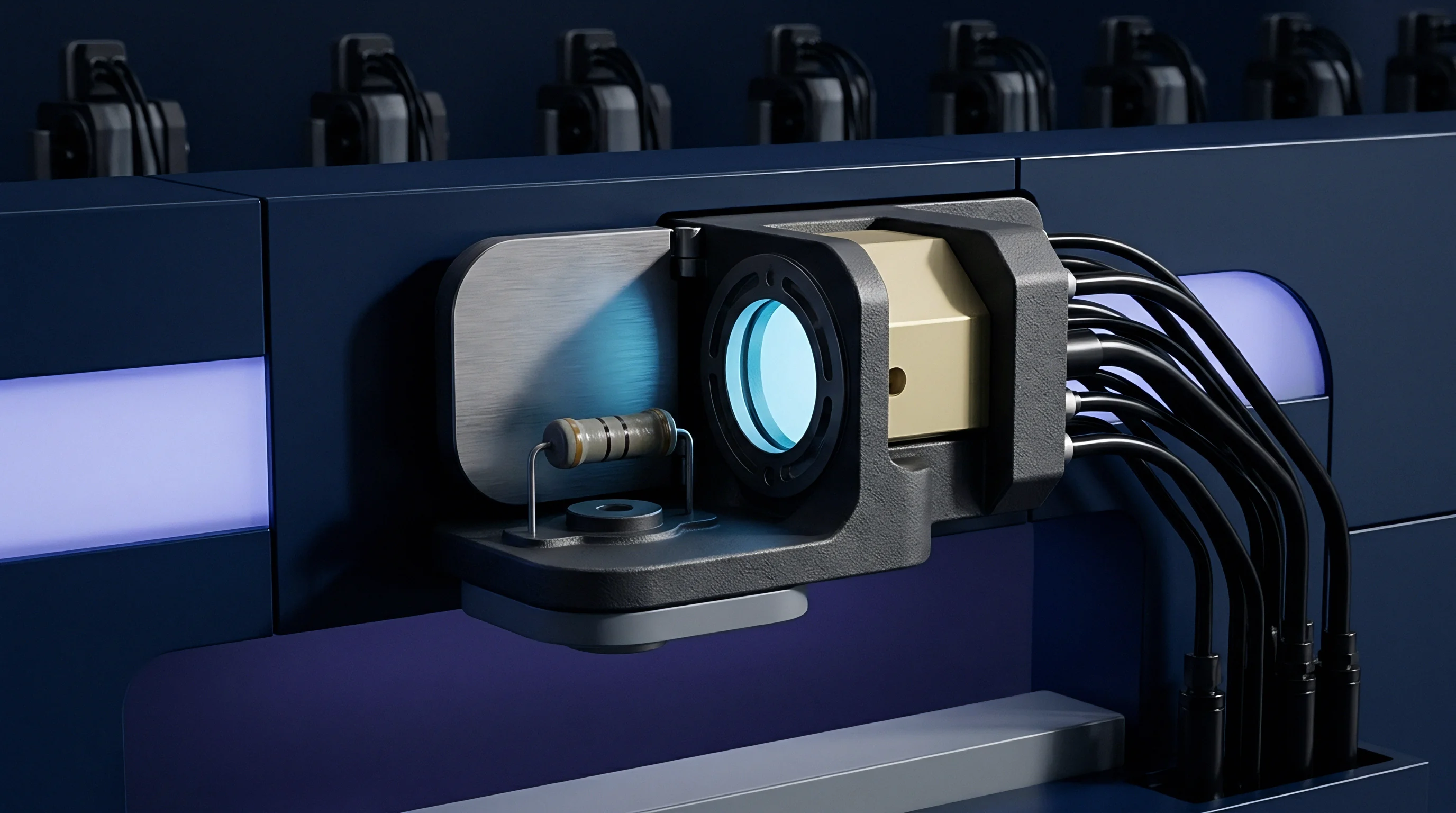
How Does Excitation Asymmetry Induce Zero Drift under Cryoflux?
Excitation asymmetry originates when mechanical strain alters core cross-sectional area or local saturation thresholds. Driving twin cores into saturated flux states twice per excitation cycle demands identical dynamic magnetic properties. A core half suffering higher cryogenic stress requires a larger coercive force to reverse magnetic polarization, delaying its saturation point relative to the paired core.
Phase lag between core saturation events produces narrow voltage spikes at the secondary demodulator input. Demodulation electronics interpret these phase-lag pulses as true direct-current magnetic fields. Symmetry dictates signal zero.
Phase shifts ruin offset stability. Parasitic capacitance corrupts primary balance.
- Parasitic Capacitance Imbalance uneven distribution of inter-winding capacitance across twin core bobbins creates high-frequency phase shifts that distort the differential excitation balance.
- Thermal Gradient Asymmetry localized heat generated by copper resistance losses within excitation windings creates a temperature delta across paired cores, triggering uncompensated permeability differences.
- Magnetoelastic Demodulation Drift stress-induced anisotropy shifts the second-harmonic phase alignment relative to the synchronous demodulator reference clock, driving offset voltage drift.
- Harmonic Excitation Distortion non-linear magnetization curves in cryogenically stressed cores generate third and fifth harmonic currents that bleed past zero-crossing filter networks.
Symmetric excitation winding prevents even-harmonic distortion from bleeding into the zero-flux signal output.
Matching excitation wire length and winding tension across twin core halves stabilizes baseline noise before applying cryogenic immersion.
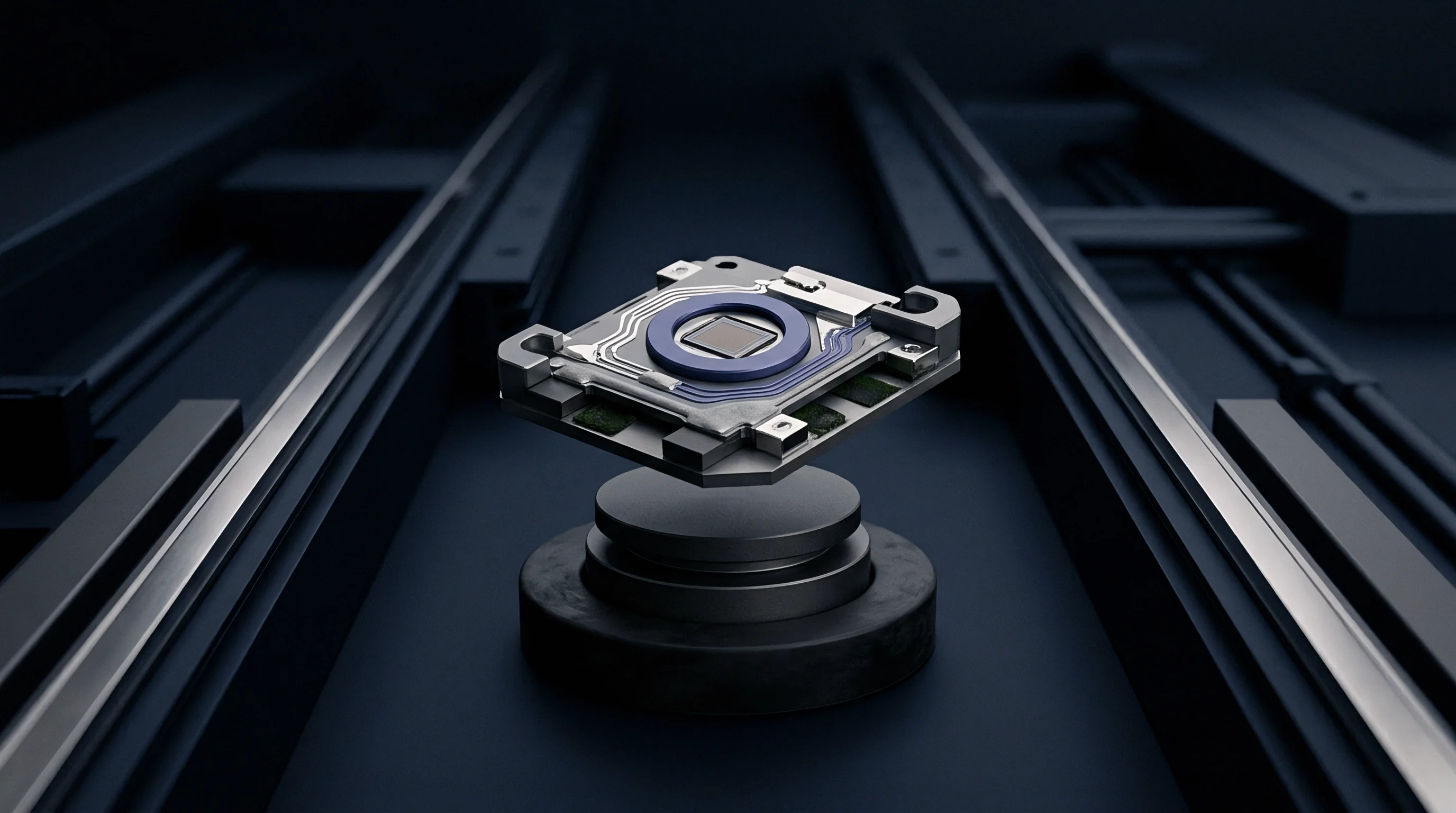
Verification
Cryogenic bench testing relies on non-magnetic cryostats, three-layer mu-metal shields, and high-resolution analog-to-digital converters to capture sub-nanotesla baseline shifts. External magnetic fields introduce measurement corruption, demanding superconducting niobium shields or high-permeability enclosures operating outside the thermal gradient. Continuous tracking of excitation voltage, current phase, and core temperature ensures that drift artifacts reflect material performance rather than instrumentation instability.
Cryostats isolate external field noise. Thermal dwell reveals structural creep. Immersion shocks core geometry.
Quantifying cryogenic baseline stability follows a rigorous sequence to separate elastic core shifts from permanent structural micro-yielding.
- Secure the differential magnetic core within a stress-free PTFE enclosure inside the cryostat.
- Connect excitation drives using twisted shielded pair cabling to minimize inductive loop pickup.
- Cool the chamber down to 77 kelvin at a controlled rate not exceeding two kelvin per minute.
- Record zero-input baseline voltage over a twelve-hour dwell window to isolate creep drift.
- Transition the system to liquid helium immersion at 4.2 kelvin while logging second-harmonic response.
- Perform ten consecutive thermal cycles back to ambient room baseline to measure hysteresis offset.
Thermal cycling across liquid helium temperatures alters residual core stress and shifts zero offset values permanent after three complete excursions.
Whether stress-relaxation annealing fully eliminates thermal cycling baseline shift across fifty deep cryogenic cycles remains unconfirmed across published industrial literature.
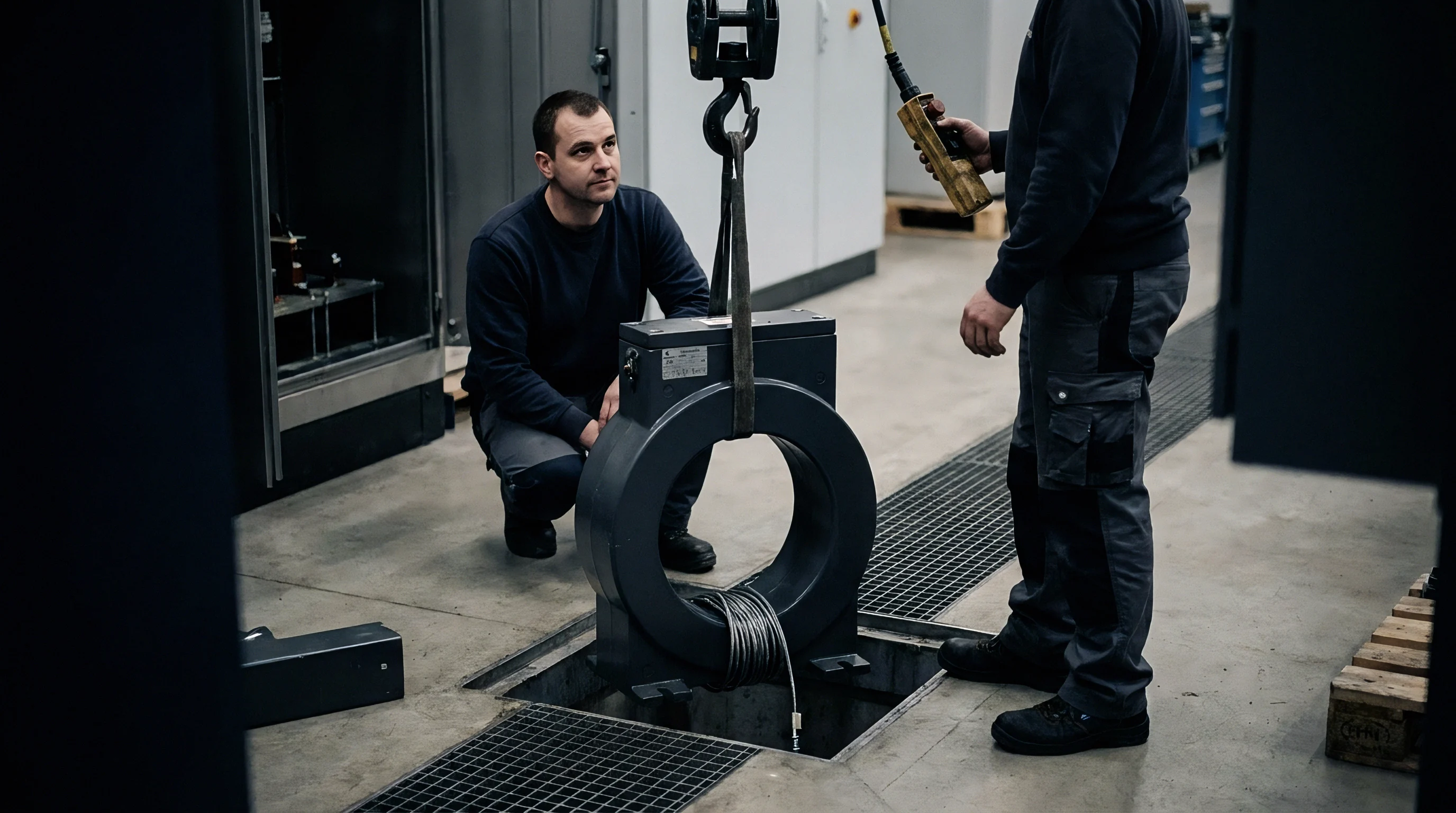
Contract
Sourcing soft magnetic alloys for cryogenic precision instruments relies on strict control over heat-treatment atmosphere, cooling rates, and strip thickness tolerances. Procurement documents specifying basic room-temperature magnetic parameters fail to guarantee cryogenic zero-drift stability. Alloy mills must execute final magnetic anneals in ultra-dry hydrogen atmospheres with dew points below minus forty degrees celsius to prevent internal oxidation of trace silicon or aluminum additions.
Oxidation spots act as domain wall pinning sites, elevating low-temperature coercivity and degrading baseline balance.
Batch qualification criteria must mandate cryogenic sampling tests alongside standard compositional certificates. Strips manufactured from consecutive rolls of the same master ingot exhibit variable residual stress levels if cold-rolling reduction steps vary by even two percent. Specifying vacuum-melted or electroslag-refined ingots reduces non-metallic inclusions that trigger localized stress concentration during deep cooling.
Dimensional thickness variations across core ribbons must stay within plus or minus one micrometer to prevent differential cross-sectional flux imbalances between wound elements.
- Atmospheric Annealing Certification suppliers verify hydrogen dew point and maximum cooling rates during final high-temperature heat treatment to guarantee domain wall mobility.
- Cryogenic Permeability Guarantee delivery criteria specify minimum initial permeability limits measured directly at 77 kelvin using immersion lot sampling.
- Dimensional Strip Tolerance thickness variation across a master coil stays within tight bounds to maintain identical cross-sectional area between wound core pairs.
- Lot-Level Zero Drift Audit differential core pairs undergo a five-cycle thermal shock screening test to confirm zero-point return repeatability prior to final delivery.
Mandating compliance with IEC 60404-8-6 clause 4.2 forces suppliers to guarantee maximum magnetic permeability limits at liquid nitrogen temperatures before batch acceptance.