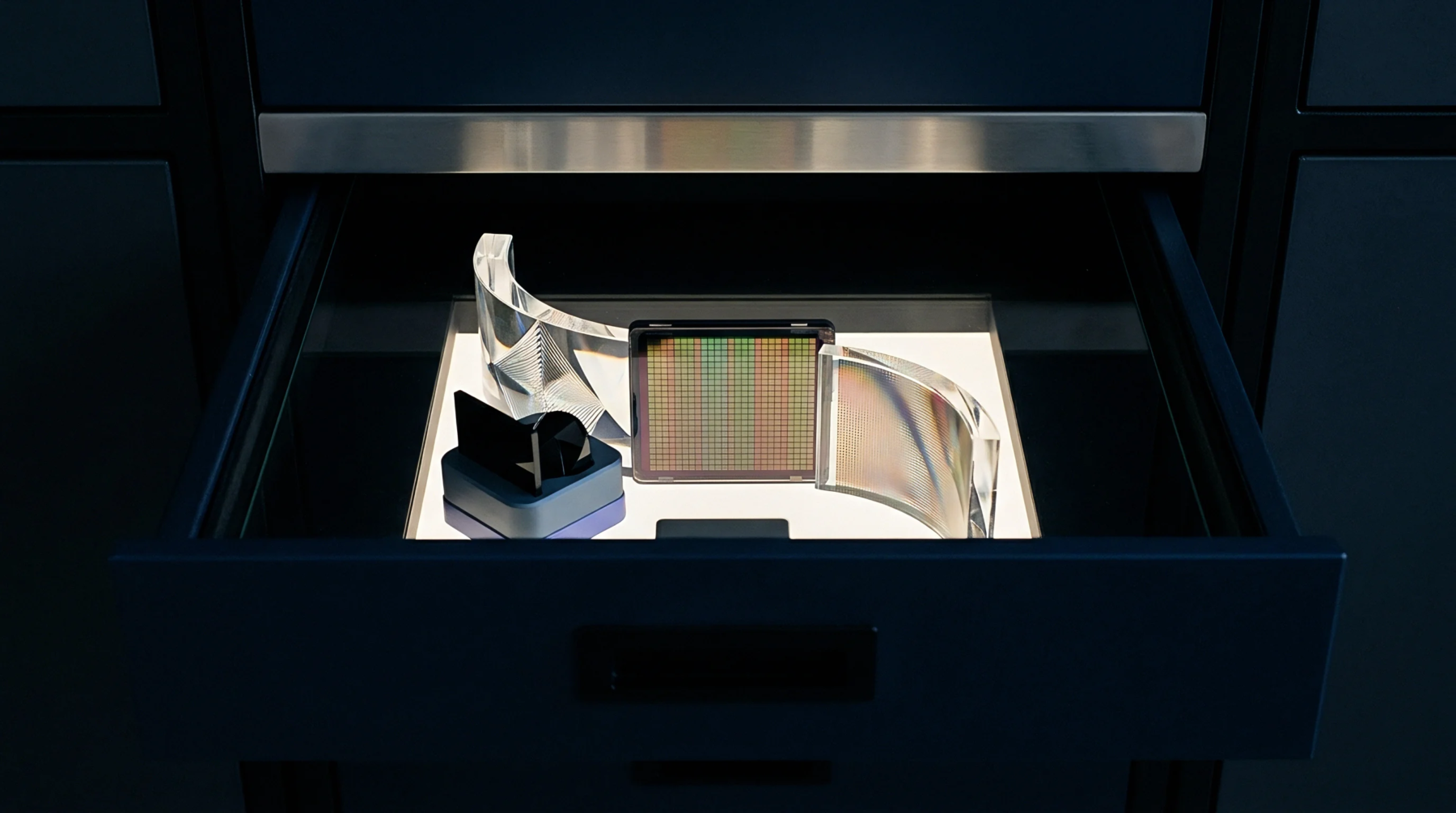
Viscoelastic Thermal Strain Transfer Mechanics in Silicon MEMS Transducers
Polymeric die-attach relaxation causes time-dependent thermal strain hysteresis in silicon MEMS, producing zero-offset drift that static calibration cannot fix.
Analytical formulation of shear stress distribution along an adhesive lap joint with axially extensible adherends establishes the classical baseline for joint mechanics. Formulated to resolve non-uniform load transfers across structural lap joints, this theoretical framework demonstrates that shear stresses are concentrated at the lap ends rather than distributed uniformly. It governs the analysis of bonded metal plates, composite joints, surface-mount component solder interfaces and strain gauge attachment layers.
The model assumes pure shear deformation within the flexible bonding layer alongside pure tension or compression within the stiff adherends, making it inapplicable where bending deflections introduce peeling stresses perpendicular to the adhesive plane.
Elastic deformation of joined plates pulls on the connecting adhesive layer unevenly along the length of overlap. Applying the classic Volkersen shear lag relationship reveals that axial strain accumulates toward the loaded end of each plate, which drives shear deformation within the adhesive to peak sharply at joint boundaries. The minimum shear stress appears at the spatial centre of the overlap zone, with the ratio between peak and average shear stress governed by joint length, adhesive shear modulus, adherend thickness and tensile modulus ratios.
Stiffer adherends or more compliant adhesives flatten this distribution, distributing shear forces more evenly along the total bond area.
Stress peaks situated at bond terminations exceed the average joint stress, triggering early edge micro-cracking well below nominal design loads. Differential thermal expansion between mismatched substrates amplifies these edge shear peaks during thermal excursions, accelerating bond separation. In thick bonded joints, eccentric loading generates secondary bending moments that add peel stresses to the existing shear profile, an effect not captured by the pure shear-lag model alone.
Adhesive plasticity provides slight relief, as localized yielding at lap edges caps the peak shear stress and transfers excess load into the interior zone. Fatigue cycling within the amplified edge zones eventually nucleates cohesive or adhesive cracks that propagate inward, causing joint rupture.
Model verification and stress parameter confirmation rely on lap-shear testing according to ASTM D1002 alongside direct strain measurement using optical digital image correlation. Testing fixtures hold lap specimens under tensile loading while high-resolution cameras track surface displacements to plot real-time shear lag curves across the bond length. Sourcing documents specify minimum joint overlap dimensions and adhesive bond-line thicknesses derived from the shear lag equations to prevent peak boundary stresses from exceeding structural endurance limits.
Micro-tensile test benches pull miniature joint coupons to verify the shear modulus of specialized adhesives under controlled environmental conditions. Finite-element cross-checks confirm that calculated shear concentrations match experimental strain gauge readouts along joint boundaries before structural designs are approved for serial instrument production.
Polymeric die-attach relaxation causes time-dependent thermal strain hysteresis in silicon MEMS, producing zero-offset drift that static calibration cannot fix.
Expertise is a utility, not a secret. sentiention™ publishes its working knowledge as open reference: intelligence layer covering the materials it sources, the markets it enters, and the reference that serves both.