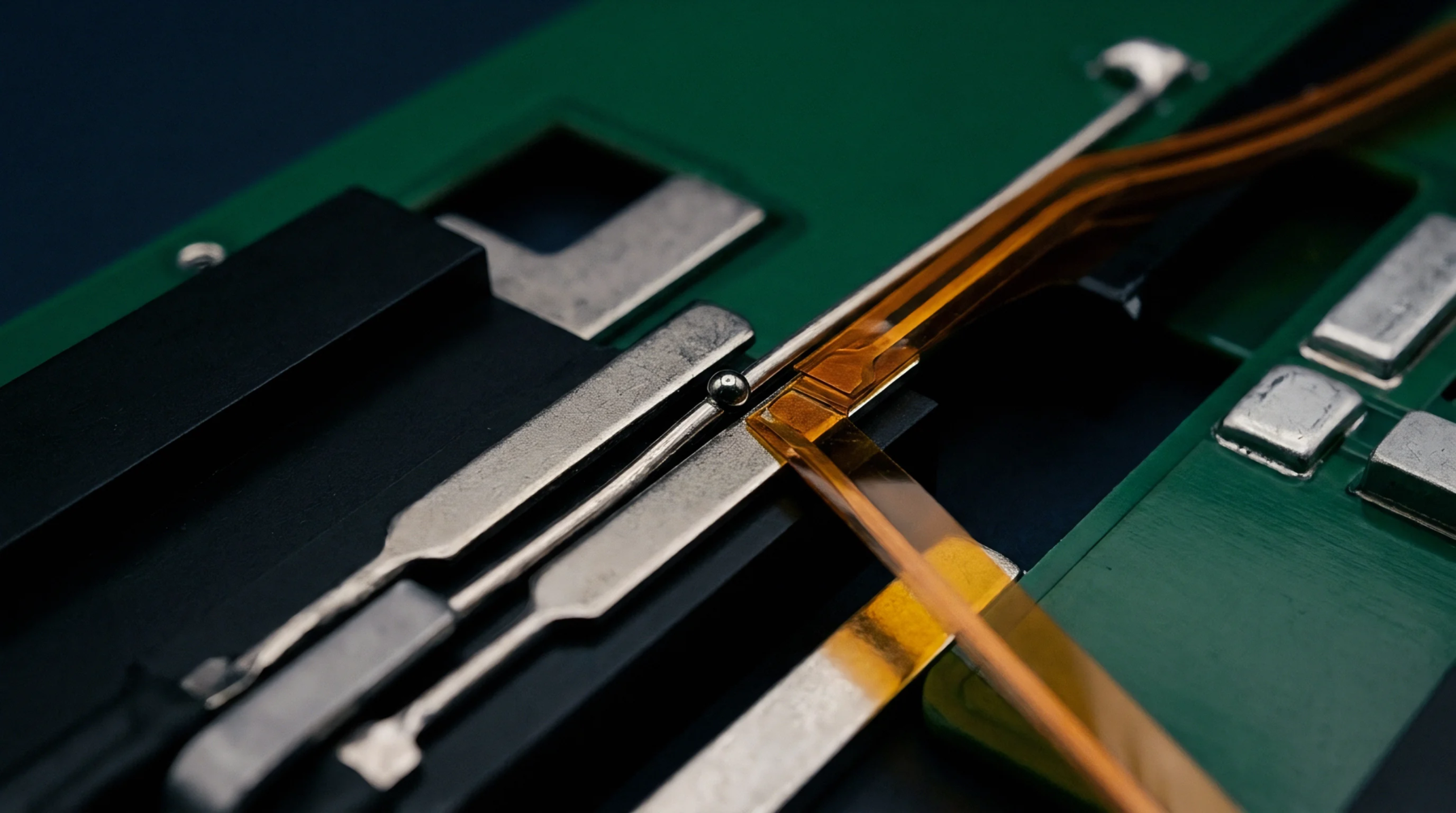
Gap Dimension
The vertical distance between the terminal pad of a printed circuit board and the mating surface of a surface-mount component determines the volume and profile of the reflowed alloy. Achieving a consistent solder joint standoff is essential for ensuring both mechanical strength and electrical continuity. This height prevents short circuits and stress concentration.
Stress Distribution
High standoff heights allow the joint to absorb the shear stresses caused by mismatched thermal expansion coefficients between the chip and the substrate. When temperatures fluctuate, the solder is sheared. This shearing is less severe in tall joints.
Control Mechanism
Adding micro-spheres, copper columns, or specialized wire forms to the solder paste establishes a physical limit that prevents the component from sinking too close to the board pad. Automated assembly nozzle force must be carefully calibrated to avoid compressing the solder deposit beyond this predefined target during component placement. This step is critical during the production of heavy, multi-pin components.
Thermal Endurance
Assemblies with a well-maintained standoff demonstrate superior fatigue life during long-term temperature cycling tests. If the standoff is too low, the joint experiences higher localized plastic deformation and undergoes rapid crack initiation. This endurance prevents premature field failures.