Displacement Mechanism
Time-dependent angular deformation develops in adhesive layers and solder interconnects subjected to sustained parallel mechanical shear forces. This progressive sliding displacement, termed shear creep, occurs when constant shear stresses induce atomic diffusion and dislocation motion along crystallographic planes or polymeric chains. In bonded assemblies, shear stresses concentrate along joint interfaces due to structural loading or coefficients of thermal expansion mismatches between joined materials.
The deformation progresses through initial transient decay where strain rates decelerate, into secondary steady-state flow characterized by constant displacement rates. In tin-based solder interconnects, room temperature corresponds to high homologous temperatures, allowing steady-state shear flow to occur under modest ambient conditions. Polymer adhesives exhibit simultaneous chain untangling that permanently shifts bonded sensor locations.
Compliance Quantification
Experimental qualification measures angular displacement over time using lap-shear test fixtures mounted in electromechanical universal testing machines or torsional rheometers. Specimen geometry follows standardized lap configurations where bonded overlap zones experience pure shear loading under static weights. High-resolution non-contact optical extensometers track relative displacement between opposing adherends with nanometre resolution.
Shear creep compliance is computed by dividing instantaneous shear strain by the applied constant shear stress. Environmental chambers maintain constant relative humidity and temperature because moisture absorption plasticizes polymer adhesives, multiplying creep compliance by orders of magnitude. Test regimes run for hundreds of hours to confirm compliance stabilization.
Transducer Integration
Sensor manufacturing protocols verify bond-line resistance to this sliding deformation to prevent zero-measurand offset drift in bonded foil strain gauges and surface-mounted force cells. When an adhesive bond undergoes shear creep, applied strain in the parent metal structure fails to transfer completely into the sensing grid, resulting in signal attenuation and baseline drift. Transducer qualification procedures reject bonding adhesives displaying high creep compliance in favor of high-glass-transition epoxy formulations.
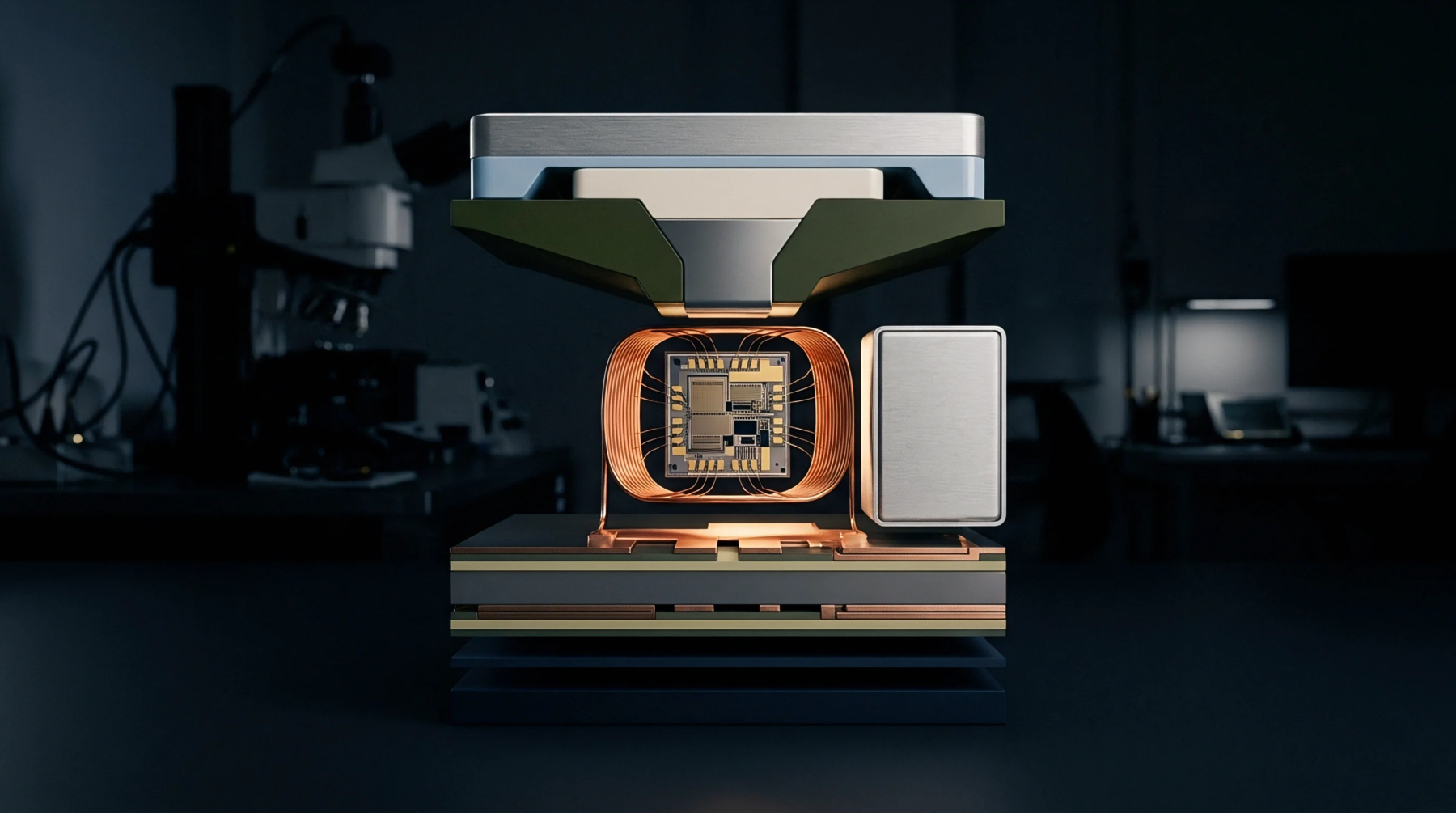
In flip-chip sensor packaging, creep in micro-bumps relaxes thermo-mechanical stresses but redistributes parasitic strains onto active silicon diaphragms. Metrology standards mandate creep testing across expected service lifespans to verify that signal degradation remains within defined accuracy classes.
Failure Boundary
Shear deformation regimes enter tertiary acceleration when micro-cracks nucleate within the bonding matrix or along the interface. At this transition, uniform shear flow ceases and catastrophic joint separation occurs, rendering continuum displacement equations invalid.