Thermal Deformity
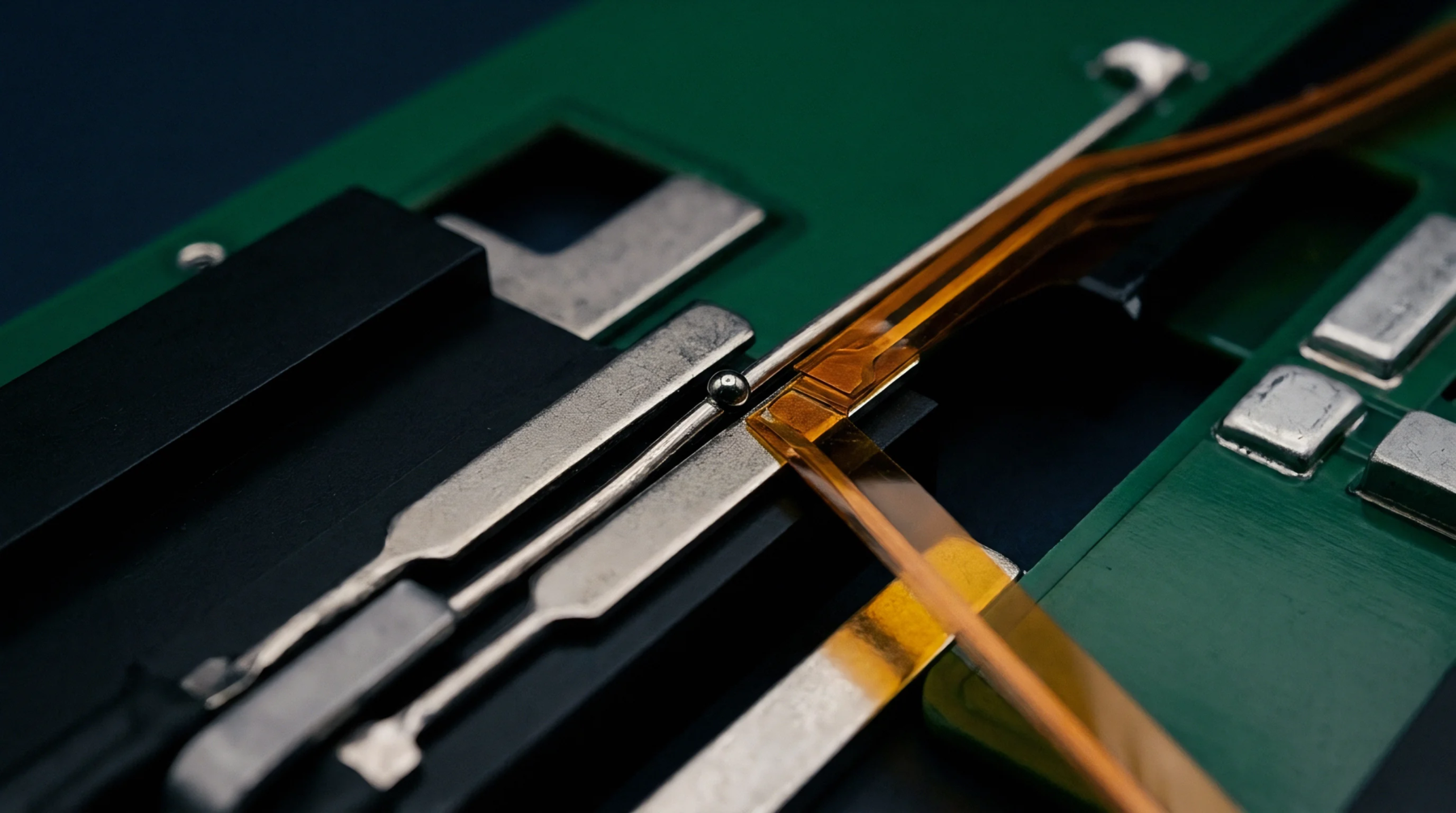
Printed circuit assemblies experience complex thermal gradients as they pass through the zones of a reflow oven. This thermal variation drives the reflow profile mechanical strain, which is the physical deformation of the board and its components caused by uneven heating. The measurement is restricted to the assembly and heating phases of the soldering process.
Phase Change
During the peak heating phase, both the laminate material and the metal terminals expand at different rates. As the solder transitions from a liquid to a solid state, it locks this differential expansion into the solder joint, leaving a permanent stress in the material. This residual stress can later cause the joint to crack under mechanical vibration or normal handling.
The thermal transition rate must be controlled to minimize this effect.
Stress Accumulation
Fast cooling rates generate high thermal gradients that accelerate the accumulation of internal stresses. These stresses are concentrated at the corners of larger components like ball grid arrays, where the solder joints are most vulnerable. This concentration of force can lead to immediate or delayed fracture of the connection.
Compliance Metric
Manufacturers evaluate these stresses by attaching miniature strain gauges to test boards and running them through the reflow oven. The recorded strain values must remain below the maximum micro-strain limits defined by the design specifications. If the strain exceeds these limits, the reflow profile must be adjusted to reduce the heating and cooling rates.
This process control prevents soldering defects and premature component failure.