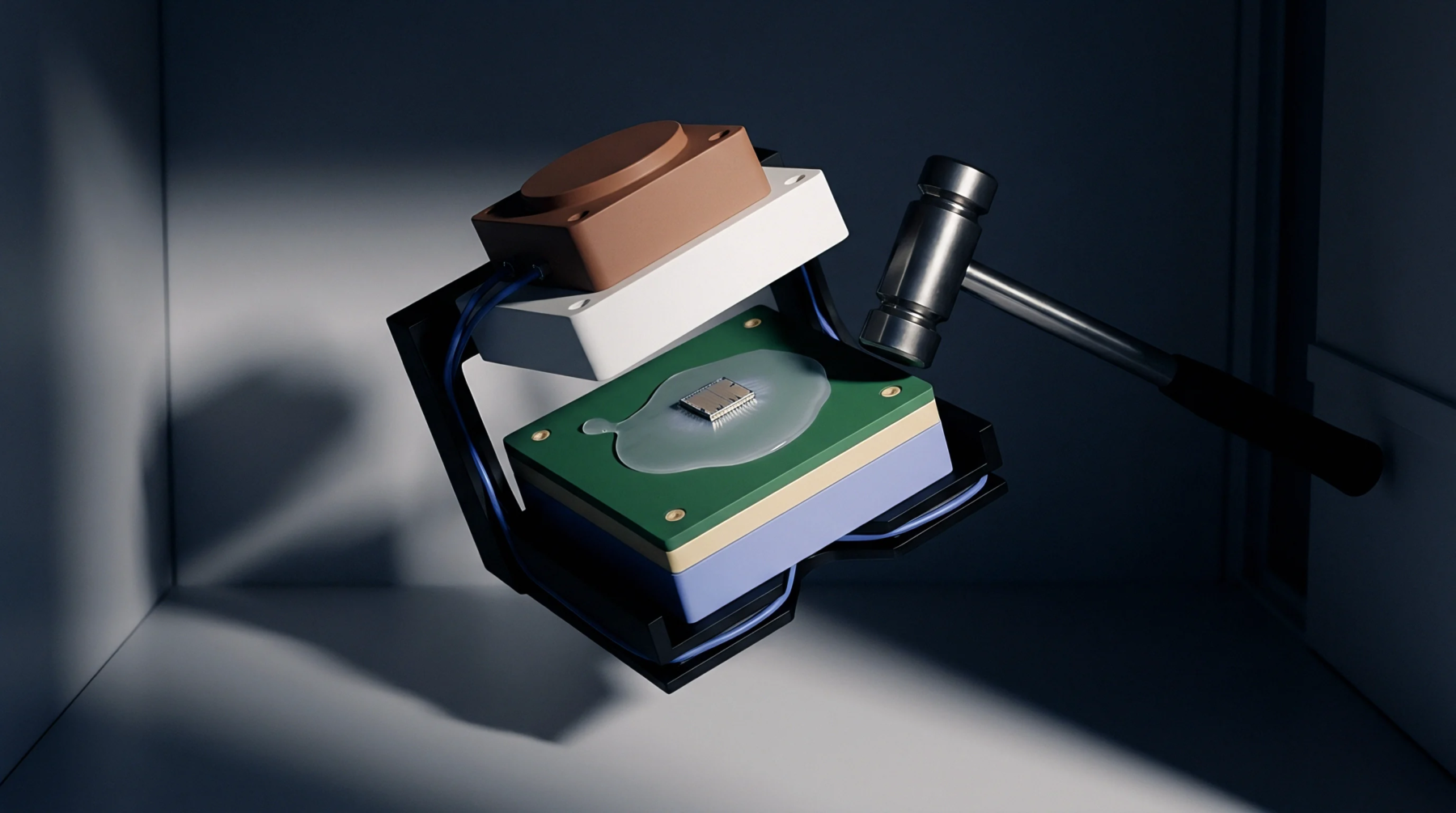
Thermal Sequence
A controlled temperature profile involves a continuous and varying rate of heat extraction from a material during its transition from an elevated processing temperature to ambient conditions. This thermal trajectory is a non isothermal cooling ramp, which is used to dictate the final crystalline structure of polymers and the grain distribution in metals. Unlike isothermal treatments where the temperature is held constant, this method continuously changes the thermodynamic driving force for phase transitions.
Industrial manufacturing lines use this approach to optimize production throughput and material properties simultaneously.
Material Transformation
Solidification and nucleation rates depend heavily on the instantaneous cooling rate at any point along the curve. When a non isothermal cooling ramp is applied, the material spends limited time at each temperature interval, which prevents the formation of large, brittle crystals.
Stress Generation
Differential cooling between the outer surface and the inner core of a thick component creates strong internal thermal gradients. As a non isothermal cooling ramp progresses, these gradients generate residual stresses that can lead to warpage or microcracking if the rate is too aggressive. Engineers model these stresses using finite element analysis to ensure the cooling rates do not exceed the yield strength of the material.
Process Optimization
Temperature monitoring via infrared sensors and thermocouples ensures that the cooling profile matches the simulated cooling curves. Adjusting the convective airflow or the conveyor speed in continuous ovens allows fine-tuning of the non isothermal cooling ramp to prevent thermal shock. Standard quality assurance protocols require these profiles to be logged and verified for each production batch to maintain product consistency.