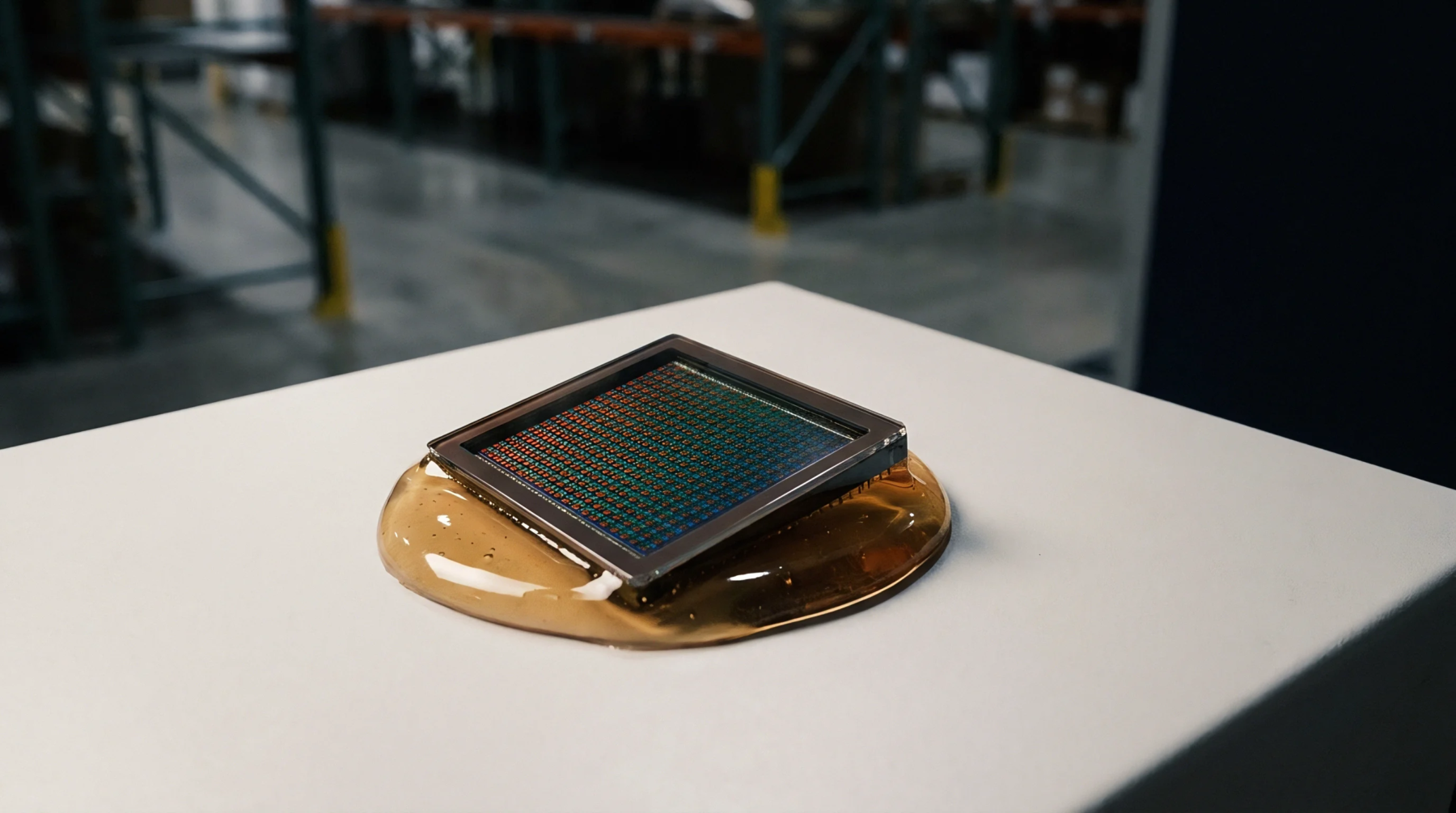
Quantifying Viscoelastic Adhesive Stress Relaxation in Ceramic LCC Sensor Packages
Viscoelastic adhesive relaxation in ceramic LCC packages causes time-dependent zero drift, requiring master-curve Prony modeling to quantify long-term offset shift.
Standardized technical guidelines define formal methodologies for evaluating the accelerated reliability and fatigue life of surface mount solder attachments. The document designated as ipc sm 785 presents testing philosophies, failure modes, and analytical life-prediction models for electronic component assemblies subjected to cyclic thermal and mechanical stresses. Metrology teams and electronics packaging engineers utilize these qualification paths to identify brittle solder joint fractures, intermetallic fatigue, and structural substrate delamination before clearing assemblies for mission-critical hardware.
Test procedures demand rigorous thermal cycling inside dual-chamber or single-chamber environmental test units, enforcing controlled temperature dwell times and defined ramp rates. Automated continuous electrical monitoring tracks daisy-chained circuit loops through the solder joints to detect instantaneous micro-second resistance spikes that signal crack initiation. Mechanical shear tests, cyclic bending protocols, and package drop shocks evaluate structural integrity under operational mechanical strains.
Test engineers compare experimental cycles-to-failure against empirical Coffin-Manson fatigue curves to validate predicted component lifetimes. The verification environment requires calibrated thermocouple arrays welded directly to component bodies to track true package temperatures rather than chamber air setpoints. Optical inspection and destructive metallographic micro-sectioning reveal internal crack paths through the bulk solder or along intermetallic compound boundaries.
Solder joints suffer progressive microstructural coarsening, grain boundary sliding, and void nucleation under cyclic shear strains driven by thermal expansion mismatches between package and circuit board. Repeated cycling transforms uniform eutectic phases into segregated lead-rich or tin-rich regions that demonstrate degraded mechanical strength. Excessive intermetallic compound thickness at copper-solder interfaces introduces brittle failure zones vulnerable to low-energy mechanical impacts.
Creep deformation dominates at elevated temperatures, leading to plastic strain accumulation that accelerates fatigue cracking. Creep rate dependencies mean that tests with short dwell times underestimate field failures, while excessively long dwells risk introducing non-representative failure mechanisms.
Guidelines published in the standard specify design margins and testing architectures, stopping short of dictating rigid pass-fail numbers for every application environment. Sourcing authorities must establish custom field life requirements based on the targeted operational envelope, whether industrial automation, automotive under-hood installations, or aerospace monitoring platforms. Test results earned under thermal cycling regimes cannot be substituted for vibration or mechanical shock qualifications without independent testing.
Solder compositions differing from legacy tin-lead alloys, such as lead-free tin-silver-copper formulations, require altered stress exponents within the analytical life models. Sourcing sign-offs remain contingent on complete test data demonstrating that zero solder open-circuits occurred across the minimum contracted cycle threshold.
Viscoelastic adhesive relaxation in ceramic LCC packages causes time-dependent zero drift, requiring master-curve Prony modeling to quantify long-term offset shift.
Expertise is a utility, not a secret. sentiention™ publishes its working knowledge as open reference: intelligence layer covering the materials it sources, the markets it enters, and the reference that serves both.