Ballistic Measurement
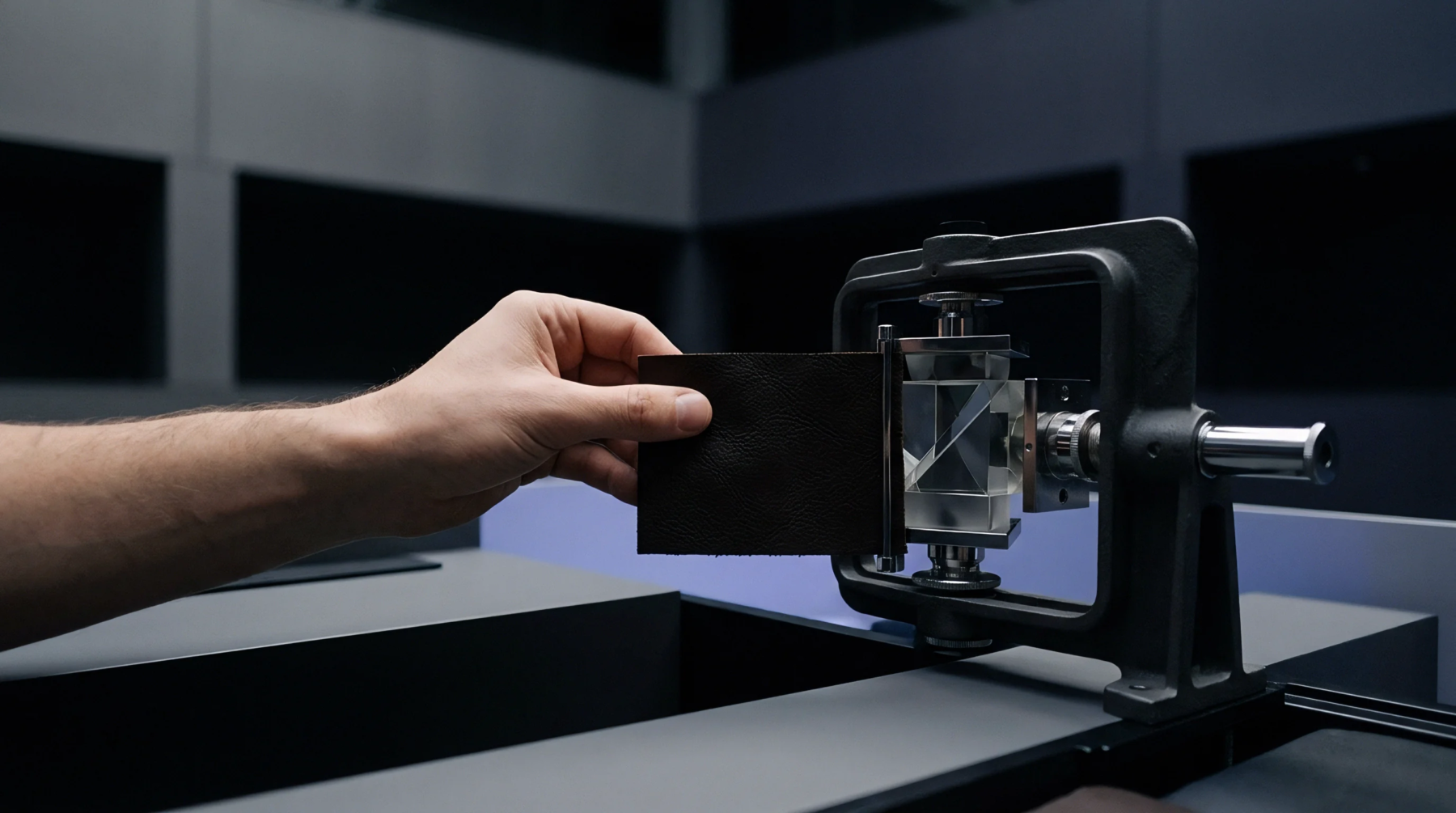
Free-fall ballistic instruments measure local gravitational acceleration by tracking the trajectory of an optical retroreflector dropped in a high-vacuum chamber against a laser wavelength standard. In precision geodetic surveying, the fg5x gravimeter provides an absolute scalar determination of vertical gravity without relying on relative spring balance conversions or calibration transfer artifacts. The instrument operates by repeatedly releasing a corner-cube prism inside an ion-pumped vacuum chamber, measuring its free descent over a twenty-centimetre drop stroke using optical interferometry.
Laser fringes generated between the falling prism and a seismically isolated reference corner cube yield time-distance coordinates tied to an atomic frequency standard. Measurement results achieve absolute accuracy within two microgals under quiet site conditions.
Interferometric Trajectory
Optical fringe generation pairs with atomic timing circuits to produce hundreds of position points during each ballistic drop cycle. Inside the fg5x gravimeter, a helium-neon laser stabilized against iodine absorption transitions provides the length standard, while an internal rubidium clock establishes the precise temporal grid for fringe counting. An active inertial isolation device known as a superspring suspends the reference optic, filtering out background seismic noise and ground vibrations above zero point one hertz.
Fitting the recorded spatial and temporal points to a parabolic trajectory equation yields the absolute vertical acceleration while resolving vertical gravity gradient corrections.
Environmental Perturbation
External mechanical vibration, barometric pressure fluctuations, and ocean tidal loading alter local gravitational fields and must be compensated during continuous data acquisition. The long drop chamber of the fg5x gravimeter minimizes air resistance errors by maintaining internal vacuum pressures below ten to the power of minus six pascals, eliminating drag forces on the falling prism. Co-located barometric sensors record atmospheric pressure variations to adjust calculated gravity values for atmospheric mass redistribution.
Seismic disturbance from microseisms or nearby vehicular traffic can overwhelm the superspring compensation envelope, requiring analytical rejection of disturbed drop events. Thermal instability across the optical base plate induces mechanical tilt, mandating automated electronic level compensation throughout extended observation campaigns.
Verification Standard
Metrology institutes and primary standards laboratories deploy these absolute instruments to calibrate national gravimetric networks and monitor baseline drift in relative field meters. The fg5x gravimeter serves as a primary reference against which relative quartz or superconducting gravimeters are calibrated before deployment in geodynamic monitoring networks. Factory acceptance protocols require participation in international comparison campaigns where multiple absolute meters measure identical station pillars to verify spatial congruence within accepted statistical limits.
Traceability chains connect local gravity measurements directly to international frequency and length definitions, eliminating cumulative calibration drift across decades of environmental observation.