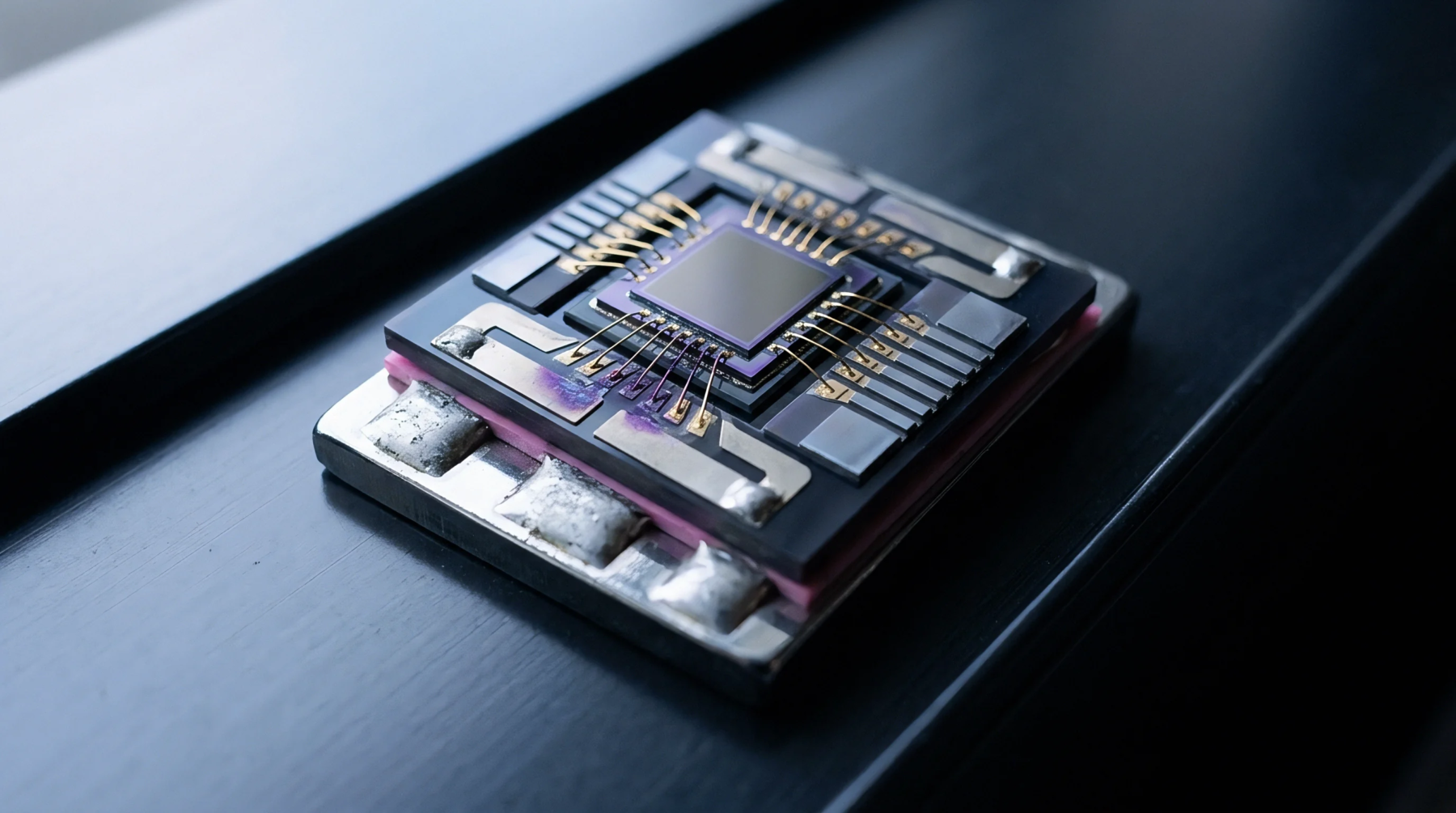
Mechanical Isolation
Stress-buffering thin films reduce the transfer of thermal and packaging strains from a package housing to a sensitive transducer element. Utilizing compliant interlayers allows for the decoupling of thermal expansion mismatches between rigid ceramics and silicon sensors. This decoupling prevents the distortion of microfabricated structures during high-temperature cycles.
Material Selection
Polymeric and soft metal coatings are the primary materials for absorbing mechanical strain. While gold and aluminum films are deposition choices for metallic bonding, polymers like polyimide provide greater compliance at lower thickness. Deposition thickness must be managed to avoid acoustic damping in high-frequency resonator applications.
Integration Process
Sputtering and spin-coating are the primary techniques used to apply these protective buffers onto the wafer surface before dicing. The selected compliant interlayers must withstand subsequent wafer bonding temperatures without degrading or outgassing. If outgassing occurs, it creates voids in the bonded interface, degrading the hermetic seal.
Calibration Stability
Metrological drift in piezoresistive pressure sensors is often traced to package-induced stress that shifts the sensor zero-point. Implementing compliant interlayers minimizes this hysteresis during temperature cycling. Calibrated sensor accuracy is thus maintained over the specified operating temperature range, ensuring reliable performance in demanding environments.
This structural isolation is verified through thermal chamber testing where the zero-point output of the sensor is tracked across repeated thermal cycles to confirm the absence of mechanical shifts.