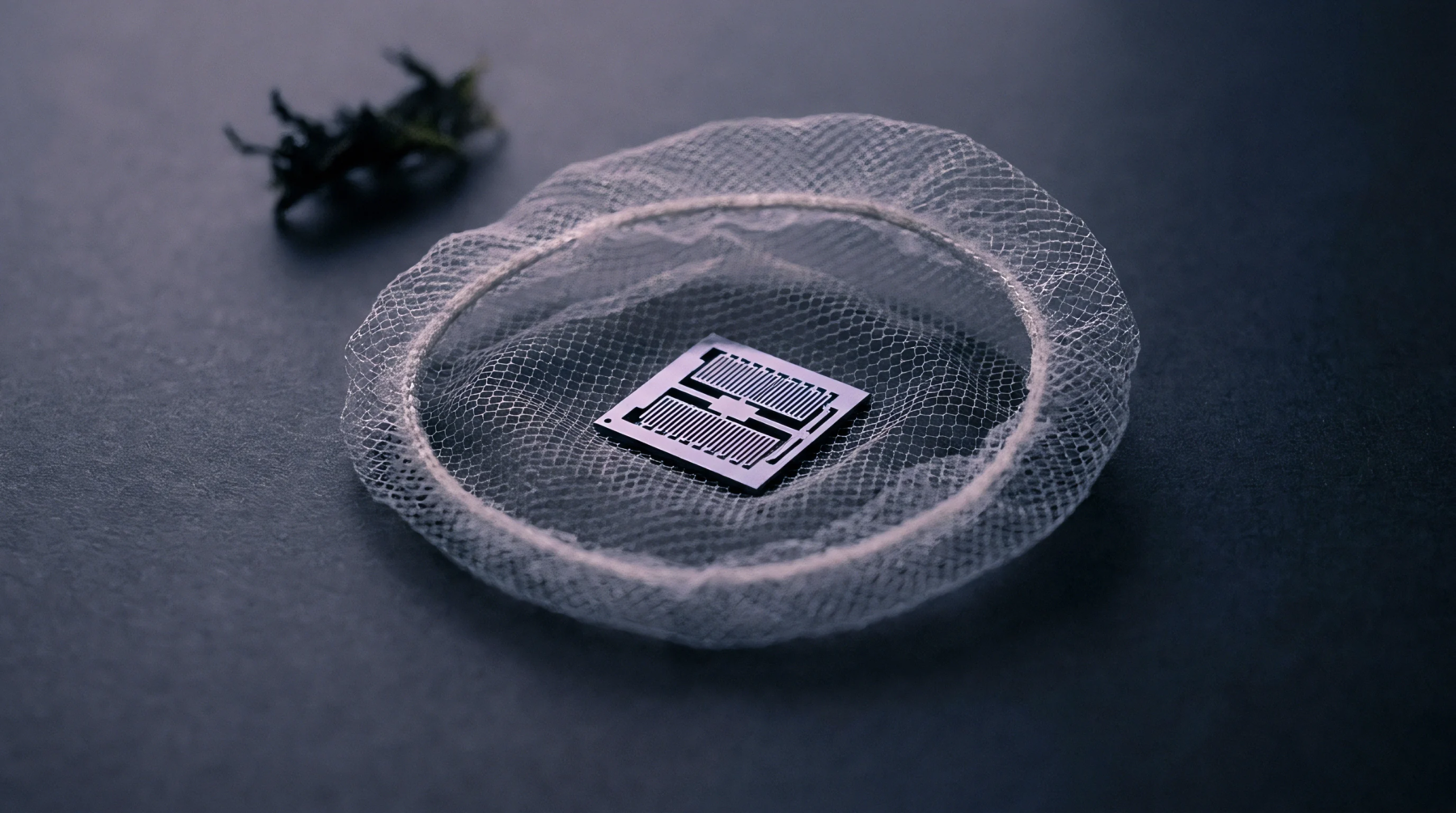
Electrode Array
Interdigitated micro-machined fingers fabricated on a silicon substrate form a differential transducer structure. Each capacitive sensing comb translates minute lateral movement into a proportional change in electrical charge. This configuration operates by varying the gap or the overlap area between the fixed and moving electrodes.
Measurement Accuracy
Acceleration and tilt measurements rely on the stability of the electrostatic forces within the structure. For a capacitive sensing comb, cross-axis sensitivity and parasitic capacitance represent the principal sources of signal deterioration. Moisture ingress alters the dielectric constant between the fingers, which distorts the output.
Physical Displacement
Micro-electromechanical systems (MEMS) use the electrostatic drive capability to test the mechanical integrity of the proof mass before sealing. Applying a known voltage to the capacitive sensing comb induces a controlled deflection to verify the spring constant. If the finger alignment is imperfect, it can lead to electrostatic pull-in, which causes the fingers to stick together and fail.
This diagnostic sequence identifies defects such as particulate contamination and etching non-uniformities prior to final wafer packaging.
Calibration Standard
Laser Doppler vibrometry offers a precise method to characterize the dynamic response of the fingers. Technicians calibrate the capacitive sensing comb against known reference accelerations in a controlled test cell. This step establishes the scaling factor and confirms that the non-linearity remains below the specified tolerance.