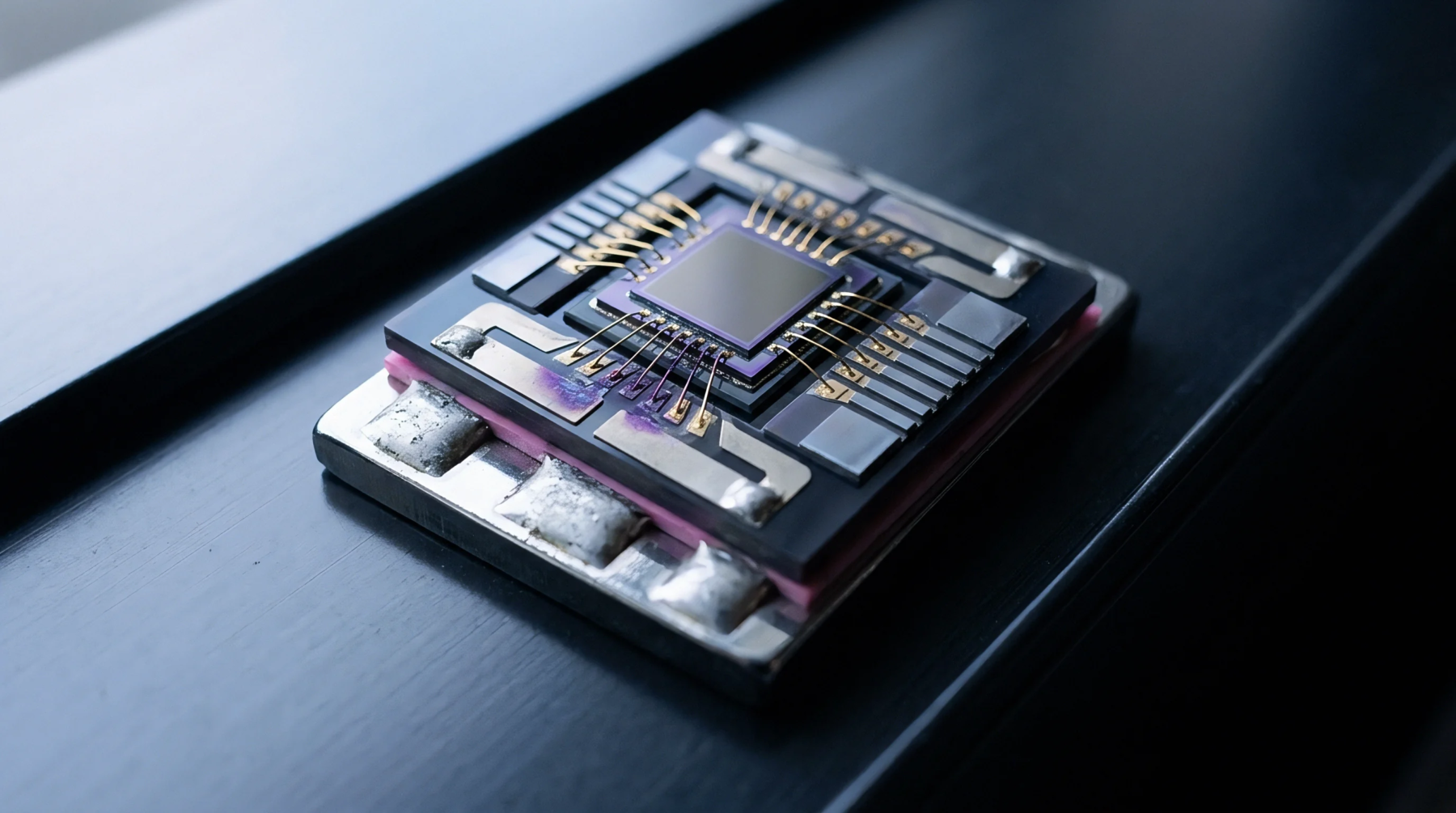
Adhesion Mechanism
Permanent sealing joins a sodium-rich glass substrate to a silicon wafer through electrostatic attraction and electrochemical reaction. Anodic glass bonding typically occurs at temperatures between 300 and 500 degrees Celsius under a high voltage DC field. The process creates a hermetic interface without the need for intermediate adhesive layers.
Applied Voltage
Applied voltage usually ranges from 200 to 1000 volts depending on the thickness of the glass. Successful anodic glass bonding requires surfaces polished to a roughness below 20 nanometers to ensure intimate contact across the entire interface. Depletion of mobile ions at the interface creates a space charge region that pulls the surfaces together at the molecular level.
Bonding Integrity
Mismatch in thermal expansion creates residual stress. Integrity is verified using helium leak detection or by observing the deflection of a sealed membrane over time. Choosing a borosilicate glass with an expansion coefficient that matches silicon minimizes this strain.
High precision is required during the heating phase to prevent fracturing or delamination of the newly formed interface.
Environmental Limit
Seal performance degrades if the glass contains excessive moisture or if the surface contamination prevents uniform field distribution. High humidity during the pre-bonding phase often leads to void formation. Stable seals maintain their structural properties in vacuum or inert gas environments over many years.