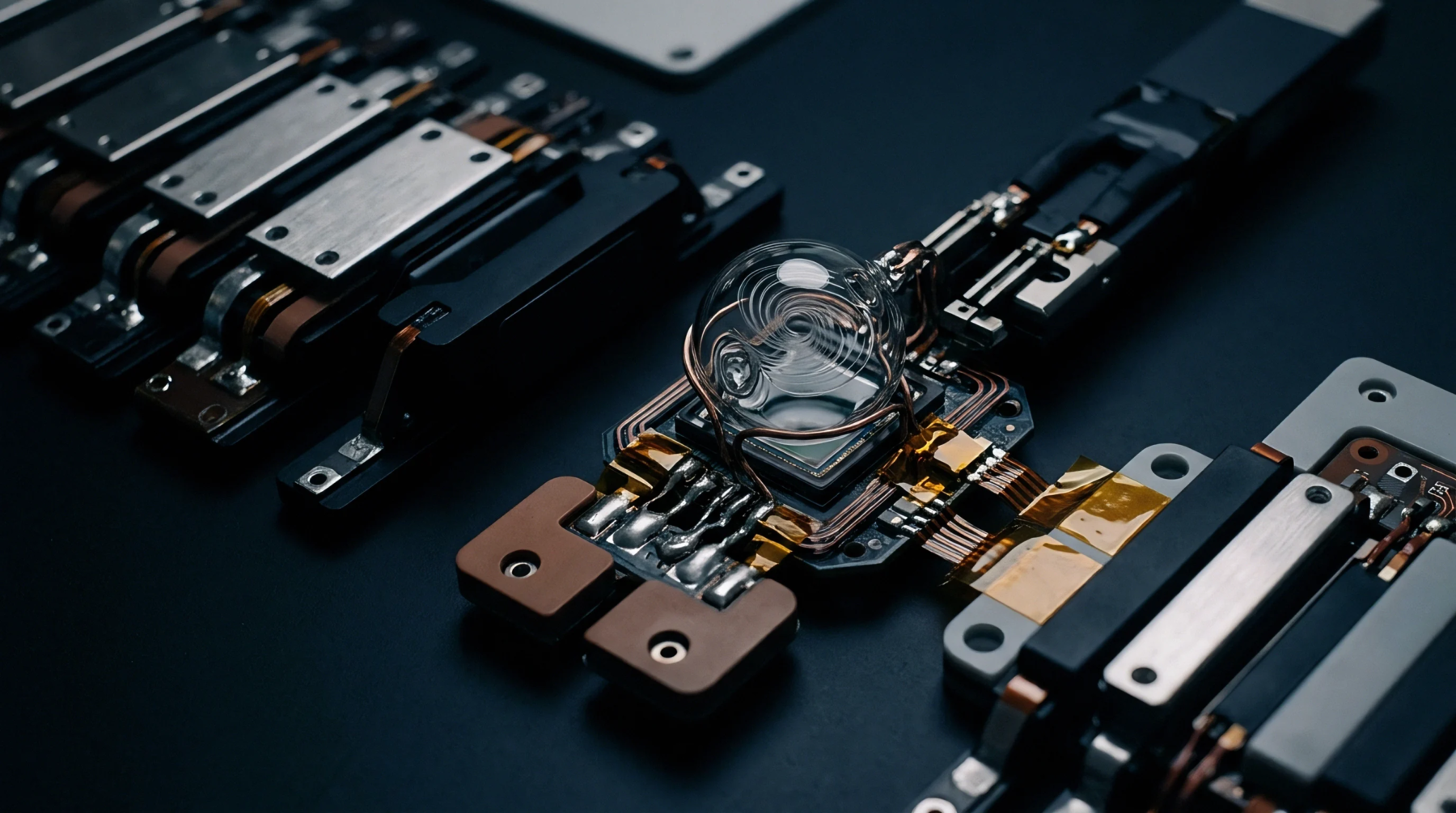
Integration Architecture
An advanced semiconductor assembly method places multiple integrated circuits side by side on a common silicon or glass substrate to enable higher interconnect density. Within 2.5d packaging, these individual components communicate through an interposer layer that contains high density metal routing. This arrangement sits between traditional two dimensional planar layouts and fully vertical three dimensional stacks.
Interposer Specification
The performance of the underlying substrate determines the signal integrity for the entire module. Passive or active silicon interposers provide sub micron routing pitches that permit high bandwidth memory to sit close to a central processing unit. Manufacturing tolerances for these layers are verified against lithographic design rules to prevent electrical shorts or opens in the fine pitch wiring.
High frequency signals travelling through the interposer encounter parasitic capacitance and inductance that must be modelled during the qualification phase. Laser based inspection tools measure the flatness of the substrate surface before die attachment to ensure that the micro bumps align perfectly with their corresponding landing pads. Every layer of the interposer undergoes electrical testing to confirm that the through silicon vias achieve the resistance values specified by the design manual.
Thermal Management
Heat sinks are typically mounted across the collective surface of the dies to maintain operating temperatures within calibrated limits. Thermal interface materials compensate for height variations between chips to ensure uniform conductive paths to the cooling hardware. Efficient heat transfer prevents the mechanical warping of the interposer.
Test Coverage
Boundary scan methods verify the thousands of micro bumps that join the dies to the interposer. Known good die requirements ensure that only functional components enter the final assembly stage. Mechanical probes struggle to maintain consistent contact with the minute structures found on an interposer surface during the testing of a complete assembly.
Probing the interposer itself remains a challenge.