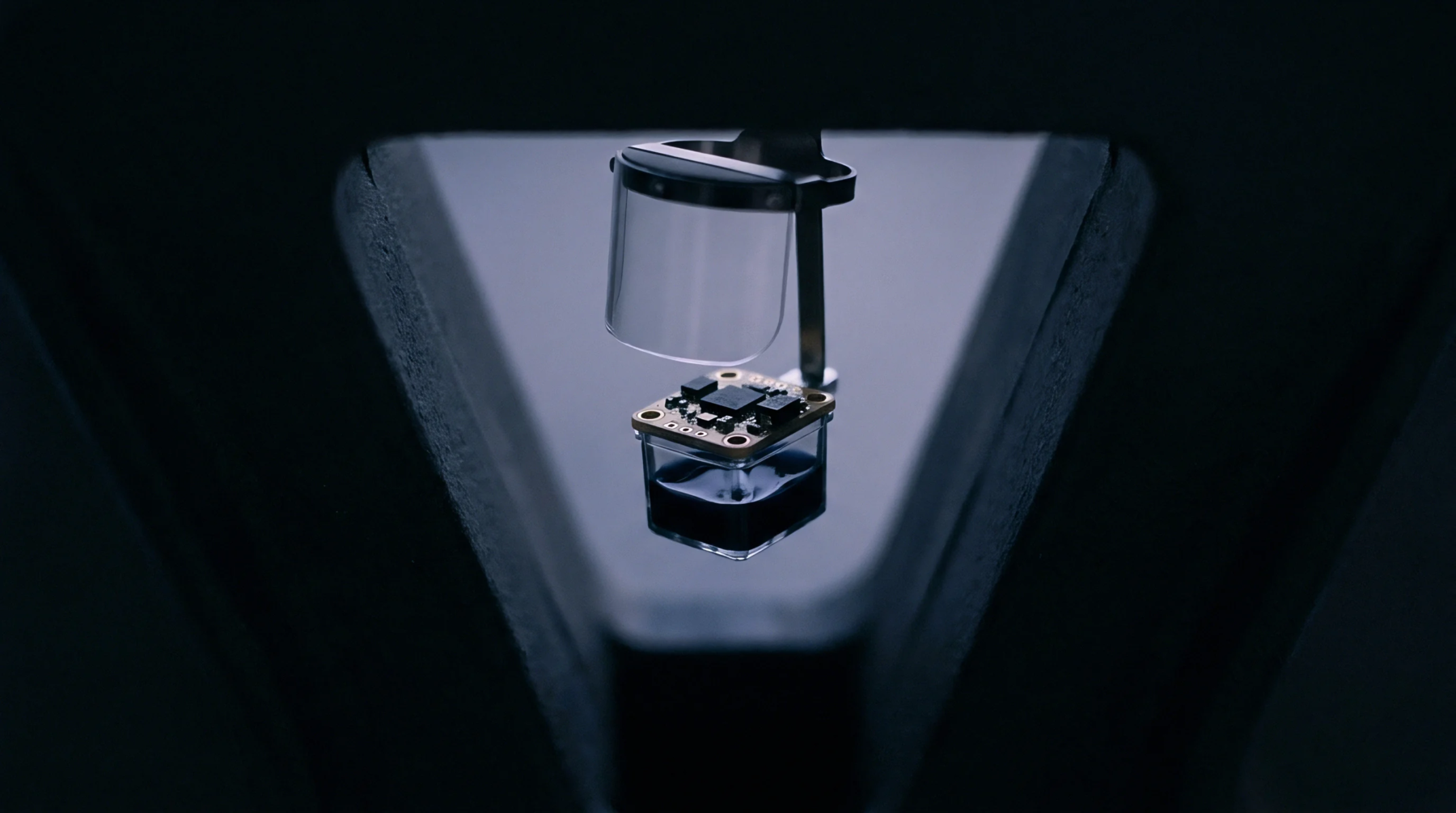
Mobility Arrest
Phase transition where a liquid or curing resin transforms into a rigid glass state occurs when the reaction temperature equals the glass transition temperature. During vitrification the molecular motion becomes so slow that the chemical reaction effectively stops. This state change happens without a change in the chemical composition of the material.
Glass Formation
Hardening of a polymer through this process creates a solid that lacks a long range crystalline order. The point of vitrification marks the transition from a diffusion controlled reaction to one limited by molecular mobility. After this point the material maintains its shape but remains in a metastable state.
Reaction Hindrance
Completion of the cure is difficult to achieve once the matrix has turned into a glass. If vitrification occurs before the intended kinetic conversion is reached the material will have inferior mechanical properties. Post curing at a higher temperature is often required to restart the reaction.
Physical Stability
Maintenance of the glass state is necessary for the long term storage of sensitive biological samples or pharmaceuticals. Below the temperature of vitrification the molecules are locked in place and degradation is significantly slowed. This behavior defines the shelf life of many advanced materials.