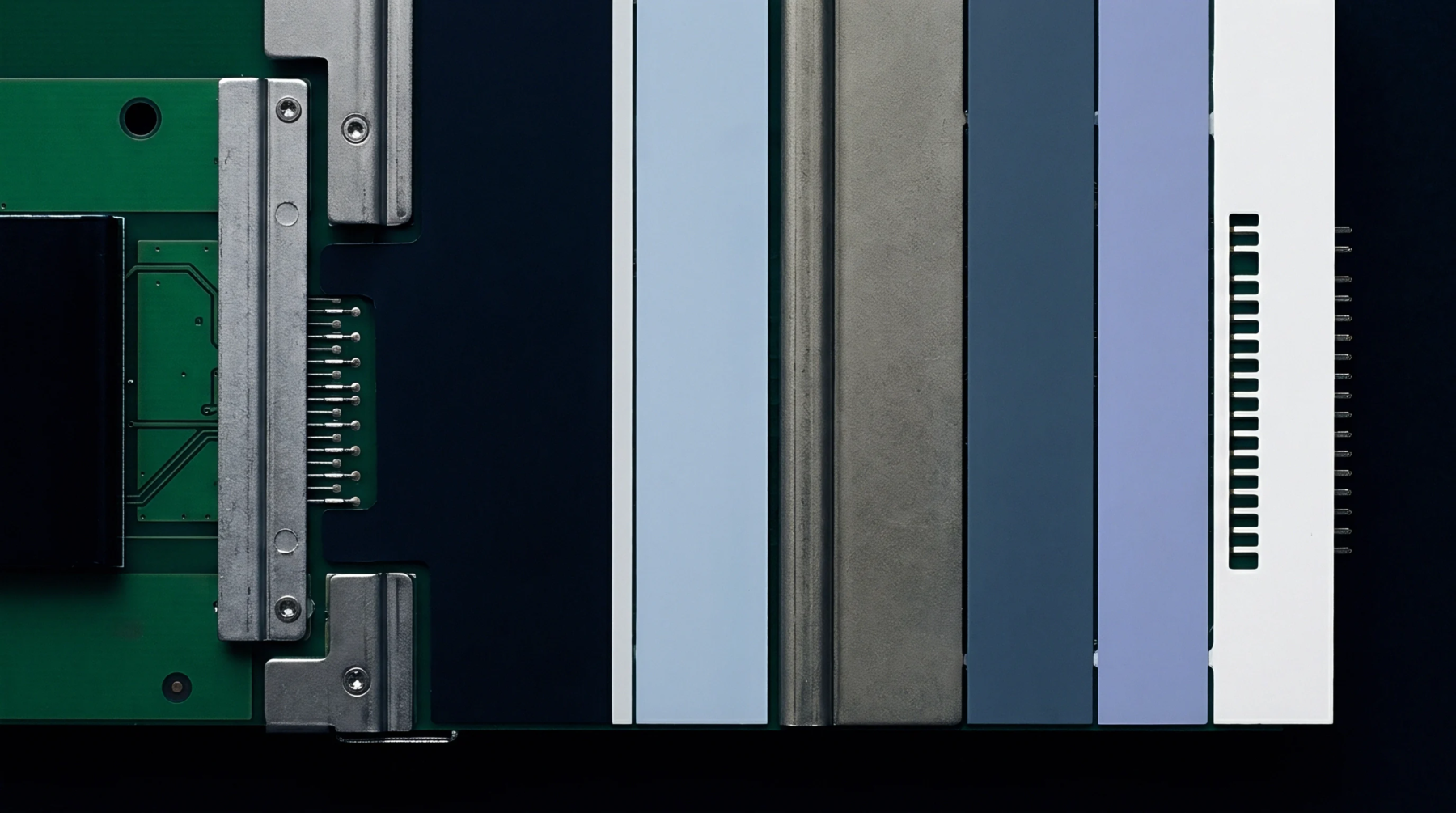
Cascade Enable Logic Integration across High Density Multi Multi Node Arrays
Cascade enable logic eliminates individual chip-select routing across dense sensor arrays by propagating a single hardware token down a shared serial bus.
Precision aperture foils mounted under mechanical tension transfer metered volumes of metal-alloy solder paste onto circuit board land patterns through squeegee-driven shear displacement. Executing stencil printing establishes the baseline solder deposit volume, location accuracy, and geometry required to mount surface-mount components reliably during electronic assembly operations. Process engineers evaluate deposition accuracy to prevent open joints, bridging defects, solder voiding, and tombstoning on fine-pitch components.
The operational cycle sweeps a metallic or polyurethane squeegee blade across a laser-cut or electroformed metal foil, forcing shear-thinned paste into apertures before controlled downward separation releases the deposits onto PCB pads. Dynamic paste rheology, blade pressure, separation speed, and environmental humidity dictate the volumetric consistency of each deposited brick. Automated three-dimensional solder paste inspection systems measure deposit height and area immediately downstream to verify process compliance.
The deposition sequence ceases to achieve uniform transfer when aperture area ratios fall below physical release limits.
Solder pastes exhibit non-Newtonian pseudoplastic and thixotropic properties that govern their mechanical behavior during application cycles. Applied shear stress from moving squeegee blades reduces paste viscosity, facilitating smooth roll across the stencil surface and complete filling of narrow aperture cavities. Once shearing forces cease inside the openings, the paste must recover structural viscosity rapidly to prevent slump and lateral bridging prior to board reflow.
Ambient factory temperature and relative humidity directly alter vehicle volatility and flux chemistry, altering paste rolling characteristics over extended production runs. Quality control protocols evaluate paste viscosity using spiral pump viscometers to confirm that incoming material lots meet specified shear response curves. Process operators monitor paste life on the stencil foil, refreshing materials periodically to prevent solvent evaporation and subsequent release defects.
Laser-cut, nickel-electroformed, or chemically etched metal foils present distinct interior sidewall surface finishes that govern paste release performance. Electropolishing and nano-coating treatments reduce aperture wall roughness, lowering shear drag and improving paste transfer efficiency on small-footprint passives. The geometric relationship between aperture opening area and total interior sidewall area dictates whether the paste releases cleanly onto circuit lands or clings to the foil.
Slower stencil separation speeds permit uniform paste disengagement from aperture walls, reducing dog-ear formations and surface defects on wet prints. Sourcing engineers specify foil thickness and aperture modifications based on the most demanding component pitches present across the design layout. Coordinate measuring machines verify opening dimensions against computer-aided design files prior to production release.
Automated optical and laser triangulation inspection platforms scan printed circuit boards inline to quantify paste volume, height, and area across every deposit. Post-print inspection acts as a primary quality gate, halting assembly sequences when deposited paste volumes drift outside statistical process control bands. Misalignment between circuit boards and stencil openings causes paste deposition onto bare solder mask, raising the probability of solder ball generation during reflow.
Process capability metrics track printing stability across production shifts, triggering automated stencil wipe cycles when paste builds up on the foil underside. Defective prints undergo immediate wash cycles to strip unbaked solder paste before boards re-enter the production line. Qualification records log volume transfer stability across production lots to confirm equipment capability.
Continuous process logging preserves assembly traceability.
Cascade enable logic eliminates individual chip-select routing across dense sensor arrays by propagating a single hardware token down a shared serial bus.
Expertise is a utility, not a secret. sentiention™ publishes its working knowledge as open reference: intelligence layer covering the materials it sources, the markets it enters, and the reference that serves both.