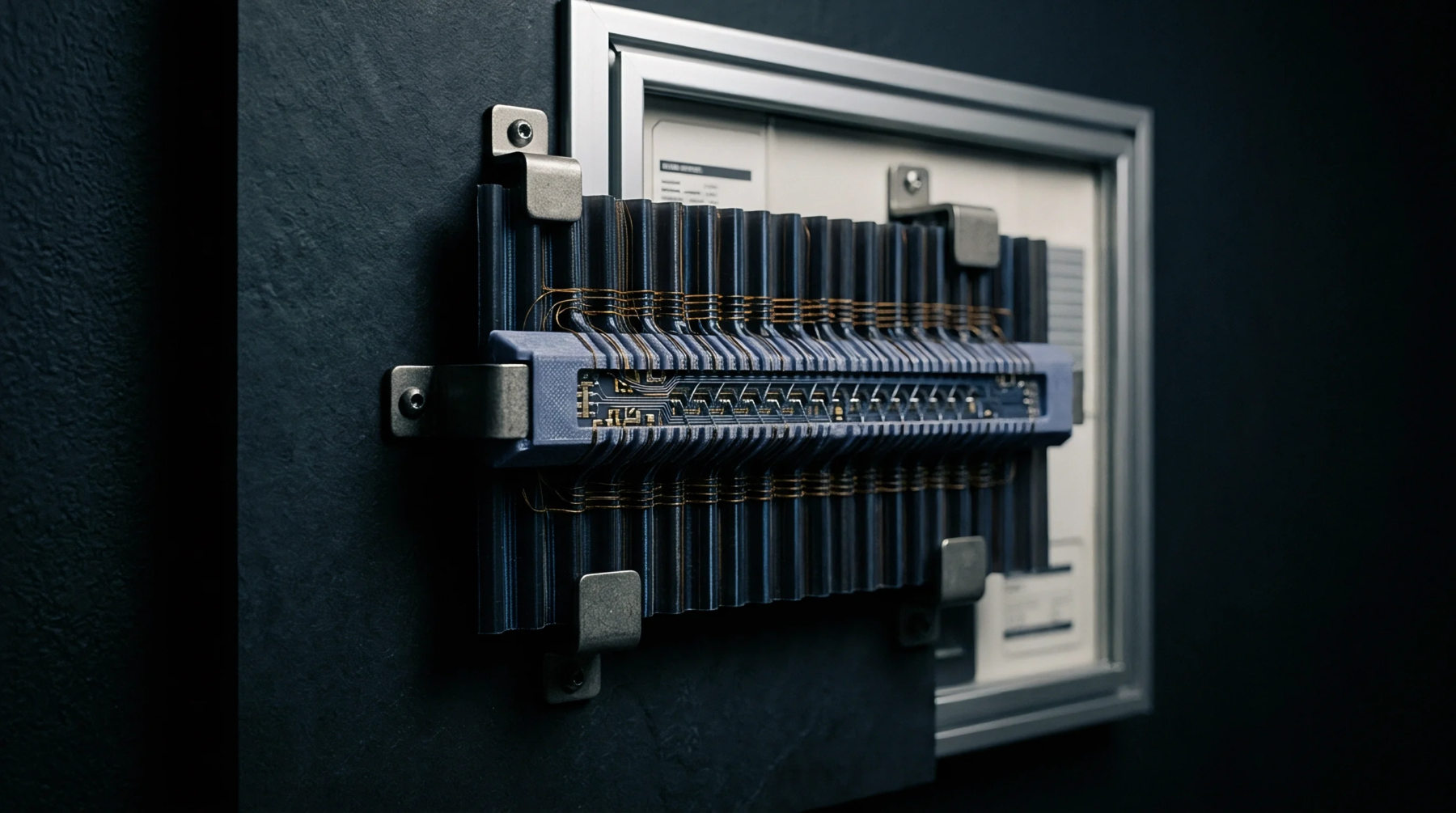
Routing Component
Electronic switches enable the selection of one signal from several input sources for transmission over a single output line. A multiplexer operates by using digital control logic to connect a specific channel to the downstream amplifier or converter. This hardware reduces the number of analog to digital converters required in a multi sensor system.
Selection Logic
Binary address pins determine which path is active at any given moment. Changing the state of these pins allows the multiplexer to cycle through a series of temperature or pressure readings in sequence. Fast switching times are necessary to prevent lag between the acquisition of different data points.
Signal Integrity
On resistance and leakage current represent the primary sources of error in a switching circuit. Because the multiplexer is placed in the signal path, it introduces a small voltage drop that must be accounted for during calibration. High quality devices minimize these parasitic effects to maintain sub millivolt accuracy.
Application Scope
Data acquisition systems use these devices to expand the capacity of a central processor. In an industrial environment, a multiplexer might handle dozens of thermocouple inputs by sampling each one for a few milliseconds. This scanning method ensures that a single high resolution instrument can monitor an entire assembly line without the cost of redundant hardware.
The frequency of the switching is limited by the settling time of the internal circuitry and the bandwidth of the connected signals.