Reference Stability
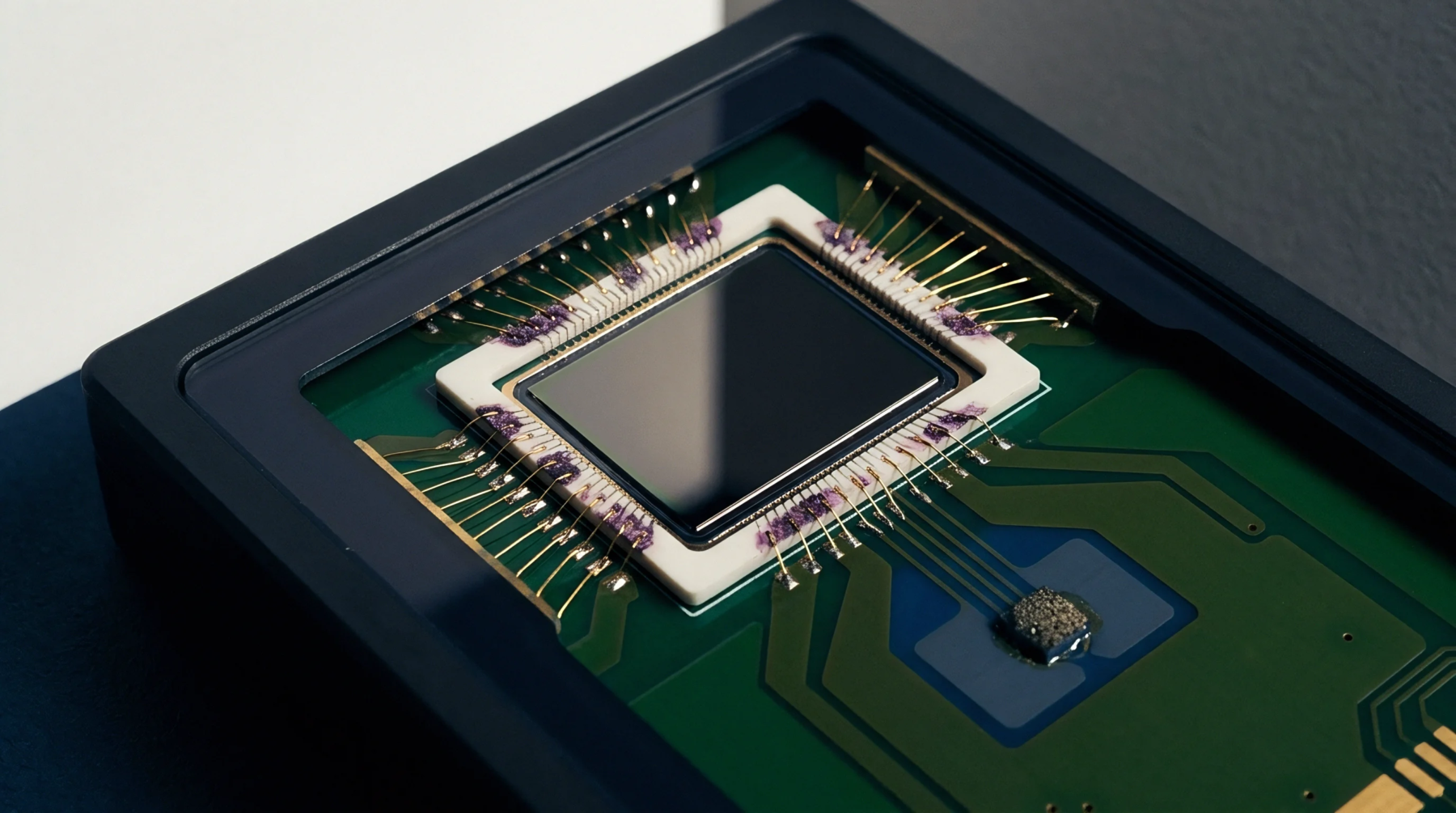
Semiconductor bandgap physics generates the internal reference voltage inside integrated circuits to supply a constant potential against supply rail fluctuations. Manufacturers specify this magnitude in millivolts at a nominal twenty-five degrees Celsius under regulated input conditions. Bandgap architectures exploit the complementary thermal coefficients of base emitter junctions and thermal voltages to cancel first order temperature dependencies.
External loads draw current from the circuit and induce thermal gradients across the silicon die that shift the output potential away from the calibration baseline. Package stress introduces piezoresistive effects that permanently alter the output magnitude during wire bonding and encapsulation.
Thermal Drift
Packaging mechanical strain couples with ambient temperature swings to drive the internal reference voltage outside acceptable error bands during field operation. Calibration laboratories measure this parameter across a specified temperature range to construct a polynomial correction curve for the host system. High precision applications require ovenized substrates or active heaters to maintain isothermal conditions around the voltage source.
Second order curvature compensation circuits reduce thermal parabolic error by introducing weighted correction currents into the core bandgap cell.
Noise Floor
Integrated circuitry generates broadband thermal noise and flicker noise within the internal reference voltage spectrum that directly degrades analog to digital converter resolution. Capacitive filtering at the output terminal attenuates high frequency fluctuations but increases the startup transient duration of the entire system. Semiconductor manufacturers define noise density limits in microvolts root hertz across a specified bandwidth to allow proper component selection.
Layout engineers isolate sensitive routing traces from digital switching noise to prevent ground bounce from modulating the DC potential.
Aging Degradation
Electromigration and lattice relaxation mechanisms cause the internal reference voltage to drift permanently over thousands of operating hours. System designers account for long term stability metrics expressed in parts per million per thousand hours when calculating total error budgets for industrial equipment. Accelerated life testing at elevated temperatures simulates years of field degradation to establish reliable drift boundaries for data sheets.
Periodic system recalibration in the field corrects for cumulative aging shifts and restores measurement accuracy without hardware replacement.