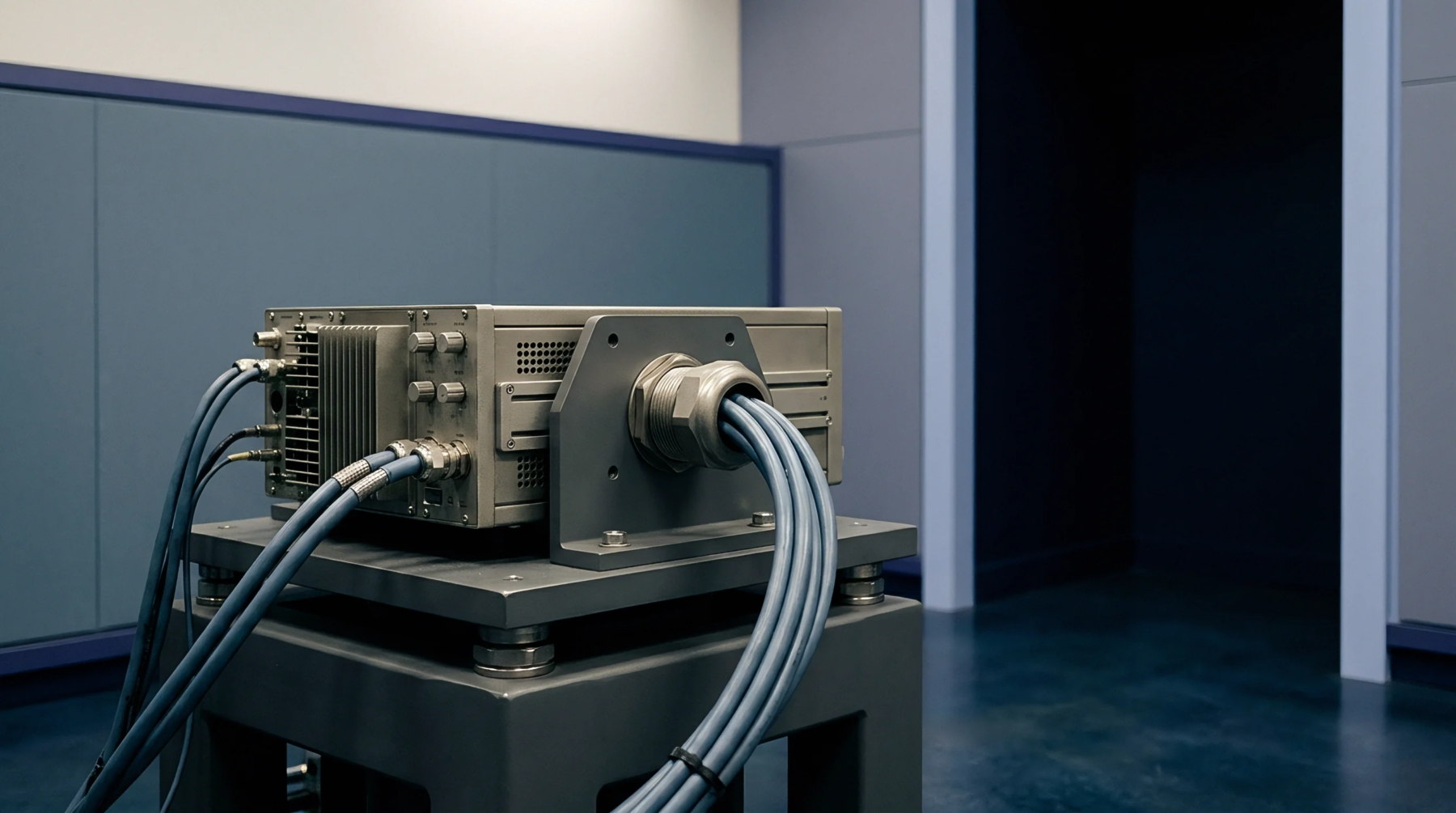
Resonant Circuit Driver
Inductive and capacitive components connected in parallel form a frequency determining network that sustains electrical oscillations. Sensors measuring displacement often use a tank oscillator as the primary excitation source. The resonant frequency depends on the inductance of the sensing coil and the capacitance of the circuit.
Any change in the environment that affects the coil also changes the frequency.
Sustained Resonance
An amplifier provides the energy needed to overcome resistive losses in the coils. Then the tank oscillator maintains a stable amplitude through an automatic gain control circuit. The quality factor of the inductor determines the sharpness of the resonance and the stability of the frequency.
High quality factors lead to lower phase noise and better resolution.
Frequency Shift
Measuring the output frequency provides a high resolution digital representation of the sensed variable. If a metal target approaches the coil, eddy currents reduce the effective inductance, causing the tank oscillator to run at a higher frequency. This direct conversion to frequency eliminates the need for precision analog to digital converters in some applications.
Component Stability
Changes in temperature cause the physical dimensions of the coil and the properties of the capacitors to shift. These variations result in a drift of the base frequency that can be mistaken for a sensor signal. Using components with opposing temperature coefficients helps to stabilize the output.