Internal Oscillation
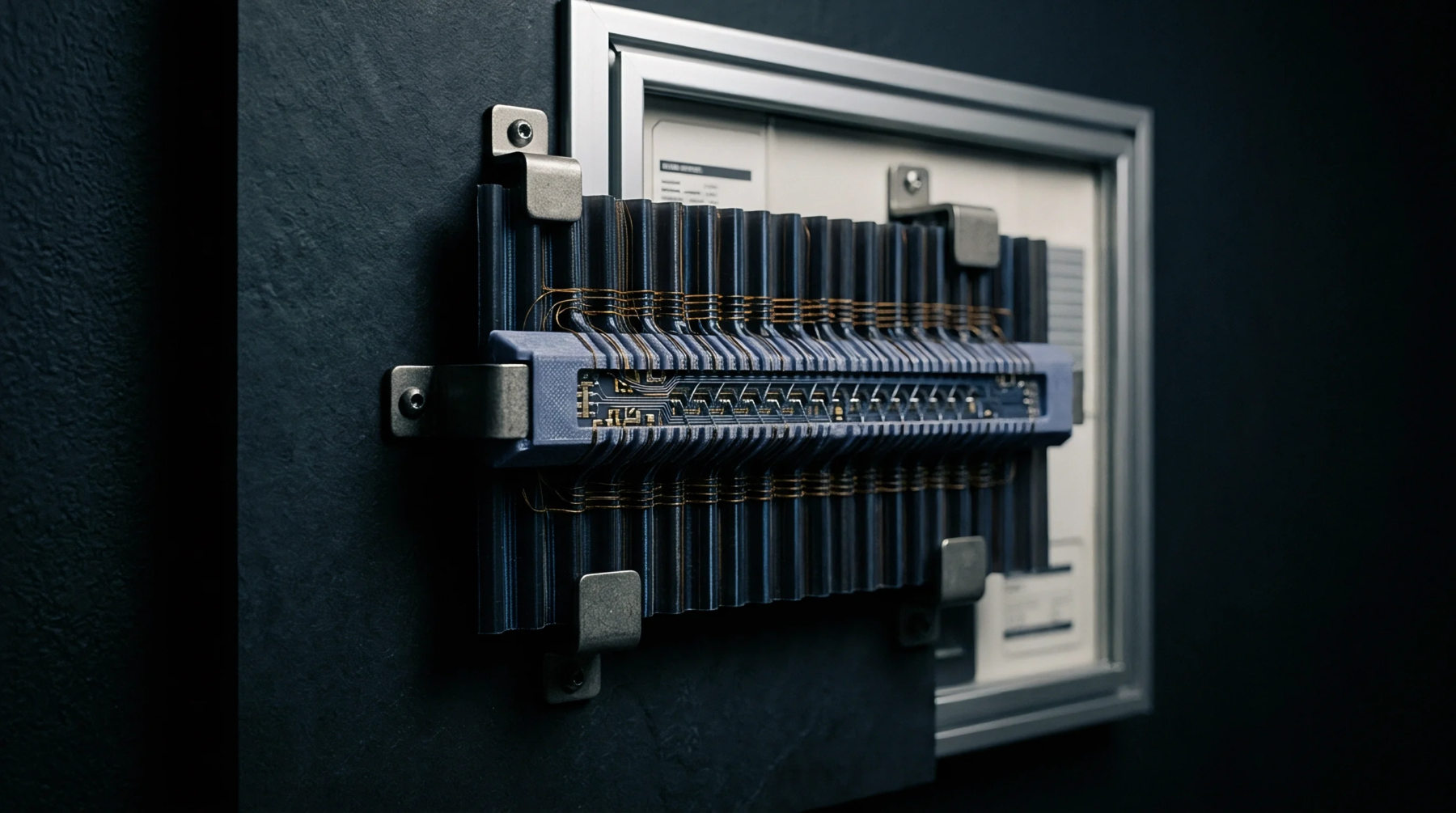
Electromagnetic devices exhibit natural resonance when their inherent winding inductance balances with their own parasitic capacitance without external capacitors. This phenomenon of self-resonance defines the high-frequency limit where a coil ceases to behave as a purely inductive element. The frequency at which this occurs is determined by the physical design of the winding.
Phase Inversion
Impedance characteristics change from inductive to capacitive as the excitation frequency passes through the resonant point. At this frequency, the phase angle of the impedance passes through zero degrees. This transition must be avoided in sensors that rely on stable inductive characteristics.
Sensor Limit
Operating frequencies must be kept well below this internal resonant point to ensure linear sensor behavior and repeatable measurement results. When a sensor operates too close to this limit, any small change in parasitic capacitance from humidity or proximity shifts the signal unpredictably. This sensitivity to environmental factors degrades the accuracy of the displacement or proximity measurement.
Calibration procedures determine this limit for each sensor model to establish safe operating bands.
Winding Design
Special winding techniques are employed to reduce the internal capacitive coupling of the coil turns and raise the resonant limit. These methods include sectionalized windings or the use of low-dielectric insulation materials. Designing coils with high self-resonant frequencies allows for faster measurement response times.