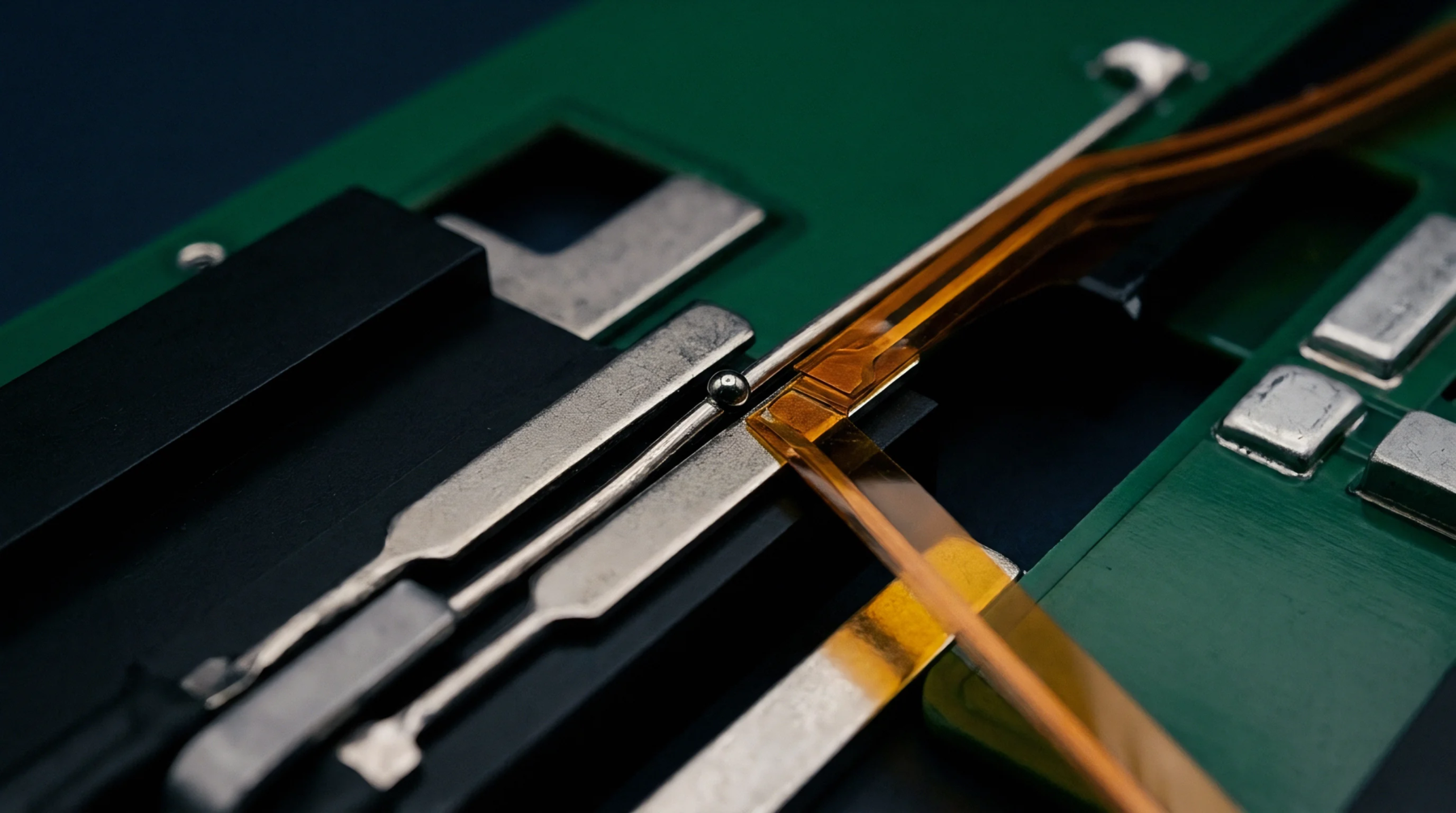
Parasitic Voltage
Voltage measurements at the microvolt level are often corrupted by unwanted potentials generated at junctions of dissimilar metals. This phenomenon introduces Seebeck thermoelectric microvolt offsets, which are parasitic voltages created by temperature differences across these metal junctions. The effect is present in all low-level electronic circuits where different alloys contact each other.
Thermal Gradient
When a temperature difference exists between two connection points in a signal path, a voltage proportional to the temperature difference is generated. In high-precision instruments, even the heat from nearby components like processors or power supplies can create these gradients. This thermal drive shifts the zero-point voltage of the measurement circuit and introduces a drift that changes with the power consumption of the device.
The magnitude of this offset depends on the Seebeck coefficients of the metals used in the circuit.
Signal Shielding
Designers use symmetrical board layouts and thermal shielding to minimize temperature gradients across critical junctions. By grouping these junctions together and keeping them away from heat sources, the temperature differences are reduced. This thermal management is essential to maintain the accuracy of high-resolution measurement systems.
Calibration Audit
Testing departments measure these offset voltages by shorting the input terminals and logging the output voltage as the instrument warms up. If the measured offset exceeds the specified microvolt tolerance, the thermal isolation must be improved or the board layout modified. This audit confirms that the instrument meets its specifications under normal operating conditions.