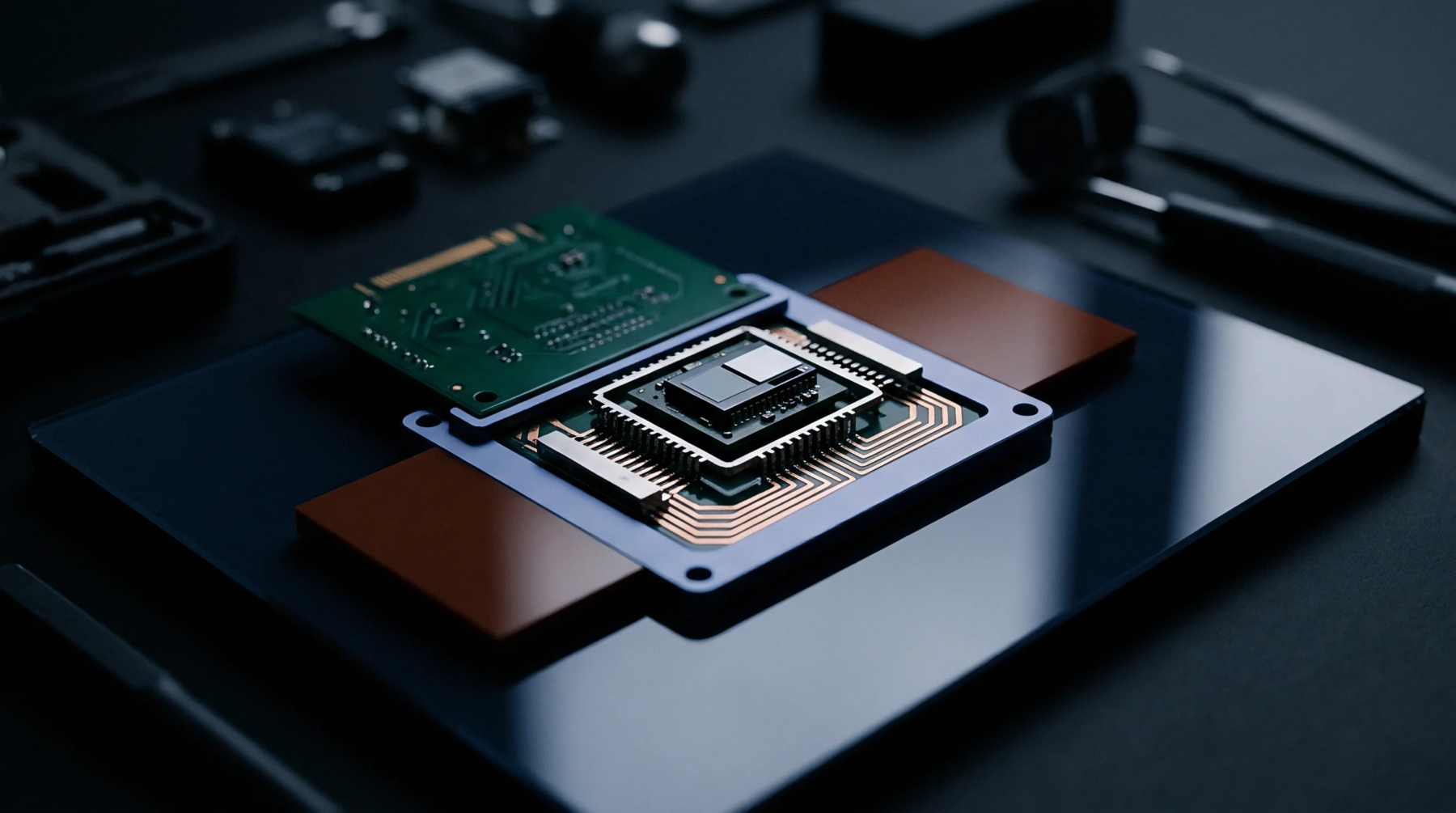
Flux Director
Magnetic cores manufactured from rapid-solidification alloys focus alternating magnetic fields around current-carrying conductors to improve sensor sensitivity. This component, known as a nanocrystalline concentrator, achieves high magnetic permeability and low coercivity while maintaining excellent thermal stability. Designers position these structures in non-intrusive current sensors to maximize magnetic coupling.
Physical Structure
Ribbon matrices of extremely fine grain size form the core material and offer high saturation flux density. Because the nanocrystalline concentrator employs microscopic grains, it exhibits minimal eddy current losses and maintains linear response at higher frequencies. Thin insulating layers between the alloy ribbons further suppress unwanted electrical paths.
Operational Margin
Saturation of the core material occurs when the measured conductor current exceeds the design threshold of the sensor. If a nanocrystalline concentrator enters saturation, the magnetic core loses its linear behavior and generates distorted secondary signals. System developers must select the core volume to match the maximum expected transient peak currents.
Installation Effect
Physical mounting positions relative to adjacent high-current conductors can introduce unwanted flux lines that disrupt measurement accuracy. To address this, shields are integrated with the nanocrystalline concentrator to attenuate external electromagnetic fields. Test technicians calibrate the assembled module in its final physical enclosure to account for remaining stray fields before deployment.
This validation stage ensures that mechanical tolerances and housing structures do not alter the magnetic path or degrade performance under typical field conditions.