Metrological Connectivity
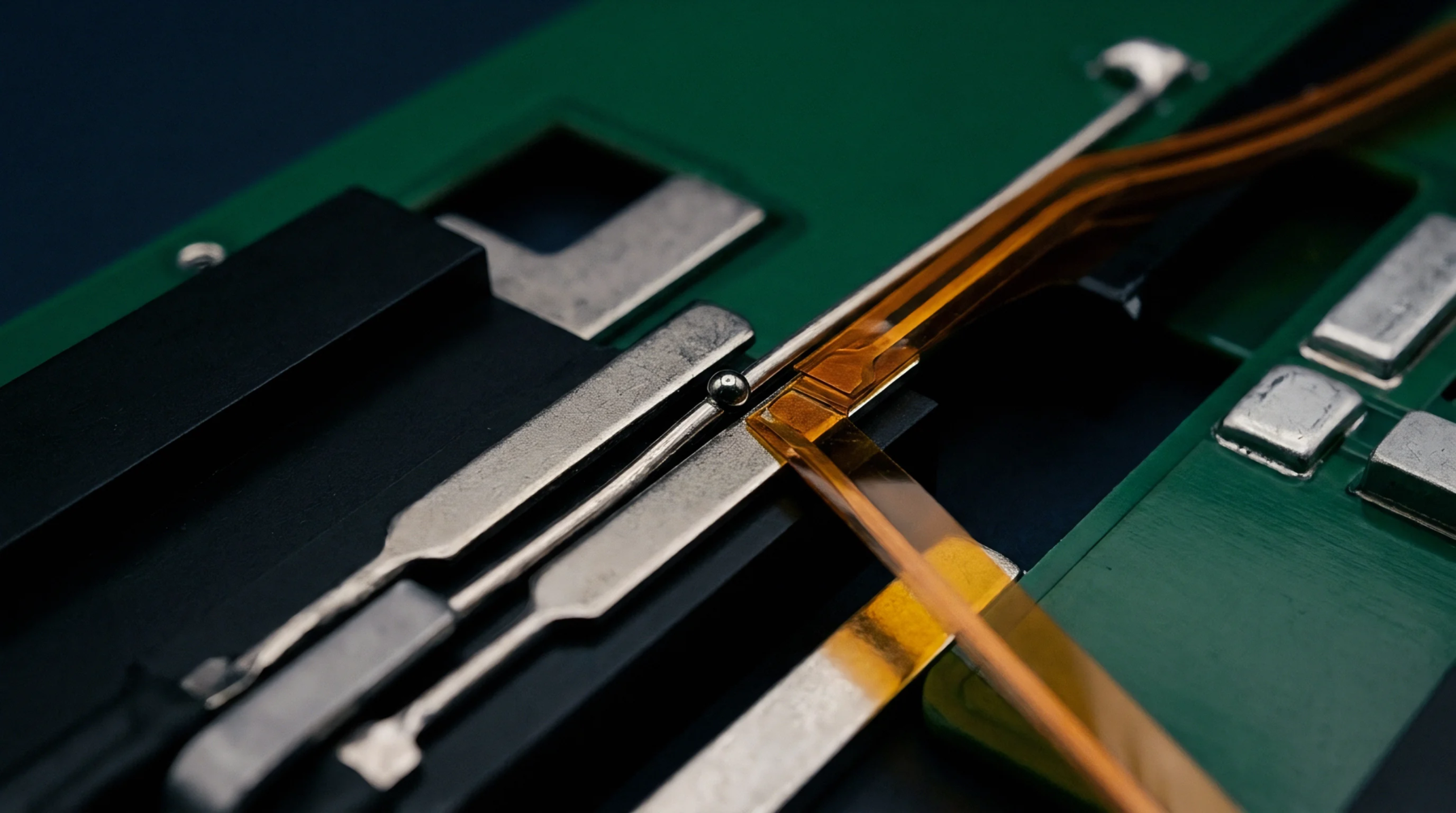
Four wire measurement techniques eliminate voltage drops caused by the resistance of signal carrying conductors. Utilizing kelvin sense reference routing allows a dedicated pair of wires to measure potential directly at the load while a separate pair carries the high power load. This separation improves precision in high current power supplies.
Error Removal
Traditional two wire systems suffer from inaccuracies when trace length increases the resistance between the source and the feedback pin. Through kelvin sense reference routing, the feedback loop receives an exact representation of the remote voltage because almost no current flows through the measurement lines. Designers rely on this architecture to maintain one percent accuracy at the point of delivery.
Routing Constraint
Traces must be kept tightly together to ensure that magnetic field interference affects both measurement lines equally. If kelvin sense reference routing wanders near high speed digital signals, the resulting noise pollutes the feedback signal and causes the power supply to oscillate. Proper shielding involves running the sense lines on internal board layers away from power switches.
Calibration Accuracy
Test equipment employs these connections to verify that the specified output matches the reality at the sensor leads. Incorporating kelvin sense reference routing ensures that connector impedance does not hide a failure in the power distribution logic. Verified systems use this method to calibrate medical sensors and industrial weighing instruments.